02.0 - MANAGING PEOPLE
02.1 - Module 02-1 - Introduction to Managing People
02.2 - MODULE 02-2 - DEVELOP PROJECT CONTROLS CAREER PATH DEVELOPMENT PLAN
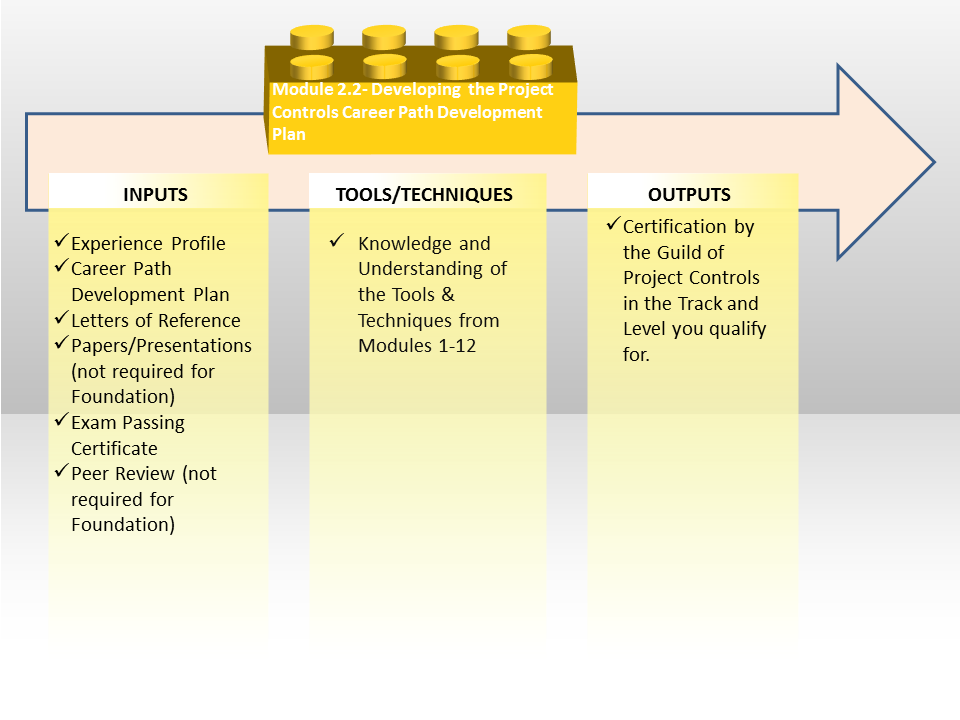
Figure 1 - Developing the Project Controls Career Path Development Plan Process Map
Source: Guild of Project Controls
02.2.1 INTRODUCTION
Given that the Human Resources Policies and Procedures are established by the corporate Human Resources, breaking with the practice of starting off each module with a Policies and Procedures Manual, in this instance we are going to focus on the Career Path Development Processes associated with Project Controls - more specifically, in the career path progression which the Guild of Project Controls developed and has built our multi-track, 5 Level Competency Assessment model against.
As always, we will try to present it from both an owners and contractors perspectives wherever there is any difference of significance.
02.2.2 INPUTS
- Experience Profile Career Path Development Plan
- Letters of Reference
- Papers / Presentations
- Exam Passing Certificate
- Knowledge Domains - Managing Project Controls, Managing People, Managing Scope, Managing Risk & Opportunity, Managing Contracts, Managing Resources, Managing Planning & Scheduling, Managing Cost Estimating and Budgeting, Managing Project Progress, Managing Change, Managing Project Databases & Managing Forensic Analysis
02.2.3 TOOLS & TECHNIQUES
02.2.3.1 Career Path Progression
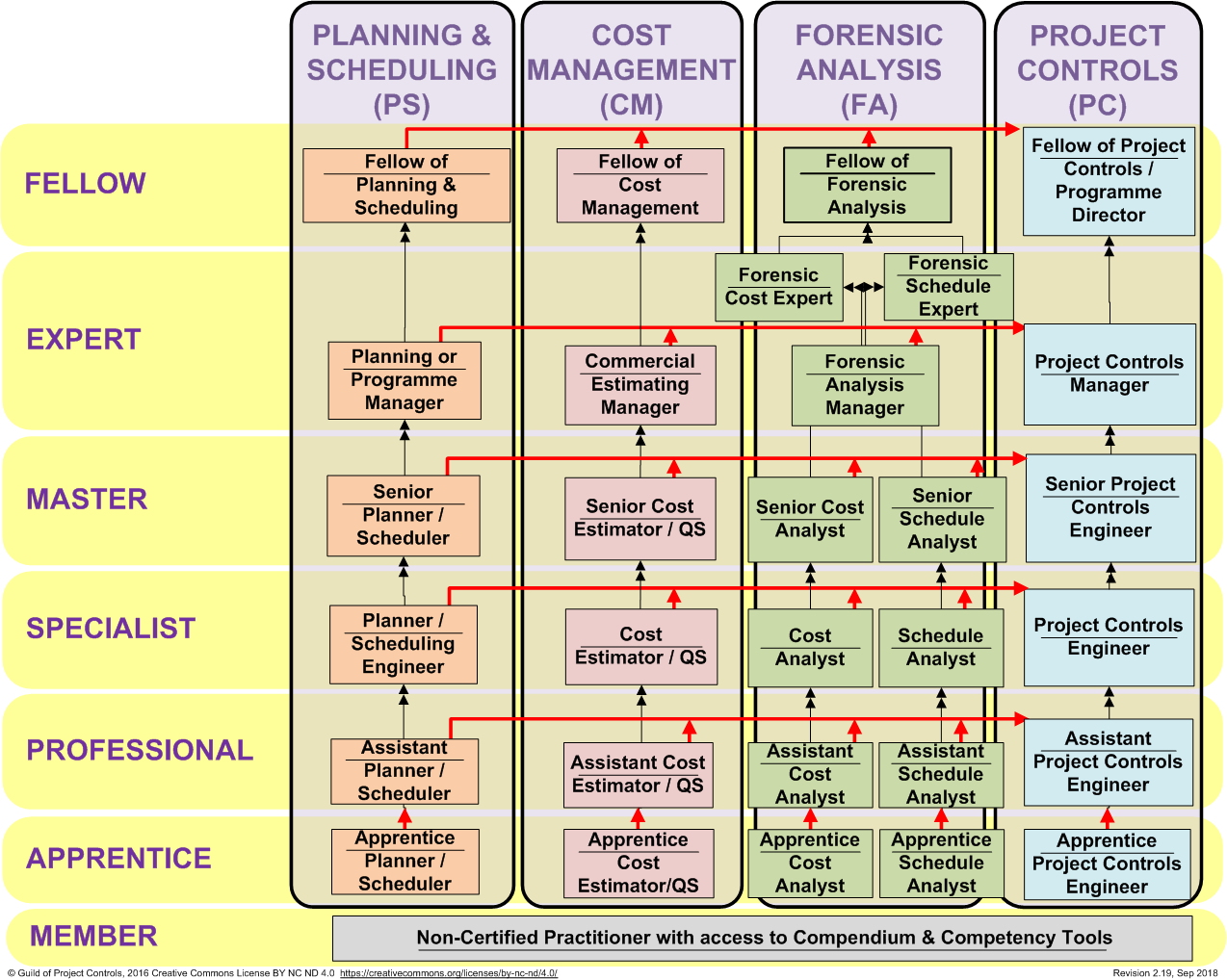
Figure 2 - Guild of Project Controls Career Path Progression
Source: Guild of Project Controls
In developing the Guild of Project Controls Competency Assessment model, the Guild recognized that as with the trades, there more than one levels of competency. Accordingly the Guild of Project Controls has identified 5 distinct levels which roughly correspond to a typical career path development.
The above matrix, the one the Guild has developed specifically for carrer path development, can be explained as follows:
THE KNOWLEDGE & COGNITIVE DIMENSION:
(1) PROFESSIONAL LEVEL -
This is the entry level assessment, the expectations being that people who aspire to obtain their first job in project controls KNOW and UNDERSTAND the TERMINOLOGY, the PROCESSES and the CONCEPTS contained within or defined by the GPCCaR. This would be equivalent to the “Engineer in Training” (EIT) credential or the entry level requirements to join a trade union or guild.
- The requirements for this level are exactly the same regardless of which TRACK you qualify for and/or want to achieve as part of your CAREER PATH DEVELOPMENT PLAN (CPDP):
- The PURPOSE or OBJECTIVE of this credential is to VALIDATE your ability to REMEMBER and UNDERSTAND relevant facts, concepts, procedures and some critical thinking knowledge in relation to the GPCCAR.
- Explained another way, this level is to validate that you have a sufficient knowledge and understanding of the terminology, concepts and procedures necessary for you to be assigned to a project control team and be able to function performing entry level tasks as a first year to fourth year apprentice or intern. The process consists of 4 equally weighted component elements which can be seen here.
(2) SPECIALIST LEVEL -
This is equivalent to a Journeyman designation in the trades. It says you are competent and capable to work with minimum supervision. In this position you are expected to be able to demonstrate that you can APPLY and ANALYZE the facts, concepts, procedures and critical thinking knowledge in relation to the GPCCaR.
- The requirements for this level are exactly the same regardless of which TRACK you qualify for and/or want to achieve as part of your CAREER PATH DEVELOPMENT PLAN (CPDP):
- The credential is to VALIDATE your demonstrated COMPETENCY by assessing your ability to APPLY and ANALYZE relevant facts, concepts, procedures and critical thinking knowledge in relation to the GPCCaR.
- Explained another way, this level is to validate that you are in fact a COMPETENT practitioner having the ability to apply what you know under varying conditions by applying crtical thinking skills to solve real day to day factual, conceptual or procedural problems with limited supervision or over-sight. This a JOURNEYMAN level credential. The process consists of 6 equally weighted component elements which can be seen here.
(3) MASTER LEVEL -
This is equivalent to a Master Craftsman. In this role, you not only would be expected to be able to work with little or no supervision but that you are able to ANALYZE relevant facts, EVALUATE existing concepts, procedures and CREATE new concepts, procedures, through the application of critical thinking in relation to the GPCCaR.
- The credential is to VALIDATE your demonstrated COMPETENCY by assessing your ability to ANALYZE relevant facts, EVALUATE existing concepts, procedures and CREATE new concepts, procedures, through the application of critical thinking in relation to the GPCCaR.
- Explained another way, this level is to validate that you are not only a COMPETENT practitioner, but are also recognized as a future leader in the project controls community of practice. You not only have the ability to apply what you know under varying conditions by applying critical thinking skills to analyse, evaluate and create NEW factual, conceptual or procedural tools, techniques or procedures, but are able to do so on your own with little or no supervision or direction. This a MASTER CRAFSTMAN level credential however you are not directly supervising or responsible for the management of others. The process consists of 5 equally weighted component elements which can be seen here.
(4) EXPERT LEVEL -
This level validates that you have become a Master Craftsman AND that you have developed the competencies to be able to supervise, develop and mentor others at the Intermediate, Professional and Advanced Level. In this role, you would be expected to "ANALYZE, EVALUATE and CREATE" relevant facts, concepts, procedures and critical thinking knowledge in relation to the GPCCaR.
- The credential is for Candidates who are already Advanced Level Certified and is to VALIDATE your demonstrated COMPETENCY by assessing your ability to SUPERVISE, LEAD and MENTOR others such that they are able to "ANALYZE, EVALUATE and CREATE" relevant facts, concepts, procedures and critical thinking knowledge in relation to the GPCCaR. At this level, the focus is on assessing and validating your COMPETENCY not so much as a practitioner which was done when you earned your Advanced Level Certification but as a SUPERVISOR or MANAGER and MENTOR.
- Explained another way, this level is to validate that you have not only built a reputation for being a COMPETENT practitioner, with recognition as a leader in the project controls community of practice, but that you are now formally responsible to manage others. This a MASTER CRAFSTMAN level credential but now instead of actually doing the work, your primary responsibility is to supervise, mentor, develop and manage the work of others. The process consists of 5 equally weighted component elements which can be seen here.
(5) FELLOW LEVEL -
This Level is designed to recognize those who have distinguished themselves not only as competent practitioners and role models, but as “thought leaders”- those who have demonstrated the ability to identify trends in project controls and to develop and implement strategies to prepare practitioners to meet the needs of a changing world. Preparing project controls professionals for the impacts Building Information Modeling (BIM) are likely to have and preparing us to meet those challenges is an example of the role Fellows are expected to play.
- The credential is to VALIDATE your demonstrated COMPETENCY as a MENTOR, LEADER and ROLE MODEL to others, such that they are able to "REMEMBER, UNDERSTAND, ANALYZE, EVALUATE and CREATE" relevant facts, concepts, procedures and critical thinking knowledge in relation to the GPCCaR with the focus being on assessing and validating your COMPETENCY as an effective MENTOR, LEADER and ROLE MODEL.
- Explained another way, to earn this level, you need to be a recognized and respected name in the Project Controls Community of Practice. The process consists of 5 equally weighted component elements which can be seen here.
THE SUBJECT MATTER DIMENSION:
As we can see, there are a multitude of approaches to developing a a CAREER PATH path that a person interested in the “project controls” can take:
(6) PLANNING AND SCHEDULING TRACK (PS) -
- This track was developed for those who are directly involved in the creation, development, progressing, analysis, evaluation or forecasting using CPM schedules. The job titles shown in the Matrix are indicative only, so even if you do not have one of these job titles but in fact are spending the majority of your working day using CPM Schedules, this is the track you would most likely qualify for.
(7) COST MANAGEMENT TRACK (CM) -
- This track was developed for those who are directly involved in the creation of cost estimates or cost budgets, the development of cost and resource loaded CPM schedules, or the progressing, analysis, evaluation or forecasting using primarily costs. The job titles shown in the Matrix are indicative only, so even if you do not have one of these job titles but in fact are spending the majority of your working day working with cost estimates or cost budgets, this is the track you would most likely qualify for.
(8) FORENSIC ANALYSIS TRACK (FA) -
- This track was developed for those who are directly involved in the analysis of either cost or schedules in support of claims, dispute resolution and/or financial analysis of the business case. The job titles shown in the Matrix are indicative only, so even if you do not have one of these job titles but in fact are spending the majority of your working day working with either CPM Schedules or Financial Data with the objective to determine what happened in the past, then this track is most likely the track for you.
(9) PROJECT CONTROLS TRACK (PC) -
- The Project Controls track is somewhat unique. Because it requires experience from all three of the other tracks (PS, CM and FA) before you can qualify. So to accommodate those whose jobs require a mixture of PM, CM and FA, then this track is ideal for you. This becomes especially important for those who are creating your Career Path Develop Plan (CPDP) as you need to decide which track you want as your career path and then seek out job titles or experience opportunities consistent with the track you want to follow.
02.2.3.2 Knowledge and Competencies
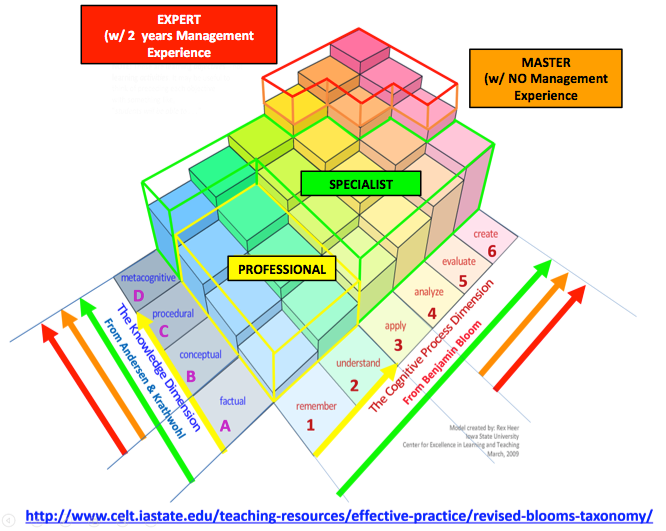
Figure 3 - Illustrating the Knowledge Dimensions vs Bloom’s Cognitive Dimensions
Source: Giammalvo, Paul D (2015) Course Materials. Adapted for the GPC based on research by Rex Heer (2009) "Iowa State University Center of Excellence in Learning and Teaching". Contributed Under Creative Commons License BY v 4.0
At the PROFESSIONAL level, you would be expected to demonstrate your ability to 1- REMEMBER and 2- UNDERSTAND various A- FACTS, B- CONCEPTS and C- PROCEDURES associated with Planning and Scheduling, Cost Management or Forensic Analysis (collectively called Project Controls). The expectation should NOT be testing you on your ability to apply what you know. That will happen with the higher level, the SPECIALIST level.
As you can see, the SPECIALIST LEVEL is the most difficult and challenging stage of any career development; as this is the “Journeyman” level you would be demonstrating your ability of the KNOWLEDGE domains (i.e. A- Factual, B- Conceptual, C- Procedural and D- Metacognitive or Critical Thinking) as well as all 6 Levels of Blooms Cognitive Domain (i.e. 1-Remember, 2- Understand, 3- Apply, 4- Analyse, 5- Evaluate and 6- Create).
As we get to the MASTER and EXPERT levels of career development, the expectation emphasis is on the top end of Bloom Knowledge Domains (i.e. to 4- Analyse, 5- Evaluate and 6- Create) and the (i.e. the D- Metacognitive or Critical Thinking, C- Procedural and B- Conceptual abilities).
To gain a better understanding of what you are expected to know in order to pass each level, go here and you can see the basis for how the Guild Career Development Path (and a typical career development plan) has and should be structured.
This is important as it forms the basis for those individuals and organizations developing and providing training as well as for those organizations who want to create their own in-house training courses.
02.2.3.3 Competency of those Providing Training and the Training Itself
The Guild of Project Controls is one of the first of the major professional organizations supporting project controls to adopt an EXTERNAL standard for assessing both trainers and training providers and this applies equally to practitioners who are supervising, training, coaching and mentoring staff as part of the ongoing career development plan / process. Therefore for you and your training and coaching to look at competency as well as knowledge validation it needs to address the following model.
Consistent with the necessary objectives described above, all career development, supportive mentoring and training (both self and assisted) should be consistent with the 4 levels using the Kirkpatrick Scoring Model.
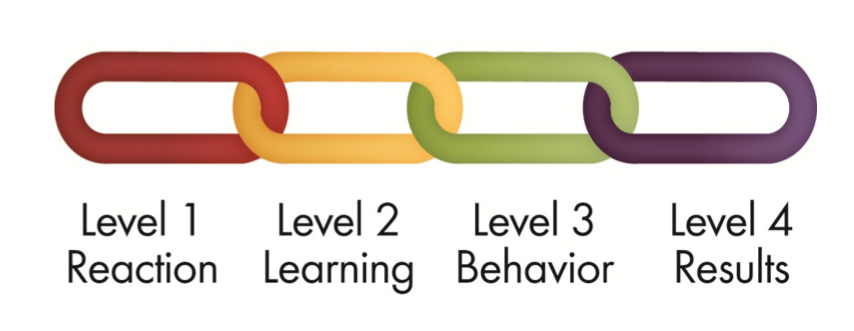
Figure 4 - Kirkpatrick Training Competency Assessment Model Level
Source: New World Kirkpatrick Model (2016)
LEVEL (1) REACTION
To what degree participants react favorably to the training
- Customer Satisfaction The degree to which the participants were satisfied with the training.
- Engagement The degree to which participants are actively involved in and contributing to the learning experience
- Relevance The degree to which training participants will have the opportunity to use or apply what they learned in training on the job Level
LEVEL (2) LEARNING
To what degree participants acquire the intended knowledge, skills, attitudes, confidence and commitment based on their participation in a training event.
- Knowledge “I know it.”
- Skill “I can do it right now.”
- Attitude “I believe this will be worthwhile to do on the job.”
- Confidence “I think I can do it on the job.”
- Commitment “I intend to do it on the job.” Level
LEVEL (3) BEHAVIOUR
To what degree participants apply what they learned during training when they are back on the job
- Required Drivers Processes and systems that reinforce, encourage and reward performance of critical behaviors on the job Level
LEVEL (4) RESULTS
To what degree targeted outcomes occur as a result of the training event and subsequent reinforcement.
- Leading Indicators Short-term observations and measurements suggesting that critical behaviors are on track to create a positive impact on desired results.
Therefor any such career development planning, methodology, supportive mentoring and training needs to demonstrate how it meets all 4 of the Kirkpatrick requirements.
02.2.3.4 Peer Review of the Knowledge Domains
Combined with the aforementiond career progression and knowledge and competency tools and indicators, the practitioner needs to develop in regard to (as a minimum) the following knowledge domains:
- Module 01- Managing Project Controls
- Module 02- Managing People
- Module 03- Managing Scope
- Module 04- Managing Risk & Opportunity
- Module 05- Managing Contracts
- Module 06- Managing Resources
- Module 07- Managing Planning & Scheduling
- Module 08- Managing Cost Estimating and Budgeting
- Module 09- Managing Project Progress
- Module 10- Managing Change
- Module 11- Managing Project Databases
- Module 12- Managing Forensic Analysis
02.2.4 OUTPUTS
- Certification by the Guild of Project Controls in the Track and Level you qualify for
02.2.5 REFERENCES & TEMPLATES
- Guild of Project Controls
- Guild of Project Controls - Compendium & Reference
- Guild of Project Controls - Career Path
- Guild of Project Controls - Membership
02.3 - Module 02-3 - Developing Individual Competencies
02.4 - Module 02-4 - Developing Management Competencies
02.5 - Module 02-5 - Developing Organisational Competencies
02.6 - Module 02-6 - Identifying And Engaging Stakeholders
GPCCAR Module M02-2, Revision 1.02