06.0 - MANAGING RESOURCE ACQUISITION / ALLOCATION
06.1 - MODULE 06-1 - INTRODUCTION TO MANAGING RESOURCE ACQUISITION / ALLOCATION
06.1.1 - WHAT IS THE PURPOSE OF MANAGING RESOURCE ACQUISITION / ALLOCATION
The purpose of the Managing Resource Allocation & Acquisition is to introduce the tools, techniques and methodologies, deemed appropriate to identifying, acquiring and allocating resources that have been identified as being “best tested and proven” practices and which have been found to work on “most projects, most of the time”; provide a logical or rationale sequence showing when those tools or techniques would normally and customarily be used and in selected instances, show how to use those tools/techniques and/or where to find additional information on how to use or apply them.
In terms of the resource management processes, there is not any major or significant difference between how owners and contractors identify, acquire or allocate resources.
As project control professionals, we have 5 responsibilities during the PLANNING PHASES of a project whether from the owners or contractors perspective:
(1) Identify WHAT resources are needed (See also Module 7 - Planning and Scheduling, Module 8 - Cost Estimating and Budgeting)
(2) Determine HOW MANY of each resource is going to be required (See also Module 4 - Managing Risk, Module 7 - Planning and Scheduling and Module 8- Managing Cost Estimating & Budgeting.)
(3) Identify WHEN those resources will be needed (See Module 7 - Planning and Scheduling.)
(4) Identify HOW we can obtain or acquire those resources (This Module 6 - Acquiring Resources).
(5) Calculate HOW MUCH those resources are going to cost (See also Module 8- Managing Cost Estimating & Budgeting)
This Module has been designed as a PREREQUISITE to Module 7 - Planning and Scheduling and Module 8 - Cost Estimating and Budgeting, as this provides for much greater level of detail in terms of how to cost and price labour, equipment and materials. In this module we explore items which have an impact on the productivity (duration) and/or cost of a work package or activity that are too detailed to fit neatly into the main or primary module.
So what is a resource defined to be? Once again, looking to the Business Dictionary we find that a “BUSINESS ASSET” is defined to be “Human, financial, physical, and knowledge factors that provide a firm the means to perform its business processes. Which means that “Business Assets” or just plain “Assets” are synonymous with RESOURCES.
Thus “Resource Management” is “The process of using a company's resources in the most efficient way possible”. These resources can include tangible resources such as goods and equipment, financial resources, and Labour resources such as employees. Resource management can include ideas such as making sure one has enough physical resources for one's business, but not an overabundance so that products won't get used, or making sure that people are assigned to tasks that will keep them busy and not have too much downtime.
What this means is what any organization is doing, be it an owner or contractor, is taking their ORGANIZATIONAL BUSINESS ASSETS, which are also known as RESOURCES and applying them to generate a favourable Return on Assets (RoA) or Return on Investment (RoI).
To summarize, Resource (or Assets) categories includes not only human assets (supervisory, administrative and workers) but also physical assets such as equipment, plant and materials; knowledge assets (as in engineering design or proprietary methods); financial assets (required to fund the project for both owner and contractor) and intangible assets such as reputation and goodwill.
06.1.2 - WHAT ARE THE PROCESS MAPS FOR MANAGING RESOURCE ACQUISITION / ALLOCATION
As the process for managing the identification, acquisition and allocation of resources is for all intents and purposes identical for both owner and contractor, the process shown below works for both of them.
The primary difference between an owner and a contractor organization lies with which resources each party is responsible for. Generally speaking, an owner’s project control team is mostly responsible for the front end planning resources during Phases 2, 3 and 4 and during Phase 5, for project supervision (i.e. Owner’s Project Manager); project support services (Owners Project Control Team, QA/QC, Safety, Security etc) and any owner supplied equipment or materials.
For the contractor’s organization is not only responsible for his/her project manager and project management team (including project controls) but also the direct labor, materials and equipment to satisfy the technical requirements of the project plus the indirect labor, materials and equipment to fulfill the “Division 1” or “General Conditions” of the contract, including safety, health, the environment and all testing and commissioning.
What is somewhat unique about this process, is exactly how iterative it is and unlike most of the other processes, with the exception of whether resources are physically available, is a relatively closed loop system. What this means is, of all the project variables, resources acquisition and allocation is the one most within the control of the project management/project controls functions.
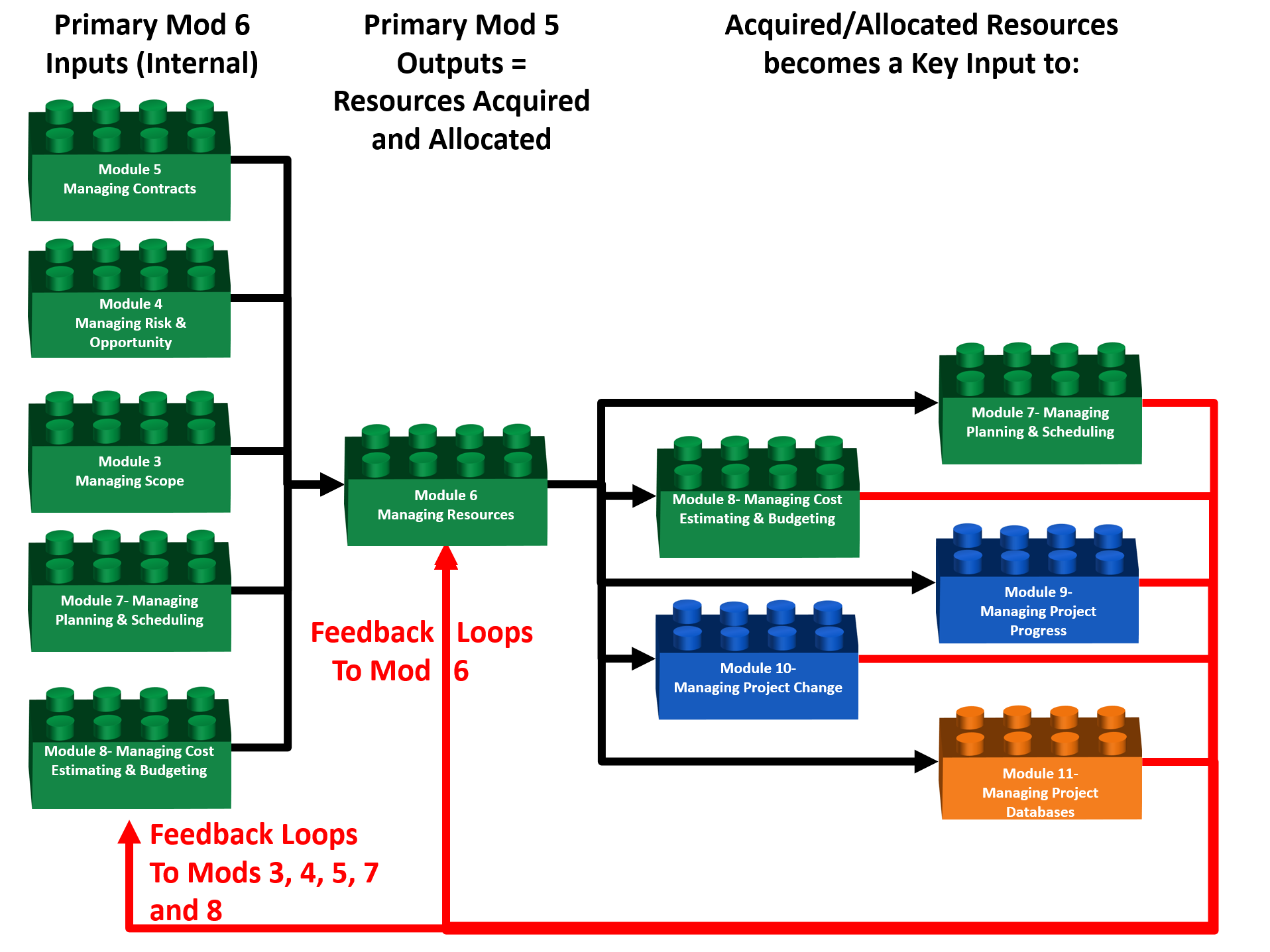
Figure 1 - 1,000 Meter Level Process Flow Chart for Managing Resource Allocation and Acquisition, from BOTH the OWNER and CONTRACTOR ORGANIZATION PERSPECTIVE
Source: Guild of Project Controls
As Figure 1 illustrates for both owner’s and contactor’s organizations, the resource allocation and acquisition process is largely a closed process. Once the scope of work is known (from the WBS (Module 3- Managing Scope) for the owner or the CWBS (Module 5- Managing Contracts) for the contractor, we can assess what resources are likely to be required. The WBS or CWBS becomes an input to the Managing Risk/Opportunity (Module 6) where we identify whether or not the resources are available or not. Once that has been ascertained, the two major concerns is what are the costs of those resources (applies to labor, equipment and materials) which happens in Module 8- Managing Cost Estimating and Budgeting) and what is the productivity (labor and equipment) or what are the procurement lead times (materials) which is one of the primary inputs into Module 7- Managing Planning & Scheduling.
Once this information is frozen in the approved Performance Measurement Baseline (output from Module 7 and Module 8 and we start to track physical progress against the baseline, we use the actual costs and actual productivity not only to update the databases but also use this “real time” cost and productivity information as the basis to forecast remaining durations and cost estimates to complete the remaining work.
At the same time, the resource cost and productivity information is also used to price out change orders and assess the impact they have on the completion dates.
To summarize, Module 6- Managing Resource Allocation and Acquisition is an ongoing process for both owner and contractor, which starts in the earliest phases of the Asset/Project life span and continues until the project is completed and turned over to the end user.
The Managing Resource Acquisition / Allocation Process Map
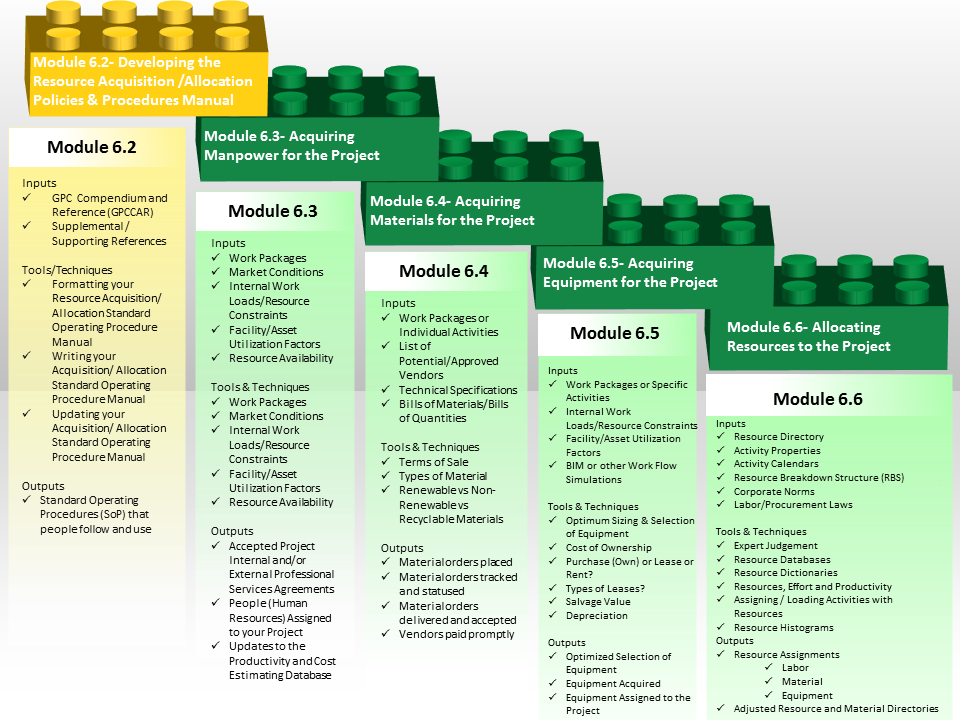
Figure 2 - The Managing Resource Acquisition/Allocation Process Map 100 Meter Level of Detail
Source: Guild of Project Controls
Given that in an owner’s organization all or nearly all resources are “borrowed” (coming from functional departments and working in a matrixed organizational structure) it becomes essential for owner organizations to establish a policy and procedures manual which explain very clearly how project managers acquire their internal resources, how do they evaluate and reward them and most importantly are they dedicated to the project, and only responsible for assignments from the project they are working on or are they “shared” either with other projects or are responsible for both functional responsibilities and project responsibilities. These issues are serious and need to be resolved in advance, otherwise there are sure to be conflicts.
Rarely do trade contractors use a matrix organization but definitely owners do and the really large Design-Build contractors do as well, but normally in large EPC or Design>Build contractor organizations when a “borrowed” resource (i.e. an Engineer or Procurement or Project Controls specialist) is taken from a functional department, that person is assigned more or less full time to that one project and they stay on that one project until their services are no longer needed. When that happens, it is the project manager and not only the functional manager who does the performance review on matrixed or shared resources. For more on this topic, see Module 2 - Managing People.
For most contractors, their project managers are usually authorized to hire, fire, promote and in some cases, reward using either bonuses or raises as incentives for those employees and subcontractors working on their projects, and while usually contractors project managers have a “core team” who they bring with them, they will often seek out project control professionals on a contract or outsourced basis.
For project control practitioners, in particular planners and schedulers, producing resource loaded CPM schedules at the earliest possible opportunity and at the appropriate level (owner’s level 3 or 4 and contractors usually levels 4, 5 or even 6) provide essential inputs for the project managers to make the case for how many resources they need, when they need them and for how long. This is an important service that as professional practitioners we should be proactive in preparing without being asked or told to do so. However, to do this, they need access to the existing cost and productivity databases and to avoid the dangers of “garbage in/garbage out” they need to validate the information in the database against the conditions in the area where project will be executed to see if there are any differences and if so, make the appropriate adjustments.
For contractors especially who are most likely bidding the project under some form of fixed price contract, validating local resource availability, productivity and cost information is a critical element when putting together your cost and pricing information. (See Module 5 - Managing Contracts).
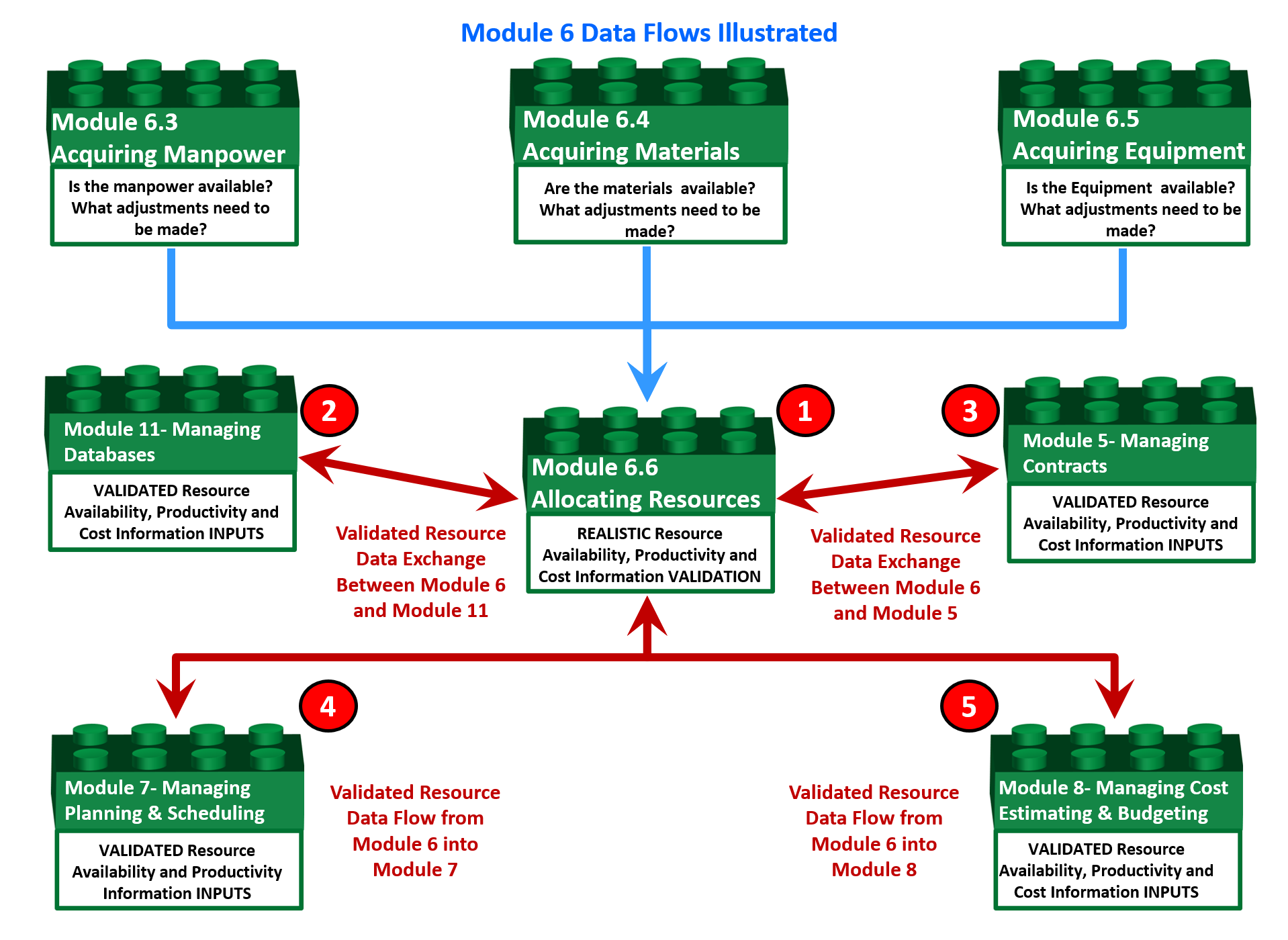
Figure 3 - Showing the Data Flows through Module 6 - Managing Resource Acquisition/Allocation into Module 7 - Managing Planning and Scheduling, Module 8 - Managing Cost Estimating and Budgeting and Module 11 - Managing Databases.
Source: Guild of Project Controls
(1) Module 6.6 is a key “hub” process, serving both “quality control” and “risk identification” functions, which helps the project controller assess and validate:
- The resources in the resource pool are actually available
- The productivity of those resources is known and has been factored into the cost and schedule duration information
- The material resources are available and in sufficient quantities to fulfil the project requirements
- The equipment resources are available and in sufficient numbers, capacity and state of repair to fulfil the project requirements
(2) There is a data exchange relationship between the location specific resources and what is shown in the database. As both planners and schedulers as well as cost estimators, we need to compare what is in our historical databases vs what can reasonably be expected to find in any given location and make the appropriate adjustments to availability, productivity, lead times or costs.
(3) For both owners and contractors, but especially for contractors, bidding a project from the company database without first checking and validating the availability, productivity, lead times and/or costs in any specific location can lead to usually unpleasant surprises.
(4) Only after the resources have been validated for availability and costs, (people, materials and equipment) productivity (people and equipment) and procurement lead times (materials and equipment) can we use them as valid inputs into Module 7- Planning and Scheduling or 5) Module 8.
Explained another way, Module 6 addresses many very important but often forgotten aspects of resource acquisition and allocation and in doing so serves as both a “quality control” and “risk identification” function ensuring not only that the resources are available to include in the resource pool and available for the planner/scheduler to draw from but that the productivity and cost data has been validated to ensure how accurate, reliable and precise it is so that the data can be used with confidence.
While this level of detail provides a more granular look of the processes and how they interact than the 1,000 Meter view, there is yet another deeper level of detail which the Guild calls the “ground” or “working level”. It is the next level deeper which contains the explanation for each of the modules shown above, telling more about what inputs are required, including providing some examples; what tools, techniques are typically used, including providing examples or templates, and in selected instances, specific step by step instructions or links to additional resources, showing how to use each of these tools or techniques consistent with the Guild’s commitment to identify and advocate “best tested and proven” practices.
While this level of detail provides a more granular look of the processes and how they interact than the 1,000 Meter view, there is yet another deeper level of detail which the Guild calls the “ground” or “working level”. It is the next level deeper which contains the explanation for each of the modules shown above, telling more about what inputs are required, including providing some examples; what tools, techniques are typically used, including providing examples or templates, and in selected instances, specific step by step instructions or links to additional resources, showing how to use each of these tools or techniques consistent with the Guild’s commitment to identify and advocate “best tested and proven” practices.
06.1.3 - BACKGROUND INFORMATION FOR MANAGING RESOURCE ACQUISITION / ALLOCATION
As this is the Guild of Project Compendium and Reference (GPCCAR) we are looking at what we, as project controls professionals are obligated to do in terms of “project resources”, both in terms of acquiring and assessing them in terms of cost and productivity and then to allocate them against WBS Work Packages and Activities.
As project control professionals, we have 5 responsibilities during the PLANNING PHASES of a project whether from the owners or contractors perspective:
(1) Identify WHAT resources are needed (See also Module 7 - Planning and Scheduling, Module 8 - Cost Estimating and Budgeting)
(2) Determine HOW MANY of each resource is going to be required (See also Module 4 - Managing Risk, Module 7 - Planning and Scheduling and Module 8- Managing Cost Estimating & Budgeting.)
(3) Identify WHEN those resources will be needed (See Module 7 - Planning and Scheduling.)
(4) Identify HOW we can obtain or acquire those resources (This Module 6 - Acquiring Resources).
(5) Calculate HOW MUCH those resources are going to cost (See also Module 8- Managing Cost Estimating & Budgeting)
This Module has been designed as a PREREQUISITE to Module 7 - Planning and Scheduling and Module 8 - Cost Estimating and Budgeting, as this provides for much greater level of detail in terms of how to cost and price labour, equipment and materials. In this module we explore items which have an impact on the productivity (duration) and/or cost of a work package or activity that are too detailed to fit neatly into the main or primary module.
So what is a resource defined to be? Once again, looking to the Business Dictionary we find that a “BUSINESS ASSET” is defined to be “Human, financial, physical, and knowledge factors that provide a firm the means to perform its business processes. Which means that “Business Assets” or just plain “Assets” are synonymous with RESOURCES.
And that “Resource Management” is “The process of using a company's resources in the most efficient way possible”. These resources can include tangible resources such as goods and equipment, financial resources, and Labour resources such as employees. Resource management can include ideas such as making sure one has enough physical resources for one's business, but not an overabundance so that products won't get used, or making sure that people are assigned to tasks that will keep them busy and not have too much downtime.
What this means is what any organization is doing, be it an owner or contractor, is taking their ORGANIZATIONAL BUSINESS ASSETS, which are also known as RESOURCES and applying them to generate a favourable Return on Assets (RoA) or Return on Investment (RoI).
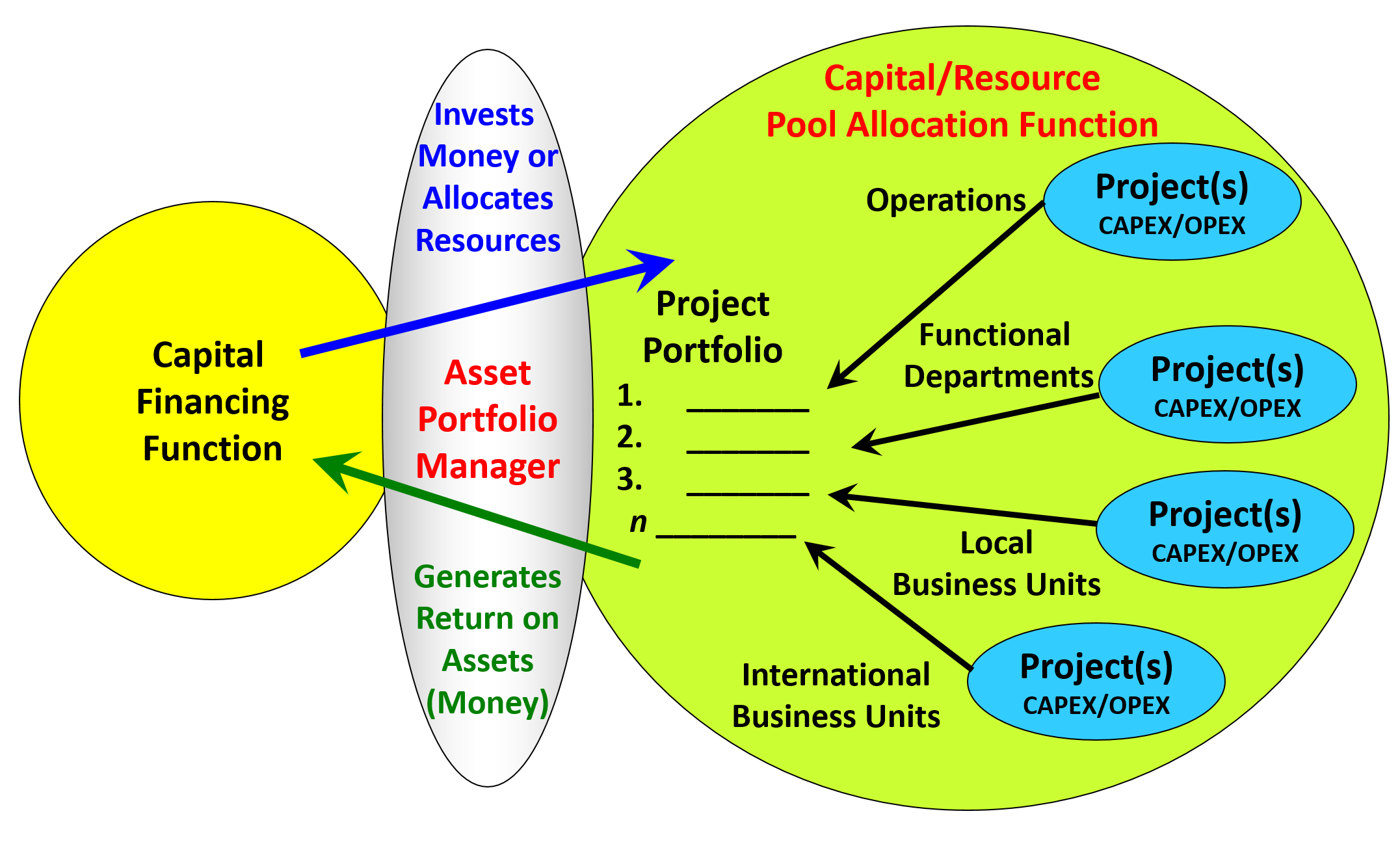
Figure 4 - Roles and Responsibility of the Asset Manager
Source: Adapted from Sullivan, Wickes & Kroelling (2014) Engineering Economics 15th Edition by Giammalvo, Paul D (2015) Course Materials. Contributed Under Creative Commons License BY v 4.0
Remember also from Module 1 - Managing Project Controls that there are 5 categories of Organizational Business Assets and those are:
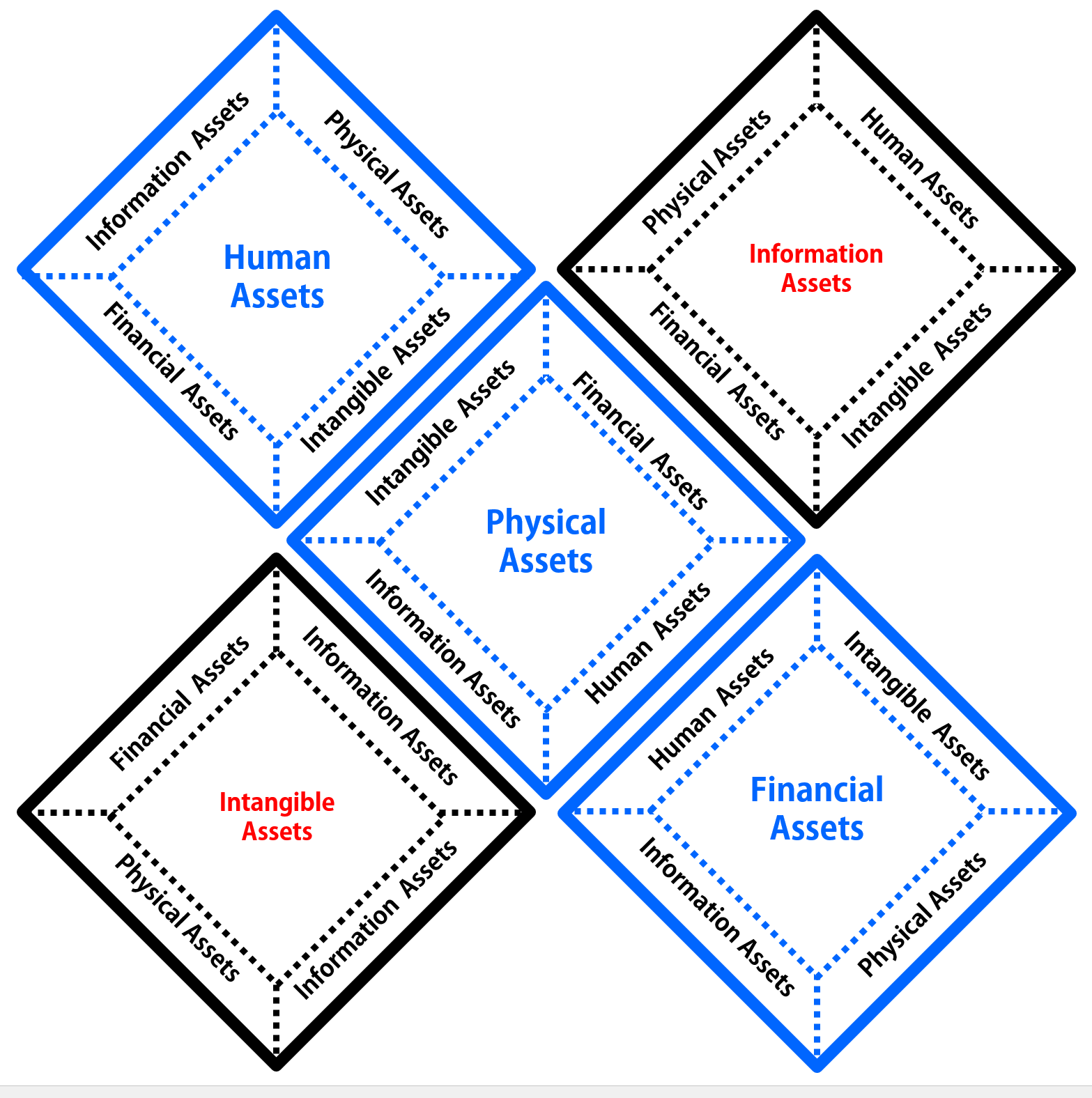
Figure 5 - The 5 categories of Organizational Business Assets
Source: Giammalvo, Paul D (2015) Course Materials. Contributed Under Creative Commons License BY v 4.0
(1) Physical Assets (plant, equipment, tools etc)
(2) Financial Assets (cash and near cash instruments)
(3) Human Assets (people)
(4) Knowledge or Information Assets (proprietary designs, cost information, productivity information)
(5) Intangible Assets (organizations brand image or reputation)
And that “assets” or “resources” are normally and customarily managed or controlled by FUNCTIONAL MANAGERS:
(1) Physical Assets (plant, equipment, tools etc) are managed by the Plant Manager or Heavy Equipment Shop Manager;
(2) Financial Assets (cash and near cash instruments) are normally and customarily controlled by Financial or Accounting Managers;
(3) Human Assets (people) are normally and customarily controlled by Human Resources Managers;
(4) Knowledge or Information Assets (proprietary designs, cost information, productivity information) are often owned, controlled and managed by IT, Engineering or other technical managers;
(5) Intangible Assets (organizations brand image or reputation) are normally controlled and manages by sales, marketing or government affairs managers.
For the purposes of this Module, we will be focusing on Physical Assets, which include both materials and equipment, as well as Human Assets. As this module plays a supporting or integrating role with Module 8 - Cost Estimating and Budgeting, both Physical Assets and Human Assets have to be monetized as well. Also Implicit in this is the assumption that with the Human Assets come the organizations Knowledge Assets as well, although this may or may not always be true, depending on how effective the organization is at being able to capture “lessons learned” and incorporate them into continuous process improvement. (See Module 2 - Managing People and Argyris and Schon’s Double Loop Learning model as well as Module 11 - Managing Databases for more on this topic)
Whether owner or contractor’s project manager, the primary focus is on managing three resources-
(1) People (whether your own employees or subcontracted Labour)
(2) Materials (both permanent and temporary)
(3) Equipment (both permanent for installation as part of the project deliverables (e.g. pumps, compressors or rolling stock etc.) and the equipment needed to execute the work packages (e.g. cranes, bulldozers, trucks, computers etc.)
Whether we are the owner’s or contractor’s project control team, there are three sets of resources he/she needs to identify, acquire and allocate, the only difference between the owner and contractor’s perspective is in the timing. Owner’s project control professionals normally would be doing this in Phases 3, 4 and to a lesser degree in Phase 5, while the contractor would mostly be doing this same analysis but in Phase 4 (bidding) and Phase 5 (executing).
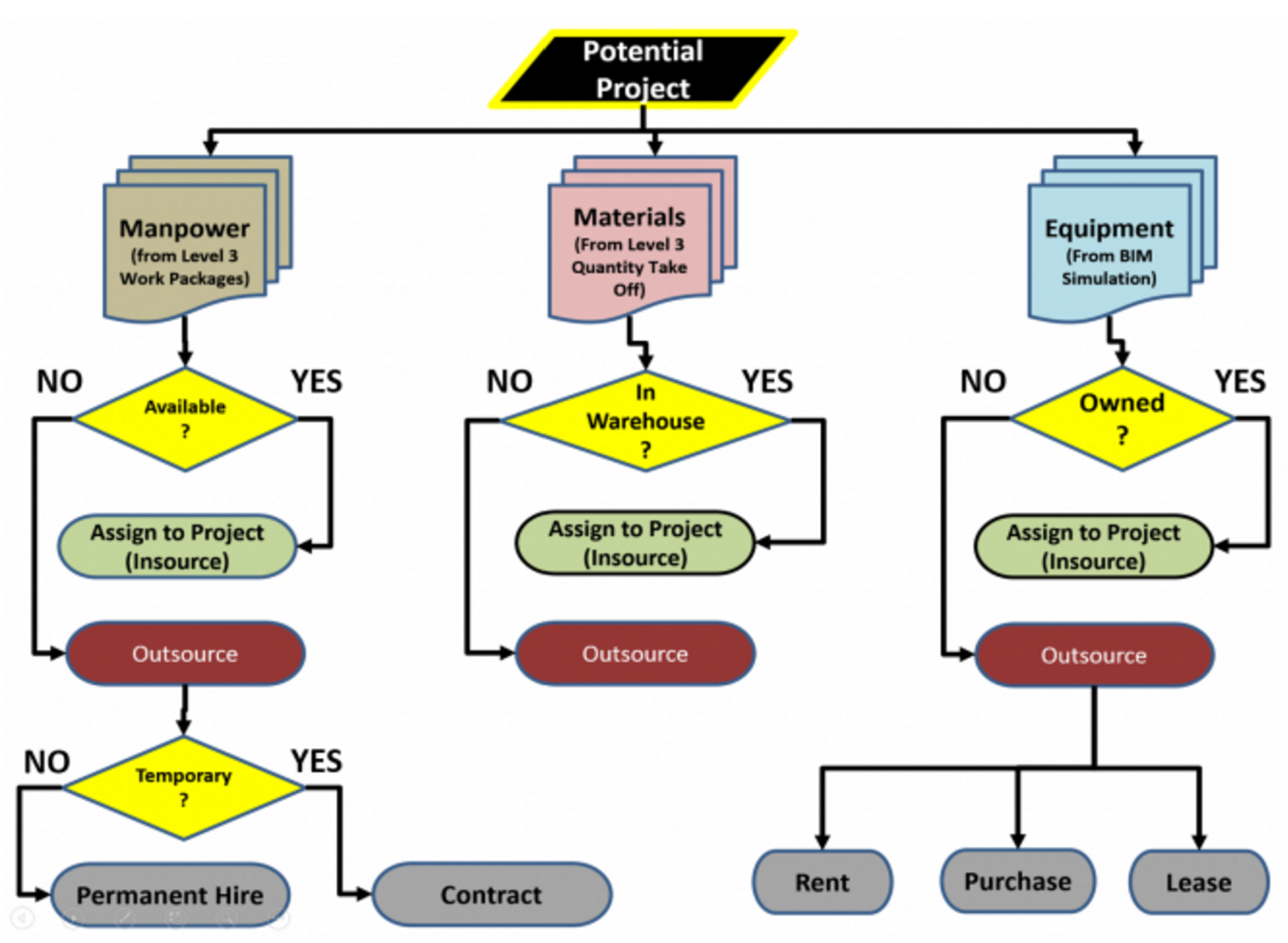
Figure 6 - Illustrating what resources an OWNER’S project control manager/team should be concerned with
Source: Giammalvo, Paul D (2015) Course Materials. Contributed Under Creative Commons License BY v 4.0
One of the major challenges somewhat unique that owner’s project controller’s face is where to get enough resources to do the projects they have been assigned to manage. During the Phase 3 (“Select”) and Phase 4 (“Define”) the owner’s project manager, supported by the project control team, should be looking at:
(1) What human resources he/she will need to execute the OWNER’s responsibilities and where to get them from? (In far too many projects, the biggest delays often come not from the contractors but from the owners side- not executing their responsibilities in a timely manner)
(2) What materials will be needed which can be obtained from existing company warehouses? (Inventories can be incredibly expensive to own and maintain due to obsolescence, damage and pilferage)
(3) What equipment does the company own which can be utilized? (If you are an owner and have equipment on the books why not maximize the use rather than just depreciate it?)
The savvy owner’s project control practitioner should know and understand this and use this knowledge to increase your value to the project management team by preparing:
- Level 3 (minimum) and preferably Level 4 Manpower histograms (which should come from a resource loaded Level 3 or Level 4 CPM schedule),
- A Bill of Materials (BoM) or Bills of Quantities (BoQ) for the Level 3 or Level 4 Work Packages which can come from the Front End Engineering and Design (FEED) or Detailed Engineering and Design OR more common today from the Building Information Modelling software, and;
- Identifying the major pieces of equipment which will be necessary for inclusion into the project facility as well as the major pieces of equipment necessary to execute the work of the project.
These last two items are where Building Information Modelling (BIM) can be very useful. By generating BoM’s/BoQ’s it should give the planner/scheduler ample opportunity to look in the organizations warehouses to see if any of this material is already available. As inventories cost money, if the planner/scheduler can reduce existing inventories, he/she not only can save time while reducing procurement risks, but also save money on the project.
As major pieces of equipment often require long lead times to order, the owner’s project control team can identify these pieces of equipment and finding out the lead times, and working on the backwards pass, identify when each piece of long lead equipment needs to be purchased. The same goes for equipment necessary to construct the project. Especially in remote sites, the owner often has their own equipment and the sooner the planner/scheduler can identify what pieces of equipment are necessary and if the owner has them, then they need to be reserved and if the owner does not have them, then the planner/scheduler needs to locate the equipment and found out what the lead time is to get it to the site. For specialized equipment such as tunnel boring machines and heavy lift cranes, the lead times may be measured in years.
In the contract documents, these materials and/or equipment is known as “Owner Supplied Materials” or “Owner Supplied Equipment” and the owner’s project control team needs to ensure this information is included in the contract documents. The owner’s project control team also need to know and understand that if the materials or equipment promised to the contractor is late, it will set your organization up for a legitimate claim from the contractor. So be sure to build in a sufficient RISK BUFFER or RISK CONTINGENCY on the procurement lead times as well as a monetary buffer or contingency in the event the materials or equipment needs to be expedited. (i.e. air freight)
For contractor’s project managers and project teams, as these are normal and customary requirements and are project specific, the contractor’s project control team usually does not have to be told to do these things, as the instructions telling us what we need to be doing should be coming from the contract documents. Also, aside from consumable items (i.e. formwork, scaffolding planks) contractors normally do not stock pile much in the way of materials for in most contracts the use of used materials is not allowed. And unless the contractor is a specialty contractor who uses the same pieces of heavy equipment on a daily basis, (i.e. road contractors) most contractors do not own heavy equipment, but rent or lease it or subcontract the work to those who do use it every day.
From the contractor’s perspective, a lot depends on the type of contract to determine what role the contractor’s project control team is likely to play. (See Module 5 - Managing Contracts) If it is a Cost Reimbursable type contract, then both the contractor’s and owner’s project control team would be working together during Phase 3, Phase 4 and Phase 5 to optimize the identification, procurement and timely allocation of the three resource categories. However, if the contract is one of the Fixed Price type contracts, then the contractor is only involved in Phase 5 and thus is more focused on optimizing the types of resources, their productivity and the sequencing of the work. The best analogy of the role of the contractor’s project control team is to enable, assist and support the project manager in his or her role as the “conductor of an orchestra”. Another excellent analogy often used by contractors are the pit crews for Formula 1 Racing Teams. It is the role and responsibility of the planner/scheduler in particular to facilitate the organisation and sequencing of the work activities in such a way that to the outside observer, it looks like a Formula One pit crew or a symphony orchestra at work.
Regardless of whether we are the owner’s or contractor’s project control team members, our responsibilities are to make certain that:
(1) The work is correctly or appropriately sequenced so that one trade is not damaging the work of those who came before them or that there are not too many people working in the same area at the same time;;
(2) That the detailed design documents (i.e. shop drawings) are correct and the latest revision is available before the activity is scheduled to start;
(3) The required permanent materials and equipment are delivered “just in time” so they do not hold up the activities;
(4) Any installation tools or equipment (i.e. welding machines or cranes) are appropriately sized and in sufficient numbers;
(5) There is adequate supervision to plan, organize, coordinate and direct the workers to optimize their productivity.
06.2 - Module 06-2 - Develop the Resource Policies & Procedures Manual
06.3 - Module 06-3 - Acquiring Manpower for the Project
06.4 - Module 06-4 - Acquiring Materials for the Project
06.5 - Module 06-5 - Acquiring Equipment for the Project
06.6 - Module 06-6 - Allocating Resources
GPCCAR M06-1 - Managing Resource Acquisition / Allocation, Revision 1.01