12.0 - MANAGING FORENSIC ANALYSIS
12.1 - Module 12-1 - Introduction to Managing Forensic Analysis
12.2 - Module 12-2 - Creating The Forensic Analysis Process & Procedures Manual
12.3 - Module 12-3 - Conduct the Preliminary Analysis
12.4 - Module 12-4 - Conduct the Schedule Analysis
12.5 - MODULE 12-5 - DAMANGE ANALYSIS PHASE
12.5.1 INTRODUCTION
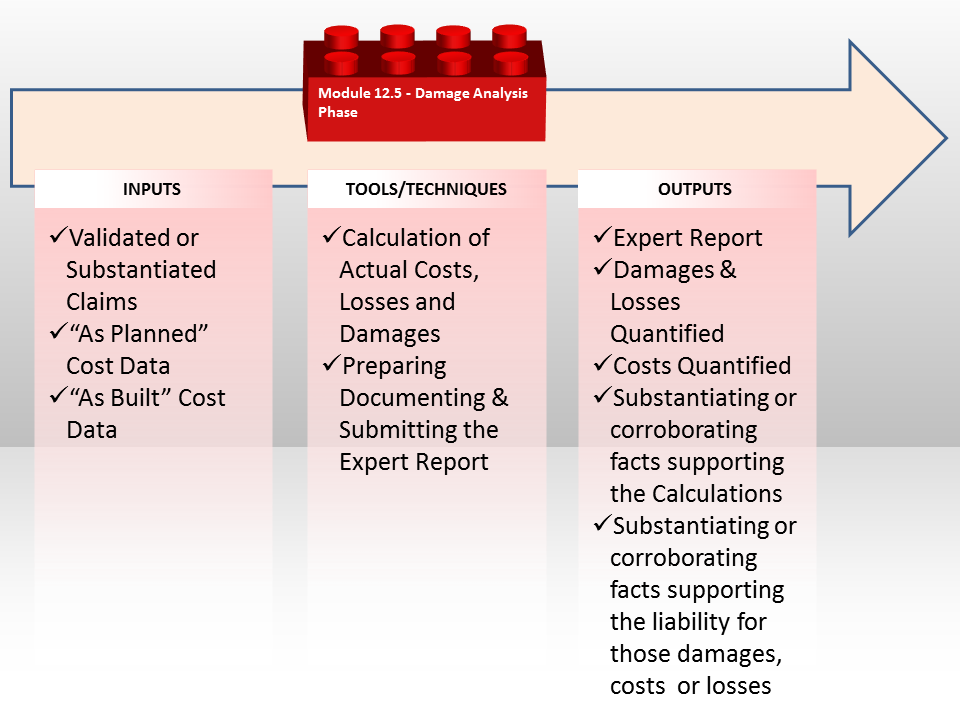
Figure 1 - The Damage Analysis Phase Process Map
Source: Guild of Project Controls
In the end, all claims and disputes come down to money and while the analysis itself is largely scientific, the calculation of what constitutes a “loss” or “damages” is as much art as it is science.
Perhaps the most egregious example of this concept run amok are the huge damages being won by plaintiff’s in the US Courts for “pain and suffering”…….. Intangible but very real costs that often dwarf the actual losses or damages incurred.
While we hope this trend does not makes its way into the types of claims and disputes we tend to be involved in, the concept cannot be avoided and needs to be taken into consideration when calculating damages.
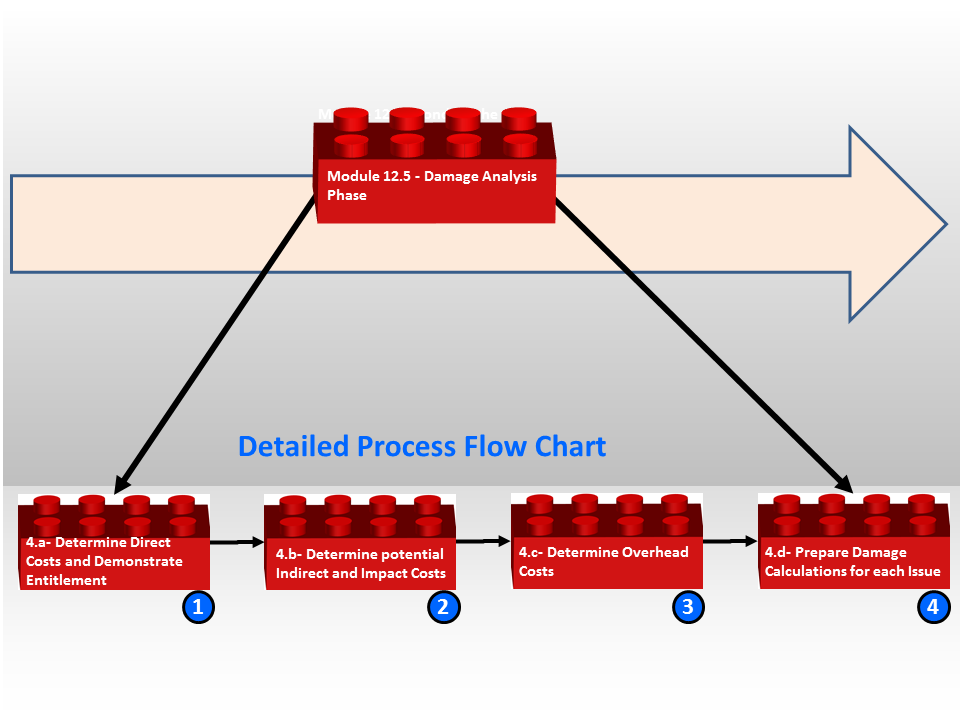
Figure 2 - Detailed Process Flow Chart for Damage Analysis (Calculate the Loss / Damages) Phase
Source: Adapted from Livengood, John (2014) “Construction Claims A to Z" CDR 1484 AACE Symposium Bangkok, Thailand
For more detailed understanding of how to create an accurate, reliable and precise cost estimate, which can withstand the rigors of a legal cross examination, reference Module 8- Managing Cost Estimating and Budgeting. However, the process is identical, save for the fact that this estimate will undergo challenges, which means the documentation and supporting references must be prepared and presented as part of the Expert’s Report.
(1) Determine the direct costs. The difference between an estimate for claims is not only must the estimate itself be calculated, but those numbers need to be linked to the contract document to show why either the owner or contractor is entitled to collect them.
(2) Here again, the calculation of the project indirect costs are exactly the same as outlined in Module 8, the exception being in the need for supporting documentation that is not normally required when preparing the bid. Again in addition to documenting the costs, there needs to be a clear causal link between the actions or lack of actions on the part of one party which caused a loss to the other party.
(3) In this step, we are focused on calculating the home office overheads as well as what is known as “cumulative impact” costs. This is the inherent inefficiency caused when there are many change orders on a project, which results in losses to the contractor which are more than simply the sum of the change orders.
(4) The final step is we prepare the monetary value of each claim, which consists of:
- Direct Costs
- Indirect or Extended Overhead Costs
- Home Office Overhead Costs
- “Cumulative Impact” Costs
The items below provides a more complete explanation or elaboration supporting how to implement or follow this detailed process map.
12.5.2 INPUTS
- Validated Or Substantiated Claims
- “As Planned” Cost Data
- “As Built” Cost Data
12.5.3 TOOLS & TECHNIQUES
12.5.3.1 Calculation of Actual Costs, Losses and Damages
The calculation of damages for a Request for Equitable Adjustment can range from highly detailed discrete element cost analysis to a “Total Cost” claim for reimbursement.
(1) The Estimate
The basis of calculation of damages first stems from the contract estimate’s work breakdown structure, quantity takeoff, resourcing, crewing, productivity rates and extended pricing. The quantification and pricing of the scope of work defined within the contract documents fall within the general categories of direct and indirect cost. Costs are further typically divided into categories, including:
- Permanent materials
- Construction materials
- Direct Labor
- Subcontracts
- Indirect Cost and Overhead including Plant and Major Equipment
- (Note that profit and home office overhead are not normally considered to be within the scope and context of project related cost and expenditure.)
(2) The Budget
The original quantification and pricing of the Work Breakdown Structure associated with the contract estimate contains assumptions made by those who estimated and priced the particulars which relate to timing, productivity, planned sequence and means and methods.
Subsequent to the signing of the contract by the Shareholders, the process of procurement of permanent and construction materials, subcontracts, plant and equipment and the initial aspects of planning and scheduling the project refine the cost contained within the estimate into the project baseline budget. The budget which is derived from the estimate thus forms the baseline from which additional unanticipated cost expenditure is to be evaluated.
Prior to any calculation of damages, the cost baseline must first be reviewed and evaluated to discern whether any errors and omissions exist which might alter the cost basis from which actual expenditure is evaluated. One source of validation of the baseline budget can often be found in the tenders of others proffering bids on the same or very similar project in accordance with the requirements of the contract document plans and specifications. Other means of validation can be derived from the review of the estimate and budget by a third party expert or simple stipulation from the Shareholders to a dispute.
(3) The Calculation of Damages
The basis of any calculation of damages lies within the demonstration of cause, effect and associated unanticipated additional expenditure. Damages may be confined to discrete sources of causation and related additional expenditure or extend to multiple sources of impact resulting in unanticipated cost overage to multiple WBS cost items and categories. Typically, the more discrete the issue and impact, the easier it is to discern entitlement to additional compensation and/or relief from liquidated damages.
Damages often fall into one or more categories, including:
- Unprocessed Change Order Requests
- Release of Retention and Release of Retained Payment(s)
- Liquidated Damages Associated with Delay to Milestone & Substantial Completion
- Cost of Mitigation
- Discrete Cost Claims
- Direct Cost Claims - Loss of Productivity/Inefficiency, Work Stoppage/Disruption/Mobilization Claims, Loss of Supervisory Span of Control, Delay - Indirect Overhead EoT Claims, Delay - Home Office Overhead Claims
- Measured Mile Claims for Disruption
- Lost Profit Claims
- Global Cost Claims
- Cost of Finance / Cash Flow Claims
(4) Calculation of Actual Cost
Requests for Change Orders are typically submitted with an evaluation of cost based on the WBS of the agreed pay application or some combination of estimated and actual cost projection.
Claims for reimbursement are required to be proffered on the basis of actual cost and substantiated damages. The cost records required to evaluate actual damages are derived from the project accounting cost records and are substantiated by those sources which feed into the job cost. As with the estimate and budget, the job cost WBS line items are typically subdivided into the following categories:
- Permanent materials
- Construction materials
- Direct Labor
- Subcontracts
- Indirect Cost and Overhead including Plant and Major Equipment
The actual cost records compiled under these categories are derived from numerous sources under standard cost accounting practice and standard’s principles and guidelines. The following is a general listing of the types and sources of cost expenditure which typically are reviewed and audited to validate actual cost:
- Permanent Materials - Purchase Orders & Invoices, Subcontracts & Pay Applications, Delivery Tickets, Receipts and Vouchers, Construction Material
- Purchase Orders & Invoices - Subcontracts & Pay Applications, Delivery Tickets, Receipts and Vouchers, Equipment Rental Contracts and Invoicing
- Direct Labor - Daily Time Sheets, Certified Payroll, Contract Labor Proof of Payment & 1099 Contracts, Subcontractor Certified Payroll and Proof of Payment, FICA, FUTA, Workman’s Comp and Fringes
- Subcontracts - Subcontracts and Purchase Orders, Pay Applications and Invoices, Project Cost Reports produced through Discovery
- Indirect Cost and Overhead - including Plant and Major Equipment
- Purchase Orders, Receipts and Vouchers
- Supervision Payroll Time Sheets and Certified Payroll
- Equipment Purchase, Rental and Maintenance Cost Records
- Equipment Utilization Reports
(5) Calculation of Loss
The calculation of loss should endeavor to define loss as discretely as possible and to associate claimed unanticipated cost expenditure with causation, effect and responsibility.
As the elements and sources of causation increase, the ability to directly link discrete elements of causation to discrete quantum calculation becomes increasingly difficult to discern. Similarly, the ability to discern and associate discrete elements of loss with discrete elements of causation is often impaired by the availability of discrete cost records. This is particularly true for subcontract and sub-subcontract claims where the ability to obtain records may be impeded by a lack of a direct contractual relationship and more often by the lack of definition within first and second tier subcontractors’ accounting procedures.
Subcontractor and sub-subcontractors are more likely to utilize field supervision as working supervisors which restricts their time and ability to discern and record cost by WBS.
In construction, excessive labor expenditure is the most likely element of loss to be claimed in disputes between the stakeholders. Loss associated with the operation and maintenance cost of major equipment follows close behind.
12.5.3.2 Preparing Documenting & Submitting the Expert Report
(1) Essential Content
In England the format of an expert report required for litigation is covered by Civil Procedure Rule 35 (CPR 35) which provides details of the duties of experts and assessors with clause 35.10 relating to the ‘Contents of Report’. CPR35 relates to the preparation of expert reports in connection with litigation proceedings, however in the UK CPR 35 is well recognised and it is good practice to follow its format in respect of any formal expert report whether or not it is required for litigation.
Under these guidelines it is also suggested that the CPR 35 format is also generally adopted for less formal report preparation.
Also within the UK, organisations such as the Academy of Experts (A of E) provide model forms for expert reports. These model forms follow the requirements of CPR 35; however they do provide further detail and advice.
Under English law CPR 35 is therefore a fundamental document and as stated above it also provides the framework for any expert report.
A full copy of CPR 35 can be found here. The Academy of Experts can be found here.
CPR 35 at clause 35.10 ‘Contents of Report’ states at (2) that “At the end of an expert’s report there must be a statement that the expert understands and has complied with their duty to the court.” In respect of this the form of the statement and wording is provided at clause 3.3 of Practice Direction 35.
Further to this and at (3) there is a requirement for the expert to state the “material substance” of all instructions whether these have been given in writing or orally.
In respect of this it is good practice for an expert to ensure that all instructions have been provided in writing and that reliance on oral instructions is avoided.
It is also common practice for the expert as well as providing narrative relating to the nature of instruction to also include a copy of written instructions in an appendix to the report.
CPR 35 clause 35.10 at (1) states that the expert report must comply with the requirements of Practice Direction 35 (PD 35).
PD 35 provides details of the form and content of an expert’s report and being that CPR is considered as a fundamental document we reiterate the requirements of PD 35 below:
In other countries, there are differing requirements for expert reports; however, in general, expert reports are required to be objective, serving the need for fair and accurate analysis and reporting, based on identified documentation and expert opinion. Failure to adhere to a scientific and objective analysis methodology, based on industry best practices and standards will subject the expert to the risk rejection of expert status. It is imperative therefore that the expert is knowledgeable with industry standards as well as jurisdictional requirements.
(2) Form and Content of an Expert’s Report
An expert's report should be addressed to the court or panel and not to the party from whom the expert has received instructions.
An expert's report should:
- give details of the expert's qualifications;
- give details of any literature or other material which has been relied on in making the report;
- contain a statement setting out the substance of all facts and instructions which are material to the opinions expressed in the report or upon which those opinions are based;
- make clear which of the facts stated in the report are within the expert's own knowledge;
- identify who carried out any examination, measurement, test or experiment which the expert has used for the report, give the qualifications of that person, and say whether or not the test or experiment has been carried out under the expert's supervision;
- where there is a range of opinion on the matters dealt with in the report – summarise the range of opinions; and give reasons for the expert's own opinion;
- contain a summary of the conclusions reached;
- if the expert is not able to give an opinion without qualification, state the qualification; and
- contain a statement that the expert – understands their duty to the court or jurisdiction, and has complied with that duty; and in England, is aware of the requirements of Part 35, this practice direction and the Protocol for Instruction of Experts to give Evidence in Civil Claims.
An expert's report should be verified by a statement of truth in the following form – I confirm that I have made clear which facts and matters referred to in this report are within my own knowledge and which are not. Those that are within my own knowledge I confirm to be true. The opinions I have expressed represent my true and complete professional opinions on the matters to which they refer.
Part 22 deals with statements of truth. Rule 32.14 sets out the consequences of verifying a document containing a false statement without an honest belief in its truth.
In respect of the above clause 3.2 (1) requiring the expert to give details of qualifications, it is good and common practice for an expert to include a copy of his or her general ‘C.V’ covering qualifications and experience as an appendix to the expert report.
Furthermore it is also good practice for the expert within the report narrative to emphasise any specific experience that is directly relevant to the dispute, for instance particular experience relating to a construction method or specific type of construction project.
Where the expert has had assistance during the preparation of the report such assistance should be declared and if considered applicable C.V.s of the relevant personnel should be included.
Clause 3.2 (2) requires the expert to provide “details of any literature or other material which has been relied on in making the report;”
In respect of this it is again good practice for such relied-on documentation to be referenced within the report with the documents included within an appendix / appendices.
It is of great importance that the opinion provided by the expert is based on the available evidence and facts, however some care is needed in respect of the extent of the relied on documentation included within the appendices.
The reader may find it distracting, when reading the report, to have to refer to various and voluminous appendices, although in some cases this may be inevitable.
Where relevant there may be some advantage in including copies / abstracts of the relied on documents within the narrative of the main body of the report. For example a specific progress photograph referred to and pasted into the main narrative will have more impact than if it is ‘buried’ in an accompanying appendix.
There may be a need to include many detailed programmes within the appendices to the expert report, particularly if some form of detailed windows analysis has been used. Again volumes of detailed programmes contained within an appendix will be difficult to review and therefore abstracts or specifically prepared summary programmes pasted into the main narrative will be beneficial. As an example when considering a specific element of the works, such as the construction of the brickwork continual reference to a main detailed as-built programme, contained in an appendix may be difficult to understand.
A simple summary as-built programme consisting of limited activities, pasted and referenced within the main narrative may help the reader more easily understand the actual sequence and timing of the brickwork operations and the points being raised by the expert.
(3) Recommendations for Layout and Style
As stated above in England the basic format and requirements of any expert report are likely to be determined by CPR 35.
In England no expert should embark on the preparation of an expert report without firstly consulting this document and fully understanding his or her duties as an expert. Similarly in any international dispute the expert should be fully aware of any similar legislation or jurisdictional requirements.
Ideally a review of any available model forms for expert reports should also be considered.
Although the Civil Procedures exist and must be complied, experts will, after preparing a number of reports, develop their own individual style. The model forms will also provide suggested layouts for the report and appendices and will often provide a useful guide and ‘check list’.
In the case of Adjudication, the Adjudicator will have a limited time to consider the issues referred. This is an important consideration when preparing an expert report for adjudication and emphasises the need for a report that is precise, simple and easily understood.
Narrative should be written in the first person with matters of fact distinguished from matters of opinion. The AoF model form considers that a good report should have narrative arranged in short sentences and paragraphs.
Such narrative must be independent and impartial and the use of emotive language should be avoided. It is also important that all sections of the report and paragraphs are suitably referenced so that they can easily be referred to. It is a matter of personnel preference how this referencing is carried out.
Similarly the report layout should include appropriate headers and footers detailing such issues as the date, author of the report, and report section.
When writing the narrative the names of the various parties are often abbreviated and in the case of many such abbreviations it is useful within the report introduction to include a key to these indicating the full name of the party and their role in the project.
The narrative should be concise and user friendly and when writing the report it is always important to consider that the reader(s) will often not be nearly as versed in the subject as the author. This being the case some simple explanations of the technical terms and issues may be required. As an example it may be necessary to explain by simple examples such things as the basic construction methods employed and the nature of critical path analysis.
As stated previously although detailed programmes may be required to be included within the report appendices they can be very difficult for the reader, to review. As such the provision of summary programmes will prove beneficial in helping the reader understand the expert’s opinions.
Where a specific delay/impact methodology has been employed it is important to fully explain the steps that have been undertaken and the meaning and implications of the results obtained. As stated in ‘Delay/impact Analysis Methodologies’ all of the recognised techniques suffer from certain weaknesses and therefore the Expert should within the report narrative demonstrate that he or she is aware of these weaknesses and have taken appropriate measures to buttress those weaknesses.
It is important that the report provides a final conclusion in respect of the Expert’s opinions. With a lengthy report it is beneficial to provide a summary and conclusion to each section of the report and then to summarise these within an overall final summary and conclusion.
It is also beneficial to include an executive summary at the start of the report providing a general précis of the report and of its conclusions.
(4) Preliminary and Final Reports
During any time related dispute both preliminary and final formal reports may be required. As an example preliminary reports may be required by the client to give advice on the strengths and weaknesses of the case and will be used by the client to decide whether formal proceedings are merited.
Similarly preliminary reports may be required to assist in the preparation of the clients Statement of Case or Reply.
As any dispute moves forward to litigation, arbitration, adjudication or mediation experts will be instructed to prepare formal expert reports.
It is essential that such formal reports conform to a standard and recognised layout / format and include all of the information as required by the courts, arbitrator or other jurisdiction.
(5) Demonstrative Exhibits
During the compilation of an expert report the author can often get highly involved with the detail producing equally detailed and comprehensive narrative. During the preparation of an expert report it is therefore recommended that regular reviews of the produced narrative are undertaken. Review by a third party, without an in-depth knowledge of the issues, will often prove useful to ensure that the narrative and any associated graphics are readily understandable and user friendly.
Instructing solicitors and / or counsel will very likely also request various drafts of the report prior to final completion. Again suggestions and amendments may prove useful, however the expert must be mindful that his or her duty is to the court / arbitrator and that the report must reflect independent, impartial opinion. Care should be taken that the report is fully and solely the product of the expert.
(6) Information from Witnesses of Fact
During research of the issues it may be found that specific factual evidence is lacking in the contemporaneous documentation and the expert will need to rely on evidence provided by witnesses of fact within their witness statements or depositions.
Unless appointed as a single joint expert the expert will have no access to the witness statements from the opposing party’s witnesses until witness statements are exchanged. However, during the course of the preparation of the expert report it is likely that the witness statements will also be undergoing preparation by the party instructing the expert.
It is highly beneficial for the expert to liaise closely with this process of witness statement preparation to ensure that the statements fully cover the areas where factual evidence is inadequate.
12.5.3.3 Counterclaims and Rebuttals
In any dispute scenario there may be a need for an expert to produce supplemental reports to rebut reports and counterclaims submitted by the opposing party. Conversely there may be a need to address rebuttals made by the opposing party in respect of expert reports and counterclaims submitted by the party instructing the expert.
In general terms any formal supplemental reports / rebuttals will in layout, format and content be no different to the requirements given above.
In any formal supplemental report or rebuttal it is important for the expert to state the material substance of additional instructions and to state the reasons for the requirement of the report.
The status of the report in respect of any preceding expert report should also be clearly defined. For instance does the supplemental report wholly supersede any previous report or does it only partly amend the previous report where stated?
Any change of opinion and overall conclusion must be clearly stated giving the reasons for these amendments. As an example opinion may require to be amended due to new evidence.
If rebutting a report produced by the opposing party it is important that it is addressed in such a manner that comments can easily be cross referenced to the relevant sections and paragraphs.
It is important to bear in mind that in preparing a rebuttal it will probably be relatively easy to provide some level of criticism; however it is important that any such criticism is objective and meaningful. From experience, with delay/impact analysis, experts can easily become entrenched in arguments over the application of programme logic rather than a pragmatic review of the factual evidence relating to the issues being claimed.
Some caution is also recommended in respect of the definition of errors and positive assertions that issues and statements made by the opposing expert are incorrect. Matters of fact can obviously be alleged as being incorrect, however some caution is still required. For instance the actual start date of an activity may have been taken from contemporaneous correspondence, whereas the opposing expert may have relied on a different source. In this case rather than either party being incorrect there will simply be an anomaly.
In many instances it may be difficult to positively assert that the opposing expert’s opinion is incorrect and it will be more prudent to use wording to the effect of “based on the evidence I have seen I have difficulty understanding how in his expert report Mr. XX has reached this conclusion.”
12.5.4 OUTPUTS
- Expert Report
- Damages & Losses Quantified
- Costs Quantified
- Substantiating Or Corroborating Facts Supporting The Calculations
- Substantiating Or Corroborating Facts Supporing The Liability For Those Damages, Costs Or Losses
12.5.5 REFERENCES & TEMPLATES
- UK Ministry Of Justice “Rues Of Practice” Http://Www.Justice.Gov.Uk/Courts/Procedure-Rules/Civil/Rules
- AACE’s Certified Forensic Claims Consultants Study Guide (2014) Http://Www.Aacei.Org/Cert/Cfcc/Cfcc_Certstudyguide.Pdf
- Livengood, John, Kelly, Patrick (2015) “The Future Of Forensic Schedule Analysis: The Good, The Hard And The Scary- Part 1” Http://Www.Arcadis-Us.Com/Future_Of_Forensic_Schedule_Analysis_Good_Hard_Scary.Aspx
- Case Study- Mulholland, S. S (2009) Turner Construction And The University Of Florida. “Preliminary Forensic Analysis Report” Http://Www.Ortho.Ufl.Edu/Sites/Ortho.Ufl.Edu/Files/Pdf/Osmidocs/Usbc_Forensic_Investigation_Findings.Pdf
- Livengood, John (2014) “Construction Claims A To Z’ Cdr 1484 Aace Symposium Bangkok, Thailand
12.6 - Module 12-6 - Settlement Negotiations Phase
12.7 - Module 12-7 - Formal Disputes Resolution
GPCCAR M12-5, Revision 1.01