12.0 - MANAGING FORENSIC ANALYSIS
12.1 - Module 12-1 - Introduction to Managing Forensic Analysis
12.2 - Module 12-2 - Creating The Forensic Analysis Process & Procedures Manual
12.3 - MODULE 12-3 - CONDUCT THE PRELIMINARY ANALYSYS
12.3.1 INTRODUCTION
This module is considered to be the “planning” phase of a claims analysis “project” or undertaking. During this phase, we conduct an initial analysis to see if the claim or dispute does or does not have any validity in terms of the contract, if there is any supporting evidence to back up one position or another and whether or not the amount at stake (the disputed claim value) is or is not worth investing the time and money to resolve it or just agreeing on a mutually agreeable settlement between the parties with no further actions required.
While the objective is or should be to minimize claims and disputes, when they do occur, they should be dealt with as promptly and professionally as possible. This is supported by the EC Harris finding that “Failure to make interim awards on extensions of time and compensation” ranks as the 4th leading cause of disputes in 2013.
The more promptly issues can be resolved, the less animosity and conflict they create not to mention the time and cost of involving increasingly higher levels of management on the part of both owner and contractor(s) as well as support professionals, such as lawyers and subject matter experts. Thus it behoves both owners and contractors to conduct a benefit: cost analysis before undertaking any claim or dispute unless it is clearly justifiable. This requires taking a structured approach to managing claims and disputes.
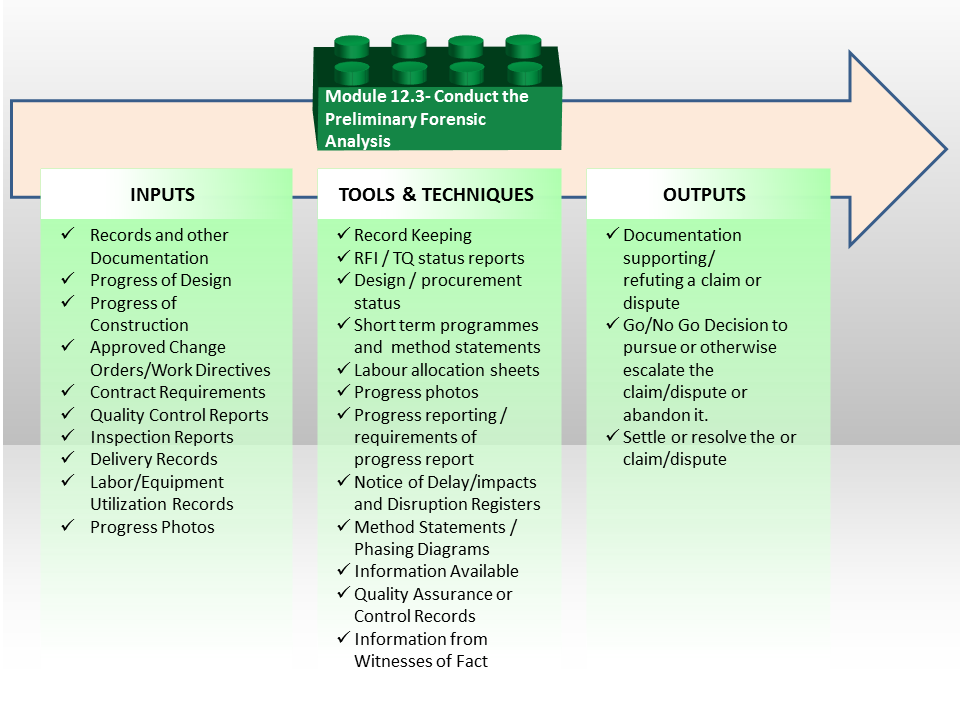
Figure 1 - Conducting the Preliminary Forensic Analysis
Source: Guild of Project Controls
A construction project is defined by the contract documents. The project plans, design and /or performance specs define the nature, utility and components of the structure. The means and methods, cost, labor productivity and the nature and source of temporary and permanent materials of construction are typically defined within the constructor’s estimate. The estimate and the budget formulate the basis of quantity, quantum and overhead. An effective project schedule models the components of both, their inter-relationship, the timing of the sequence of submittal, procurement and construction work activity and the necessary resources. The key link between the contract estimate and the project schedule is resource and labor productivity.
When contracting parties cannot resolve disputes to the source and responsibility for change detrimental to the scope and timing of work activity and project completion, they look to third parties to resolve their differences. Regardless of the dispute resolution forum, the individual(s) deciding the dispute must render judgment based on the facts presented.
The computerization of the construction industry has brought significant changes to the way project documentation is generated and managed. In many areas change has been beneficial, but not all.
The rising proliferation of data generated by the owner, the architect, the engineers, the construction managers and contractors, sub-contractors, suppliers, inspectors, government bodies and others has created an enormous body of electronic and hard copy files which must be contended with.
There are several categories of records that are normally the best source of relevant contemporaneous information. The estimate and budget, daily logs, reports, diaries, delivery receipts, minutes of meetings, RFI logs, change order logs, submittals and submittal logs, e-mails, phone logs, correspondence files, inspectors reports, testing lab field reports, Expedition Files, project schedules and updates (electronic and hard copy), job cost reports, profit projections, time sheets, certified payroll, equipment utilization logs are major sources of relevant information. Before discovery is conducted in earnest, an initial review of the available records should be performed to identify and isolate the issues relevant to the claim.
While reproduction costs should be kept as low as possible, it is better to err on the side of too much, rather than to later find too little information is available too late.
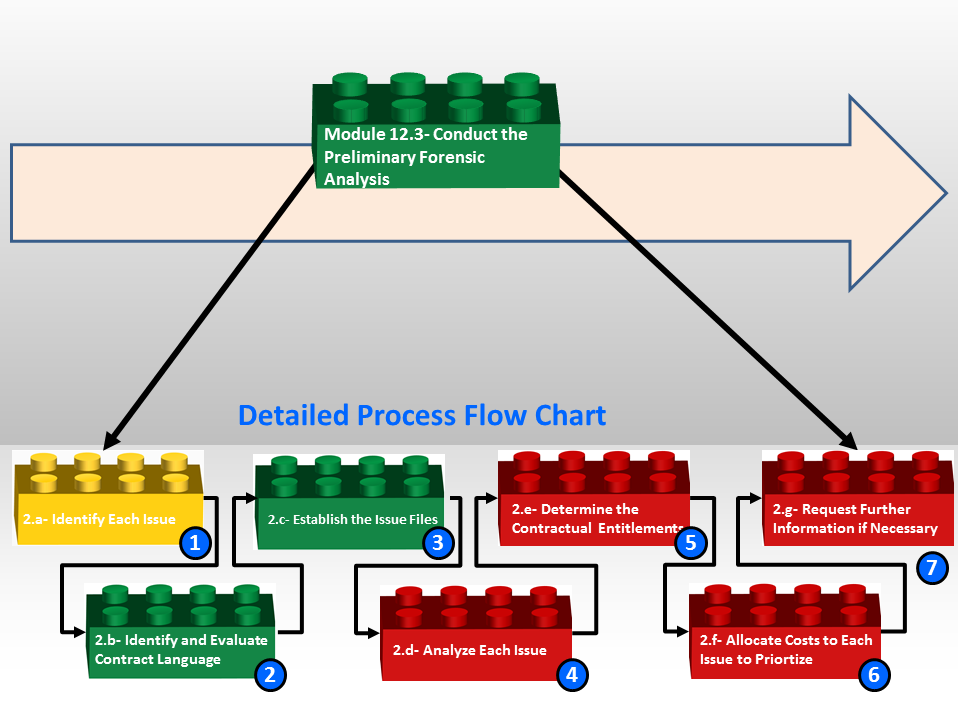
Figure 2 - Detailed Process Flow Chart for Conduct the Preliminary Forensic Analysis
Source: Adapted from Livengood, John (2014) “Construction Claims A to Z" CDR 1484 AACE Symposium Bangkok, Thailand
The graphic above provides with a more detailed step by step approach which we can use to guide us through the process of conducting a preliminary analysis.
(1) The first step is to define the issues. This is the process which initiates the Preliminary Forensic Analysis. To do that, we start out with the contract documents and see what was supposed to be done. Then we look at other documents showing what actually was done and the comparison between what was legally obligated to be done and what actually was done is how we determine the issues. These issues can be in the form of technical or quality issues, time issues, cost issues or any other issue where what was delivered or produced differed substantially from what was required.
(2) The second step is a PLANNING PROCESS where we look at the contract documents and identify which paragraphs or phrases in the contract documents relate to the issue. Not only do we need to look at the “shall” clauses but also for any clauses in the contract documents which serve to clarify, modify or conflict. If the issues are not worth fighting over, or if there is no solid basis in fact to pursue the claim or dispute further, it will often end here, with a settlement between the parties.
(3) The third step is also a PLANNING PROCES where we compile an issue file. In this folder (electronic or physical) we put all the documentation we can locate which helps us put together the story of what happened, why it happened and who was responsible for whatever happened. A gain, if the issues are not worth fighting over, or if there is no solid basis in fact to pursue the claim or dispute further, it will often end here, with a settlement between the parties.
(4) Having compiled all the documentation, we step back and analyse each issue understanding that not all issues are worth fighting over and in many instances, the issues were caused by conflicting, ambiguous or sometimes missing pieces of information. The classic example of this would be where there were conflicts or ambiguity in the contract documents and the contractor chose to follow or interpret the contractual clause in a way which was most beneficial to him/her. If the parties cannot or will not agree, then we start to actually process the claim or dispute. Thus the remaining processes are EXECUTION processes.
(5) Having identified which issues are valid, and having compiled enough documentation supporting one party being right or more right than the other, we look again at the contract and see what remedies or relief the contract offers. In many cases, the contract document spells out what the parties are entitled to in terms of corrective action or equitable adjustment to the time of delivery and/or the costs.
(6) Having established what relief or remedies the contract allows for, the next step is to determine what the cost (or time) impacts are. This is a “common sense” analysis to determine exactly how much is at stake. Given even the most non-confrontational dispute resolution processes take time and money, if the amount at stake is only a small amount, do both or either party really want to spend more time trying to determine who is “right” and who is “wrong” worth the amount involved?
(7) Lastly, if there is further information necessary or if further information is found or produced by either party to the claim, then that has to be considered and the process feeds back to step 3.c and repeats.
12.3.2 INPUTS
- Records And Other Documentation Progress Of Design;
- Progress Of Construction; (See Module 9- Managing Project Progress)
- Changes To Obligations; (See Module 10- Managing Project Change)
- Meeting Contract Requirements, Quality Control, Inspection Reports & Delivery Records (See Module 3.5- Accepting Completed Deliverables; Module 5- Managing Contracts And Module 9- Managing Project Progress)
- Labor/Equipment Utilization Records (See Module 6- Managing Resources And Module 9- Managing Project Progress)
- Progress Photos (See Module 9- Managing Project Progress)
12.3.3 TOOLS & TECHNIQUES
12.3.3.1 Record Keeping
It is rare to find any text book on construction management or construction claims that does not emphasise the importance of record keeping by the Contractor and the Owner. Indeed, it is rare that you meet anyone involved in claims not to express this same message. And there is very good reason for this.
The Business Dictionary defines “Record ” to be: “ 1.Document that memorializes and provides objective evidence of activities performed, events occurred, results achieved, or statements made. Records are created/received by an organization in routine transaction of its business or in pursuance of its legal obligations. A record may consist of two or more documents. 2. All documented information, regardless of its characteristics, media, physical form, and the manner it is recorded or stored. Records include accounts, agreements, books, drawings, letters, magnetic/optical disks, memos, micrographics, etc. Generally speaking, records function as evidence of activities, whereas documents function as evidence of intentions. And “Record Management” to be the “Systematic administration of records and documented information for its entire life cycle, from creation/receipt, classification, use, filing, retention, storage, to final disposition. "
A record, therefore, is an opportunity for the Owner or the Contractor to ‘preserve’ information or knowledge of the decisions, actions and conditions that occurred during the course of a construction project. These can then be relied on later, if necessary, to support particular statements. It is arguable, that the only reason for keeping records is to be able to rely on them in the future, in the event that a dispute about a statement arises. Of course, in reality, there are other reasons to keep records, for instance, tax legislation demands keeping of tax receipts or certain Health, Safety and Environment regulations demands the keeping of particular records. But ultimately, the reason for these may well lie in the ability to rely on statements made.
But why do we need them? Unfortunately, people are not as reliable as documentary evidence. That is not to say that all people are not as reliable, just that, on balance, some documentary evidence at the time of the event being recalled, is likely to carry more weight than an individual. There are, sadly, people who will deliberately distort the record of what happened, but generally the accuracy of records is determined by much less sinister intentions. After all, it is the nature of construction, reflected in its competitiveness, that the contractor will generally seek to maximize its position under a contract and the owner or principal to do the converse.
This concept is further complicated by the reliability of the testimony of witnesses to actual events. Eye witness testimony is a fascinating subject within the field of psychology. There have been many experiments conducted over the years to establish the reliability of eyewitness testimony. Sir Fredrick Bartlett was one of the UK’s early psychologists and a pioneer of cognitive and experimental psychology in Great Britain. He devised a number of experiments to test the accuracy of people’s memory when recalling events. Bartlett established that the longer the time between recalling the events and the events themselves, the less accurate the recollections are. This makes perfect sense, but the results are interesting in a construction or engineering context. The time at which records are made is an important consideration when trying to establish, from the records, what is likely to have happened when looking back over a project. Contemporaneous records are those that have been produced at the time as opposed to those records produced at a later time (often from memory).
Another cause of inaccurate record keeping can be the nature of the person taking those records. Most people find objectivity difficult. There is usually some bias towards their own ‘view of the world’ rather than readily accepting another’s point of view.
However, even incomplete or inconclusive records are, nonetheless, invaluable in trying to piece together a picture of what was happening on a site at any given time. So although we can strive for perfect record keeping, not achieving it entirely should not prevent us from establishing what occurred or did not occur over the duration of the project.
Typical records that enable us to do that include the following, which I have explained in further detail below and relate to the following areas:
- Progress of Design
- Progress of Construction
- Changes to Obligations
- Meeting Contract Requirements
- Quality Control
- Inspection Reports
- Delivery Records
- Equipment Utilization Records
- Progress Photos
12.3.3.2 Requests For Information (RFI) / Technical Queries (TQ) Status Reports
It is quite usual for construction and engineering designs to require some clarification from the constructor. There are often some terminological or construct-ability issues that the constructor may not have seen expressed in the way presented by the designer that calls for further explanation. Commonly these are referred to as Requests for Information or Technical Queries and they are generated by the constructor.
It can be valuable to the smooth running of this process to have set up an appropriate template or pro-forma for the constructor to use together with a register to monitor progress and outcomes. As auditability of projects is becoming more and more prevalent, from accountants and quality assurance accreditors, identifying a clear and transparent path from raising the query to the owner’s team providing a solution is absolutely fundamental to efficiently demonstrating this. No owner or contractor wants to spend valuable time some time later trying to marry up queries with variation orders or contractor directions.
Requests for Information (RFI)or Technical Queries (TQ) do sometimes lead to variations to the originally contemplated work, sometimes by a proposal from the constructor (for an alternative approach for its convenience) or by further consideration from the design team. It will be important to the construction team to know what changes have been made to the original design to predict any impact on the time allowed for completion and to measure progress against, and important to the commercial team to predict any impact on cost and to make appropriate allowances in the forecast. Keeping an up to date RFI/TQ register showing this information will allow them to keep track of this.
12.3.3.3 Design / Procurement Status
Irrespective of whether contracts are awarded as construct only or design and construct, the parties will want to know the progress of the design and the procurement of the respective elements. In a construct only project, the constructor will have made some assumptions (possibly based on representations made by the owner) regarding the likely release of design information. Some contracts specifically include design information release date schedules, indicating the dates by which design information will be provided to the constructor. Delay/impacts to these dates may give rise to an entitlement to an extension of time to the date for completion. Indicating that dates will not be met in advance may allow mitigation measures to be instigated averting potential delay/impacts. Providing constructors with progress of design (and owner procured items) will help with forewarning constructors of any problems that may arise in meeting dates. Some caution should be noted though with constructors ‘slowing down’ their progress to meet owner caused delay/impacts in the (so-called) pacing argument.
In a design and construct contract, the owner will want to know the progress being made by the constructor with design and procurement so that an early warning of potential problems can be identified and remedial actions put into place as soon as possible. Design and procurement progress status reports will help to do this.
12.3.3.4 Short Term Programmes and Method Statements
Given that often projects involve considerable number of different activities which can take long periods of time to perform, it is much more manageable for project staff to work with ‘snap shots’ of a program rather than everything all at once. Different ‘snap shots’ suit different projects but it is quite often that a period of about 6 weeks is used to identify what work is coming up and how that planned work is progressing. These six week look aheads are extremely useful in verifying what actually happened on site at a given time. The format of these should be substantially the same as the contract program.
How the constructor intends to carry out the work from a construction and health and safety point of view are very good indicators as to how long any particular activity is likely to take. It is essential that these are provided by the constructor with sufficient detail and in sufficient time to review.
12.3.3.5 Labour Allocation Sheets
A record of what labour and plant was employed on the project is absolutely essential. These should provide a complete record of what work was being undertaken, by whom and with what and for how long on each day of the project. They should indicate if the work was variation work or carried out at the contractor’s risk or contract works. They should also record if the work being performed was remedial work or not.
12.3.3.6 Progress Photos
Progress Photos are one of the most valuable records of what happened on any given day. However, for the best results, these should be taken at regular intervals from specific locations although particular additional photos should be taken of any contentious work the subject of which may later become in dispute. Useful photos include those that are taken at regular intervals from a fixed point or aerial photos.
12.3.3.7 Progress Reporting / Requirements of Progress Report
Construction Contracts usually set out the progress reporting requirements. These allow the project team to have some measure of the health of the project and the likelihood of completed as anticipated. Different contracts have different requirements and it is important to know what a given contract requires.
The schedule updates are one of the most useful documents to establish what has happened at any desired period of the project.
It is important that these accurately reflect the actual events and are not manipulated to present an alternative position that may be used at a later date.
12.3.3.8 Notice of Delay / Impacts and Disruption Registers
Most construction contracts require notification by the Constructor of events that are likely to or have caused delay/impact and/or disruption. Some contracts require both parties to give notice of events that are likely to cause delay/impact or disruption. It is important to understand the requirements of any given contract as in some legal jurisdictions failing to comply with these requirements will eliminate any entitlement otherwise due. These are known as a conditions precedent. It is also important, for the same reason, to ensure that not only are the time requirements of any notification provisions are met, but also the information requirements are met.
The idea behind the notification provisions is to identify the likely effect of particular events in sufficient time to allow the parties to take whatever necessary action suitable. In some instances this may be allocating sufficient contingency, in others it may be to review the event and put into place an alternative action plan, i.e. accelerating the work. Notice provisions sometimes double as claim provisions, setting out not only what the delay/impacting event is but also requiring quantification of the effect at a suitable time. This can often be overlooked to the detriment of the Constructor affected by a delay/impacting event.
Construction Contracts often do not provide specifically for the additional cost of disruption to the Constructor of a particular event or requirement of the Owner. This means that an action for damages may well need to be made. Where the contract does provide for compensation in the event of disruption, it is exceedingly rare for a mechanism to measuring that disruption to be provided. Early consideration should be given to this to avoid drawn out disputes.
For both Delay/impact and Disruption events, registers (ideally with relevant correspondence and reports) should be regularly maintained. When trying to assess the impact of delay/impacts or disruptive events on the project, this will become invaluable.
12.3.3.9 Method Statements / Phasing Diagrams
Construction Method Statements and other documents that are produced to detail how the construction is planned to be carried out are the bedrock of planning. These set out what material, equipment and other resources including labour is going to be required to perform the tasks making up the project. Every Contract is different in their requirements for method statements, but generally, all will require particularisation of the steps involved in the construction so as to ensure that they have been thought through properly, sensibly and safely. Particular emphasis is usually made on how construction will be performed safely where the construction is considered hazardous.
A planner should have intimate knowledge, as should an estimator, of how the works are going to be performed on a particular project and use this information to determine the duration and sequencing of the activities in the program.
When reviewing any program, particular interest should be given to the method statements to ensure that these durations and sequences are appropriate for the approach to construction that is planned.
12.3.3.10 Information Available
In Module 9- Managing Project Progress the importance of good record keeping has been emphasised. The records required for good project management should be sufficient for delay/impact analysis and in general there should be no need to compile additional records. Notwithstanding this record keeping is often poor and it is not until a dispute arises that sufficient records are kept.
It is also helpful if records are agreed by the parties during the course of the works. Issuing the Owner’s Representative with such information as regular progress updates and labour records will give the Owner’s Representative the chance to comment at the time. Once the works are complete complaints by the Owner’s Representative that the contractor provided insufficient labour will have diminished credibility if no contemporaneous comments were recorded, particularly where labour records have been regularly issued.
12.3.3.11 Quality Assurance or Control Records
Quality Assurance records are a very good source of records of when particular elements of a project have been completed. Different industries, projects and contracts have different requirements. Some industries allow for greater error tolerances than others. In Oil and Gas Projects, where safety is paramount, there is generally a very high level of quality documentation, ensuring that welds, equipment and material has been checked and double checked for defective work or other defects.
Typical projects may have QA records for the following construction elements:
- Concrete test results
- Weld Certificates
- Project close-out procedures
- Regulatory overview
- Earthwork inspection
- Excavation and confined space safety
- Underground pipeline construction
- Structural Steelwork erection
- Scaffolding Safety Certificates
QA does not only relate to construction itself. Many companies now include quality systems to ensure that contractual obligations have also been met. Obvious examples include drawing and specification revisions, correspondence and insurance renewal certificates but less obvious examples may include notification of claims, settlement of third party claims and subcontract correspondence.
QA documents are useful documents to refer to when preparing any as-built program and actual dates have not been recorded on progress updates.
In today’s society, demanding more accountability than ever before, there is no excuse for not keeping records of what actually happened on site at any given time. The only reason for there to ever be a lack of good records is bad project management. It is up to all of us in the construction and engineering industry to ensure that we do our part to keep accurate records. Keeping records of the type above will go some way to achieving that aim.
- Enterprise/Web Based Reports;
- Verification of Cost Particulars;
- Progress Data Validation Requirements;
- Forensic disclosure and discovery procedures.
- Strategies to deal with no or insufficient records
- Dedicated software apps for data storage and retrieval (x-ref SD07)
12.3.3.12 Information from Witnesses of Fact
It can be useful to interview the project participants who would normally be the fact witnesses, but care should be taken that information received from these participants is not at variance with the contemporaneous documentation from the project. Witness memories can be unreliable, or biases of the participants from long periods of dealing with the project issues may show up in expressions of opinion as fact.
When there are witness statements, those are more likely to have been researched for accurate documents than depositions relying upon the witness memories and question and answer sessions. In either case, research into the documents should support reasonable and accurate fact witness conclusions.
12.3.4 OUTPUTS
- Documentation supporting/refuting a claim or dispute
- GO/NO GO decision to pursue or otherwise escalate the claim/dispute or abandon it
12.3.5 REFERENCES & TEMPLATES
- NCHRP Report 747 (2013) Guide For Conducting Forensic Investigations Of Highway Pavements
- AACE’s Certified Forensic Claims Consultants Study Guide (2014) Http://Www.Aacei.Org/Cert/Cfcc/Cfcc_Certstudyguide.Pdf
- Livengood, John, Kelly, Patrick (2015) “The Future Of Forensic Schedule Analysis: The Good, The Hard And The Scary- Part 1” Http://Www.Arcadis-Us.Com/Future_Of_Forensic_Schedule_Analysis_Good_Hard_Scary.Aspx
- Case Study- Mulholland, S. S (2009) Turner Construction And The University Of Florida. “Preliminary Forensic Analysis Report” Http://Www.Ortho.Ufl.Edu/Sites/Ortho.Ufl.Edu/Files/Pdf/Osmidocs/Usbc_Forensic_Investigation_Findings.Pdf
- Livengood, John (2014) “Construction Claims A To Z’ Cdr 1484 Aace Symposium Bangkok, Thailand
12.4 - Module 12-4 - Conduct The Schedule Analysis
12.5 - Module 12-5 - Damage Analysis Phase
12.6 - Module 12-6 - Settlement Negotiations Phase
12.7 - Module 12-7 - Formal Disputes Resolution
GPCCAR M12-3, Revision 1.00