12.0 - MANAGING FORENSIC ANALYSIS
12.1 - Module 12-1 - Introduction to Managing Forensic Analysis
12.2 - Module 12-2 - Creating The Forensic Analysis Process & Procedures Manual
12.3 - Module 12-3 - Conduct the Preliminary Analysis
12.4 - Module 12-4 - Conduct the Schedule Analysis
12.5 - Module 12-5 - Damage Analysis Phase
12.6 - Module 12-6 - Settlement Negotiations Phase
12.7 - MODULE 12-7 - FORMAL DISPUTES RESOLUTION
12.7.1 INTRODUCTION
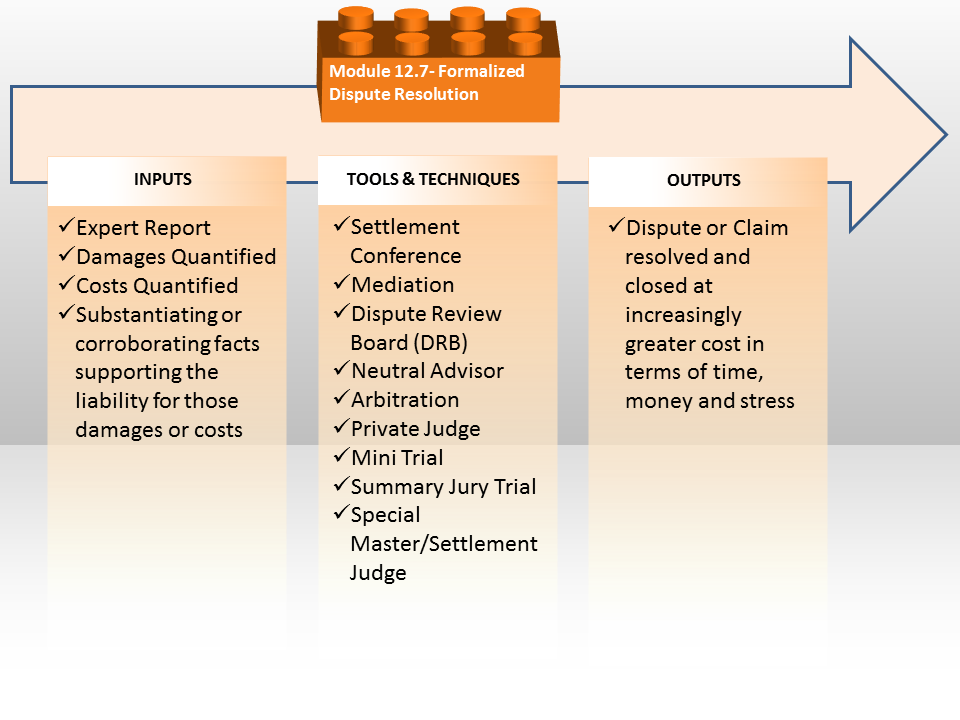
Figure 1 - The Conduct Formalized Dispute Resolution Process Map
Source: Guild of Project Controls
In this module, having been unsuccessful in preventing or minimizing claims using Partnering or Integrated Project Delivery and using relatively informal negotiations, we now have to move up the escalation ladder to more formal and structured approaches, often involving professionals specifically trained in resolving disputes and/or settling claims.
Our Business Dictionary defines “Alternate Dispute Resolution” (ADR) to be the “Procedures or processes (such as arbitration, conciliation, mediation) that are voluntarily adopted to resolve controversies (or to settle disagreements) before taking recourse to legal action (litigation).”
To elaborate a bit more, the Cornell University Law School Legal Information Institute explains that:
“Alternative Dispute Resolution" (ADR) refers to
- "any means of settling disputes outside of the courtroom. ADR typically includes early neutral evaluation, negotiation, conciliation, mediation, and arbitration. As burgeoning court queues, rising costs of litigation, and time delays continue to plague litigants, more states have begun experimenting with ADR programs. Some of these programs are voluntary; others are mandatory."
- "While the two most common forms of ADR are arbitration and mediation, negotiation is almost always attempted first to resolve a dispute. It is the preeminent mode of dispute resolution. Negotiation allows the parties to meet in order to settle a dispute. The main advantage of this form of dispute settlement is that it allows the parties themselves to control the process and the solution.”
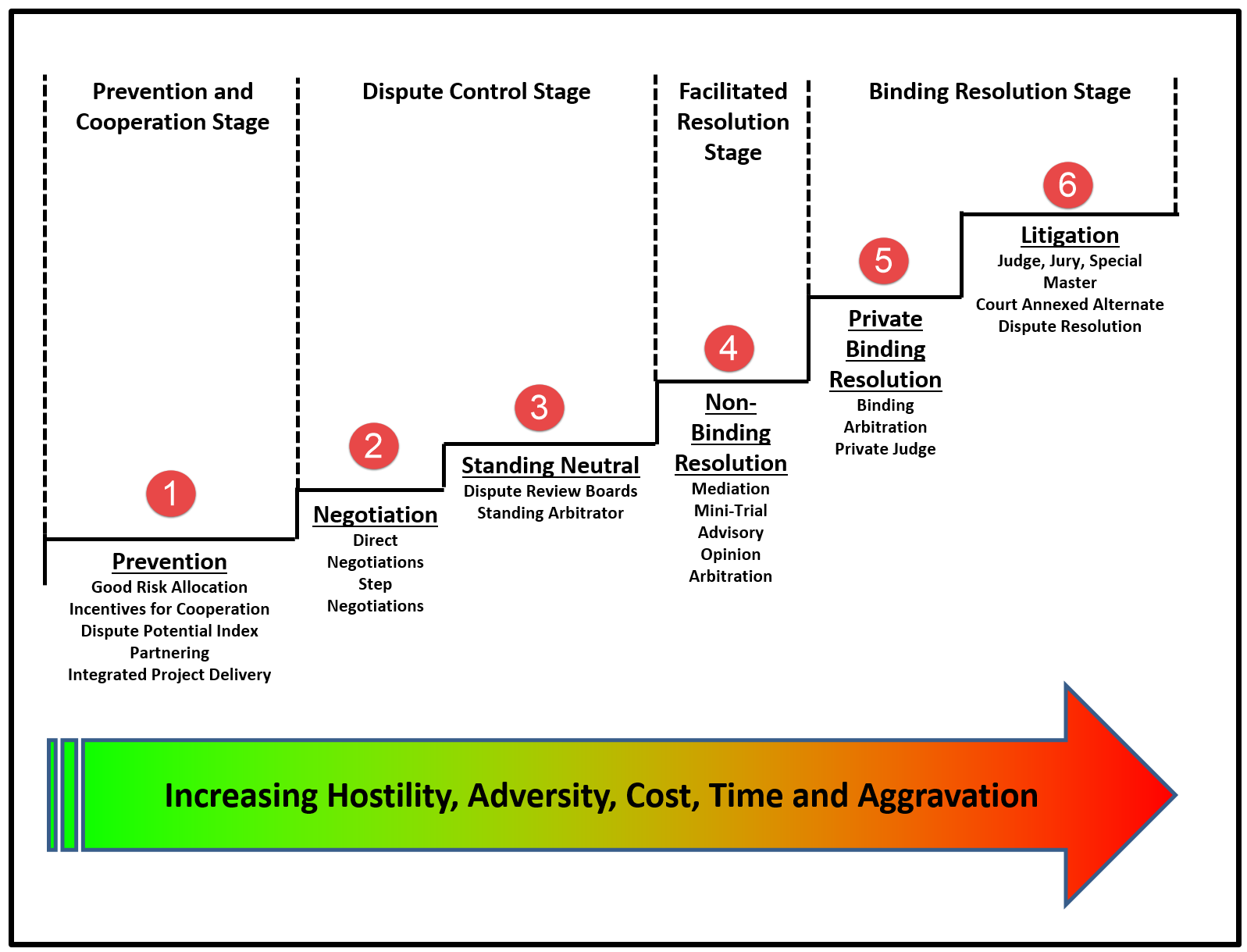
Figure 2 - Illustrating the Escalation Steps in the ADR Process
Source: Adapted from The Handbook of Conflict Resolution: Theory and Practice 3rd Edition, 2014, Coleman, Deutsch & Marcus
In the previous module we looked the preventative, collaborative and cooperative alternative dispute resolution tools/techniques.
(1) In this module we are going to focus on the more formal, confrontational and hostile approaches as shown in (2), (3), (4), (5) and (6) in the above graphic. Not only are these more adversarial in nature but they also cost more in terms of time and money, not to mention the stress and aggravation.
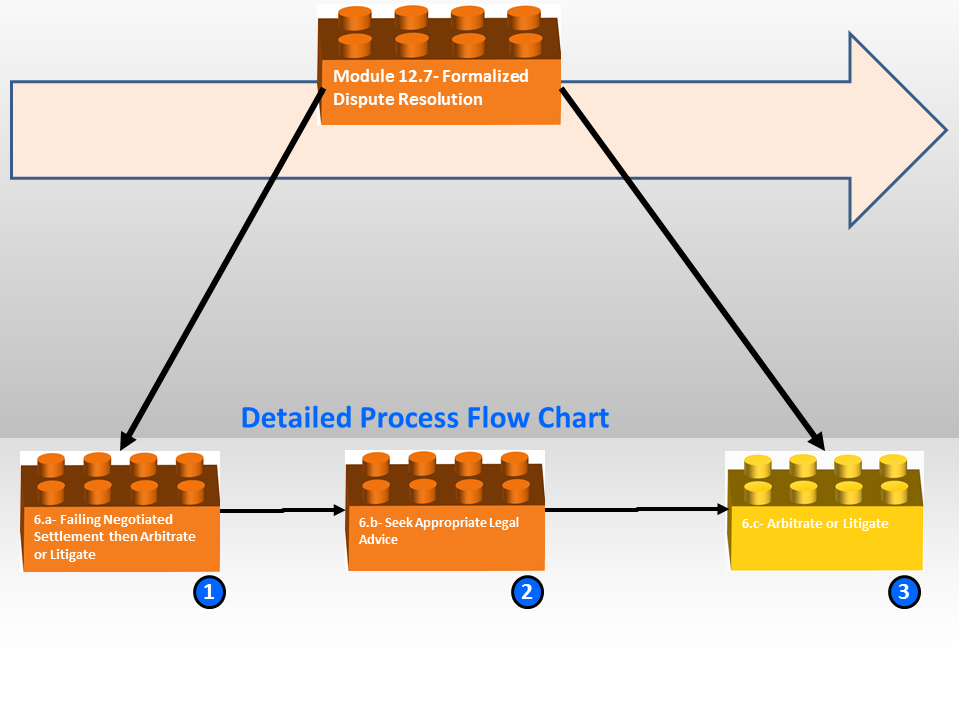
Figure 3 - Detailed Process Flow Chart for Formal Dispute Resolution Process
Source: Adapted from Livengood, John (2014) “Construction Claims A to Z" CDR 1484 AACE Symposium Bangkok, Thailand Having exhausted all less adversarial not to mention expensive and time consuming methods of dispute resolution, the only options left are the more formalized dispute resolution tools/techniques which are the various forms of arbitration or litigation.
Increasing many projects end up in some form of dispute resolution process, there have been many innovative approaches to both arbitration and litigation, which are outlined below.
The process itself is fairly self-explanatory:
(1) The less adversarial and expensive dispute methods having failed, all parties need to “lawyer up” and not only engage a legal firm but also engage one or more “subject matter experts” to serve as “Expert Witnesses”.
(2) Engage your legal team, including expert witnesses
(3) Initiate the process of formal litigation, which is beyond the scope of this document as it varies from country to country.
The items below provides a more complete explanation or elaboration supporting how to implement or follow this detailed process map.
12.7.2 INPUTS
- Expert Report(S)
- Damages Quantified
- Costs Quantified
- Substantiating Or Corroborating Facts Supporting The Liability For Those Damages Or Costs
12.7.3 TOOLS & TECHNIQUES
12.7.3.1 Settlement Conference
Settlement conferences may be either mandatory or voluntary. In both types of settlement conferences, the parties and their attorneys meet with a judge or a neutral person called a "settlement officer" to discuss possible settlement of their dispute. The judge or settlement officer does not make a decision in the case but assists the parties in evaluating the strengths and weaknesses of the case and in negotiating a settlement. Settlement conferences are appropriate in any case where settlement is an option. Mandatory settlement conferences are often held close to the date a case is set for trial. Click on the video to the left to see a demonstration of the settlement conference process.
12.7.3.2 Mediation
In mediation, an impartial person called a "mediator" helps the parties try to reach a mutually acceptable resolution of the dispute. The mediator does not decide the dispute but helps the parties communicate so they can try to settle the dispute themselves. Mediation leaves control of the outcome with the parties. Click the video on the left to see a demonstration of the mediation process.
Cases for Which Mediation May Be Appropriate:
- Mediation may be particularly useful when parties have a relationship they want to preserve. So when family members, neighbors, or business partners have a dispute, mediation may be the ADR process to use. Mediation is also effective when emotions are getting in the way of resolution. An effective mediator can hear the parties out and help them communicate with each other in an effective and nondestructive manner.
Cases for Which Mediation May Not Be Appropriate:
- Mediation may not be effective if one of the parties is unwilling to cooperate or compromise. Mediation also may not be effective if one of the parties has a significant advantage in power over the other. Therefore, it may not be a good choice if the parties have a history of abuse or victimization.
12.7.3.3 Dispute Review Board (DRB)
The Australian Institute of Arbitrators and Mediators defines a Dispute Review Board to be:
- “Dispute Review Boards are made up of typically one or three experts who can assist in the management of conflicts and disputes in longer term and large projects.
- Relatively unused in Australia they can be a very useful adjunct to the project planner. Typically, the DRB is established shortly after execution of the contract documents, as performance of work on the project begins.
- A DRB has two basic responsibilities. The first is to become familiar with the project during construction. This process begins with the Board’s review of the plans and specifications, followed by periodic visits to the project. During these visits, in addition to viewing the work in progress, the DRB members meet with the owner’s and contractor’s staff at the job site to discuss the progress of the work, as well as potential issues on the horizon. These activities on the part of the DRB play a useful role in preventing disputes from arising because the parties are encouraged to clearly and objectively state their positions. They also provide the DRB with valuable background information should it need to hear a dispute.
- The DRB’s second major responsibility is conducting hearings on any disputes referred to it. At a hearing, which usually is held at the construction site, owner and contractor representatives who have first-hand knowledge of the issues, are given the opportunity to present facts, documents, and the rationale in support of their respective positions. Formal recording of the hearing and participation by lawyers are both relatively rare. Following the hearing the DRB issues a written recommendation or a decision, setting forth its analysis and opinion. If one or both parties elect to reject the recommendation, the issue proceeds to the next stage of dispute resolution under the terms of their agreement.
- DRBs were first used about 25 years ago in the USA. Since then they have been used on over 800 projects, primarily those involving public infrastructure construction. DRBs have been credited with a 99% success rate.”
There is a wealth of information available on Dispute Review Boards for those interested in learning more:
- Dispute Resolution Board Foundation Standards of Practice Manual http://www.drb.org/manual.htm
- McMillan, Daniel J (2011) Dispute Review Boards: What the Case Law Says About Them https://www.adr.org/aaa/ShowPDF%3Fdoc%3DADRSTG_011803
- Mastin, Deborah Bovarnick, (2013) Dispute Review Boards to the Rescue ABA Forum on Constrcution Law Vol. 15 No. 4 http://www.americanbar.org/publications/under_construction/2013/novembe…
12.7.3.4 Neutral Advisor
In neutral evaluation, each party gets a chance to present the case to a neutral person called an "evaluator." The evaluator then gives an opinion on the strengths and weaknesses of each party's evidence and arguments and about how the dispute could be resolved. The evaluator is often an expert in the subject matter of the dispute. Although the evaluator's opinion is not binding, the parties typically use it as a basis for trying to negotiate a resolution of the dispute. Click on the video to the left to see a demonstration of the neutral evaluation process.
Cases for Which Neutral Evaluation May Be Appropriate:
- Neutral evaluation may be most appropriate in cases in which there are technical issues that require special expertise to resolve or the only significant issue in the case is the amount of damages.
Cases for Which Neutral Evaluation May Not Be Appropriate:
- Neutral evaluation may not be appropriate when there are significant personal or emotional barriers to resolving the dispute.
12.7.3.5 Arbitration
In arbitration, a neutral person called an "arbitrator" hears arguments and evidence from each side and then decides the outcome of the dispute. Arbitration is less formal than a trial, and the rules of evidence are often relaxed. Arbitration may be either "binding" or "nonbinding."Binding arbitration means that the parties waive their right to a trial and agree to accept the arbitrator's decision as final. Generally, there is no right to appeal an arbitrator's decision. Nonbinding arbitration means that the parties are free to request a trial if they do not accept the arbitrator's decision. Click on the video to the left to see a demonstration of the arbitration process.
Cases for Which Arbitration May Be Appropriate:
- Arbitration is best for cases where the parties want another person to decide the outcome of their dispute for them but would like to avoid the formality, time, and expense of a trial. It may also be appropriate for complex matters where the parties want a decision-maker who has training or experience in the subject matter of the dispute.
Cases for Which Arbitration May Not Be Appropriate:
- If parties want to retain control over how their dispute is resolved, arbitration, particularly binding arbitration, is not appropriate. In binding arbitration, the parties generally cannot appeal the arbitrator's award, even if it is not supported by the evidence or the law. Even in nonbinding arbitration, if a party requests a trial and does not receive a more favorable result at trial than in arbitration, there may be penalties
12.7.3.6 Private Judge
Jim Zack in his 1998 paper “Resolution of Disputes — The Next Generation“ , described the “Rent-a-Judge” approach to be:
- “In some construction disputes, there are issues of law which must be decided in order to reach resolution of the dispute. Generally issues of law ought to be decided by judges as they are skilled and experienced in deciding legal issues. But, litigation need not result. One form of ADR which allows input from judges but avoids the need for litigation is the Rent-A-Judge or Private Judge concept. The concept is to retain the services of a retired judge who is experienced with construction litigation.
- The private judge will typically conduct the process in a formal manner resembling the litigation process but without the need to await an available judge and courtroom. The private judge will generally render decisions which may be either advisory or determinative of the issue, depending upon the terms of the agreement between the parties.
- The advantages of this form of ADR follow. Retired judges practicing this type of ADR are most often skilled in managing complex construction cases and making decisions. The cost of this form of ADR is typically lower than many other forms and certainly a great deal less than litigation, generally being split between the two parties to the dispute. Finally, the speed with which a hearing can be established and held is considerably faster than litigation.
- The primary disadvantage cited by most is that the underlying process remains the same regardless of the fact that the trier of fact is a retired judge. That is, if a private judge is used in a trial, in arbitration, or in mediation, the process is still a trial, arbitration or mediation.”
12.7.3.7 Mini Trial
Zack goes on to explain in the same paper, the pros and cons of a Mini Trial:
- “A Mini-Trial is a voluntary, confidential and non-binding procedure. Generally, they involve summary presentations by attorneys and experts of the best case for each side, followed by questions and rebuttals. Mini-Trial agreements frequently limit these presentations to a half-day or a single day for each side. The Mini-Trial concept requires that top management representatives (with authority to settle) participate in the proceeding. The Mini-Trial is typically presided over by a jointly selected neutral who advises the parties, after the presentations are complete, concerning the apparent strengths and weaknesses of the cases. The neutral then assists the parties in negotiating a settlement at this point, somewhat like a mediator. The concept is to get top level management to sit through and listen carefully to both their own best case as well as that of the other side, and to reach a management decision that is based upon a realistic appraisal of both positions.
- The advantages of this system are the relatively low cost (compared to litigation or arbitration) and the fact that each party gets to present their entire case as if in court or in arbitration. Additionally the neutral advises and assists top management of both parties in finding ways to resolve the dispute rather than rendering a decision. Non-binding results, privacy, party participation and control over the process are also considered advantages of this ADR form.
- The disadvantages of the Mini-Trial system arise if the top management personnel were personally involved in the issues in dispute thus making them unsuitable as panel members. Other disadvantages arise if the issues in dispute involve legal matters or matters of credibility as management personnel may not be trained to handle such issues. Finally, this system is not cost effective if the matter in dispute is not very costly.”
12.7.3.7 Summary Jury Trial
Zack also explains that there is a more formal version of the Mini Trial in which not only is the judge “rented” but also a jury of 6. This is known as a Summary Jury Trial and is similar to the Mini-Trial in many respects.
- “The concept is that the attorneys for both parties are each given one hour to summarize their case before a “rented” jury of six people. Introduction of evidence is obviously limited due to the time limitation and witnesses and experts are not allowed to participate in the proceeding. The neutral advisor may be either a sitting judge from the local court or may be a Rent-A-Judge. After the case summaries have been presented, the judge provides a short explanation of the law concerning the issues in dispute and the jury retires to the jury room. The jury tries to reach a consensus opinion on the case. Failing that, individual juror views are presented anonymously. Generally, Summary Jury Trial verdicts are advisory and not binding (but may be made so by agreement). The concept is for the parties to gain an understanding of how a potential jury will react to the case prior to going to trial.
- The advantages of the system are that the cost is relatively low compared to litigation and the time needed to present the case is minimal. Another significant advantage is that when each of the parties has to summarize their case into a precise one hour presentation, both sides are forced to focus on real issues and forego all legal theatrics.
- The single most commonly cited disadvantage is that the jury has to form an opinion based solely on a one hour presentation from each side, a timeframe that is short in the extreme, given the complexity of the typical construction case.”
12.7.3.9 Special Master/Settlement Judge
Lastly, Zack explains the use of Special Masters or Settlement Judges:
- “The Special Master form of ADR (sometimes referred to as a Settlement Judge) has been called “ADR's last clear chance before trial”. The concept of a Special Master is for the court to appoint someone with authority and time to control the discovery process (such as deciding objections to deposition questions, document disputes and claims of privilege), to rule on all pretrial matters in lieu of a judge, and to facilitate settlement discussions. Special Masters may be requested by either or both parties or may be imposed unilaterally by a court. Payment is typically split between the disputants. By putting the litigation into a rational framework, the Special Master is often able to help the parties reach a settlement prior to the trial.
- The advantage of the Special Master system is that it can save a great deal of cost during the pretrial period with respect to needless discovery battles and help facilitate settlement discussions.
- The perceived disadvantages of this system are that a Court may grant too much authority to the Special Master (for example Summary Judgement Motions). Some also fear the possibility of private discussions between the Special Master and the trial judge concerning the details of settlement negotiations or positions asserted by the parties.”
12.7.4 OUTPUTS
- Dispute Or Claim Resolved And Closed, But At A Higher Cost In Terms Of Money, Time And Stress
12.7.5 REFERENCES & TEMPLATES
- National Center For State Courts- Http://www.Ncsc.Org/Topics/Civil/Alternative-Dispute-Resolution-Adr/Resource-Guide.Aspx
- Alternate Dispute Handbook (N.D.) Https://www.Opm.Gov/Policy-Data-Oversight/Employee-Relations/Employee-Rights-Appeals/Alternative-Dispute-Resolution/Handbook.Pdf
- Harvard Law School Library- Http://Guides.Library.Harvard.Edu/C.Php?G=310591&P=2078474
- Cornell University Law School Legal Information Institute Https://www.Law.Cornell.Edu/Wex/Alternative_Dispute_Resolution_Service
- Society Of Construction Arbitrators- Http://www.Constructionarbitrators.Org/
- Chartered Institute Of Arbitrators- Https://www.Ciarb.Org/
- Institute Of Arbitrators And Mediators- Australia Https://www.Iama.Org.Au/
- “Alternative Dispute Resolution Guidelines” - It promotes the highest standards for Alternative Dispute Resolution among ADR practitioners like ombudsmen, arbitration commissioners and tribunals (but is not a free book) - http://www.amazon.com/Alternative-Dispute-Resolution-Guidelines-Project-ebook/dp/B018EHAMT4
GPCCAR M12-7, Revision 1.02