05.0 - MANAGING CONTRACTS
05.1 - Module 05-1 - Introduction to Managing Contracts
05.2 - Module 05-2 - Develop The Managing Contracts Policies & Procedures Manual
05.3 - Module 05-3 - Select Project Delivery Method / Contract Type
05.4 - Module 05-4 - Tendering & Bidding The Project
05.5 - MODULE 05-5 - MANAGING THE CONTRACT (OWNER & CONTRACTOR)
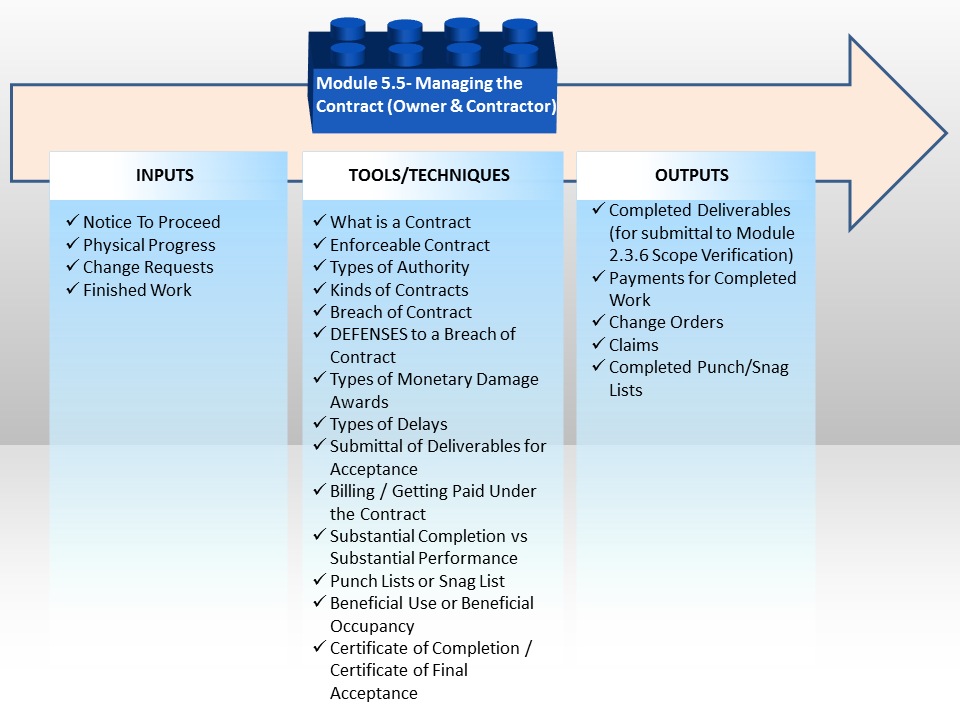
Figure 1 - The Managing the Contract Process Map
Source: Guild of Project Controls
05.5.1 INTRODUCTION
While they are closely related, managing PROGRESS and managing CONTRACTS are not the same. Managing PROGRESS, which we cover in Module 9, relates to measuring and assessing the physical progress in the field while managing CONTRACT is an ADMINISTRATIVE responsibility or function related primarily to ensuring that all the contractual terms and conditions (the contractual “shall” clauses”) have been met or fulfilled by all parties.
In many organizations both owner and contractor alike, there is a position called “Contract Manager” which is separate and distinct from that of Project Manager or Project Controls Manager. For small to medium sized contractors the responsibilities of the contract manager are often assumed by the project manager and/or split between the project manager and project control lead, but for large organizations or even for a large project, there may very well be one or more contract managers, both on the owner’s and contractors side.
The University of Exeter has created a brief outline of the roles and responsibilities of a Contract Manager which apply equally well to both owner and contractor’s contract managers:
Contract Manager Duties
A good place to start is to read the contract all the way through a couple of times. Although you may have been involved in the award of the contract; to understand the possible pitfalls, difficult negotiation points, and the commercial and contractual risk in the deal you may wish to discuss with colleagues in the procurement team.
A useful, if laborious, way of becoming more familiar with the contract is to develop a tool for tracking contract obligations and deliverables. This can be an Excel spreadsheet with the following suggested headings:
- Contract document (e.g., “Performance Measurement Baseline”);
- Contract section (e.g., “Division 1”);
- Contract reference (e.g., “para 1.1”);
- Title (e.g., “General Conditions”);
- Description (e.g., “Contractor shall prepare and submit a progress status report covering the prior period, the current period and looking ahead one period into the future”);
- Due date (e.g., The due date is the last Thursday of the month and the data date must be no more than 48 hours prior to the published date);
- Responsible party (e.g., “Prime Contractor XYZ”);
- Frequency (e.g., “monthly”); and
- Status (e.g., “in progress”) Ideally a Contract Manager should go through the whole contract carefully and note every instance where there is a requirement, a deliverable or a specific obligation (look for “The Contractor shall....” and “Both parties will ensure that...”).
In most instance these will have been set when writing the specification and scope for the tender documents (planning like this in advance is always an advantage). You could add sub-categories to filter all obligations relating to invoicing, for example, regardless of where they are in the contract. You can sort the spreadsheet by “Due date” to plan forthcoming requirements or use it as a checklist to ensure the Contractor complies with their obligations.
Remember also that their copy of the contract will be out of date as soon as the first change control note is agreed. This, and the administration required to keep on top of this, is enough reason to limit access in the first place.
Another important function for the contract manager is providing contract guidance and education. This can be a detailed summary of key terms, risks and opportunities produced for senior managers (restricted distribution). Or it could be a users’ guide to the services being delivered under the contract so users understand what they should get and what to do if they don’t. Contract changes may affect the services, so consider a standard communication template to inform users of relevant changes.
05.5.2 INPUTS
- Notice To Proceed
- Physical Progress
- Change Requests
- Finished Work
05.5.3 TOOLS & TECHNIQUES
05.5.3.1 What is a Contract?
A Contract is an agreement between two or more competent parties in which an offer is made and accepted, and each party benefits. The agreement can be formal, informal, written, oral or just plain understood by the actions of the parties.
05.5.3.2 Enforceable Contract
What elements are needed in order to have an enforceable contract?
- OFFER-Specific Promise or Commitment with definite or clear terms
- ACCEPTANCE- of the offer exactly as made; Any modifications to the original offer is a COUNTER OFFER subject to acceptance by the original offer or
- EXCHANGE- of something of value. (CONSIDERATION)
- CAPACITY- to Perform Financially, Technically, Legally
- LEGALITY- of the intent, methodology or deliverables Contracts cannot be enforced that do something which is illegal
Of critical importance for project control professionals at least those working under countries governed by English Law, a contract does NOT have be in writing to be enforceable, nor does a change order need to be in writing in order to modify a contract. Meaning verbal directives or instructions, given by a person with real or even apparent authority in many cases are probably binding and enforceable. This is particularly important where change orders are concerned and is one of the reasons that change orders often cause so much dispute and why they SHOULD be in writing, but often are not.
05.5.3.3 Types of Authority
Authority is defined to be “permission, a right coupled with the power to do an act or order others to act". Often one person gives another authority to act, as an employer to an employee, a principal to an agent, a corporation to its officers, or governmental empowerment to perform certain functions. The different types of authority is a problem on many projects and the competent project control professional needs to be aware of those types as they have the potential to impact planning/scheduling, cost estimating and budgeting and forensic analysis.
There are different types of authority including:
(1) "general authority" which is the broad power to act for another- this is also known as "formal authority" and is what is delegated from a higher level of management to a lower level of management. This is the kind of authority project managers need, but often lack. This authority should be spelled out in the project / contract documents.
(2) "implied authority" which flows from the position one holds. This is the authority that many project managers have even though it was not formally delegated to them. Implied authority means that to get things done, the project manager can give direction even though there is nothing in writing which says he/she can give direction. For a contractor, the singing of the contract and receipt of a Notice To Proceed comes with not only express authority, but also a host of implied authority which is necessary to fulfill the contractual obligations
(3) "apparent authority" when a principal gives an agent various signs of authority to make others believe he or she has authority. This is the problematic kind of authority on most projects. The project engineer gives you an instruction, and while it may APPEAR as though he/she has authority, it doesn’t necessarily mean he/she has the authority of the project manager or other manager to give that instruction
(4) "express authority" or "limited authority" which spell out exactly what authority is granted (usually a written set of instructions). This is what is contained in a delegation of authority in the project charter. It specifically says what the authority of the project manager is, what the limitations are and any boundaries to that authority. This is also the kind of authority formally granted by an owner through the contract documents.
05.5.3.4 Kinds of Contracts?
Contracts are divided into express or implied. An express contract is one where the terms of the agreement are openly uttered and avowed at the time of making, as to pay a stated price for certain goods. Express contracts are of three sorts:
(1) By parol (verbal or in writing).
(2) By specialty or under seal. (As in a bid or performance bond or property deed)
(3) Of record- are those such as judgments, recognizances of bail, statutes merchant and staple, contracts entered into with the intervention of some public authority. Building permits are an example of an “Of Record” contract.
A parol contract is the one commonly used for construction contracting and is defined to be a bargain or voluntary agreement made, either orally or in writing and not under seal, upon a good consideration, between two or more persons capable of contracting, to do a lawful act or to omit to do something, the performance whereof is not enjoined or prevented by law. This is how most change orders are made.
05.5.3.5 Change Control Processes
Core contract management processes include the change control process, dispute resolution, performance management, managing contractual documentation, and contractual/commercial risk management. You may not be aware that the contract manager is responsible for all these processes too! A distinction may be made between contract change control and “operational” change control, which is not necessarily best managed by the contract manager but can include an interface into the contract change control.
The contract will usually contain high-level procedures, for example the change control procedure, and the contract management process should sit underneath this procedure to detail the internal steps, sign-off requirements and implementation plans. If performance monitoring indicates an unacceptable level of non-compliance then immediate corrective action is required. How this is notified to the Contractor and how quickly the Contractor has to respond is usually defined in the contract.
The performance issue may also trigger service penalties and, depending on its seriousness, require escalation. Each event should be fully recorded and, once resolved, investigated and action taken to prevent any reoccurrence.
05.5.3.6 Notification
One of the more troublesome parts of contract management is knowing the various notification requirements that exist in the contract. Unfortunately there is no consistency and they vary so much that there is no single rule of thumb that can be applied.
However, nearly any variations or deviations from the contract documents, whether initiated or caused by the owner or contractor, require “prompt” and in nearly all cases, written notification being issued by the party who initiated or discovered the variation or deviation.
While notice provisions will vary from contract to contract, most contain the following common elements:
- Specified Time Limits. Most notice provisions mandate specific time limits by which a party must provide notice of a claim. Time limits vary, but common time frames found in construction contracts range between seven days to 30 days. These time limits are typically triggered when the contractor “becomes aware” of a claim. Of course, determining the exact moment when a contractor “becomes aware” of a claim is often a source of dispute in construction litigation. Some courts have held that a contractor may not be able to assess its claim until a project has been completed (e.g., James Corp. v. North Allegheny School Dist., 938 A.2d 474 pa. commw. Ct. 2007).
- Description of Claim. Typically, notice provisions will require a contractor to describe and/or provide evidence of its claim. Disputes often arise as to what and how much information ought to be provided.
- Designated Party to Receive Notice. It is common for construction contracts to designate the party that must receive notice from the contractor. If provided to the wrong party, the contractor’s notice is at risk of being deemed ineffective and might preclude the claim. See Michael L. Orndahl,Construction Change Order Claims: Notice Requirements for Changes and Related Claims (citingCameo Homes v. Kraus-Anderson Constr. Co.,394 F.3d 1084 (8th Cir. Minn. 2005)).
- In Writing. Many notice provisions require a party to submit its notice of claim in writing. Owners and contractors often dispute what type of “writing” is required and how “writing” should be defined. For example, some courts have accepted meeting minutes or monthly project schedule updates as written notice of a claim. See, e.g., Vanderline Elec. Corp. v. City of Rochester, 54 A.D.2d 155 (N.Y. App. Div. 1976). By contrast, other courts have refused to accept “requests for information” or a letter outlining a potential claim as satisfying the written notice requirement. See Orndahl, supra (quotingStarks Mechanical, Inc. v. New Albany-Floyd County Consolidated School Corp., 854 N.E.2d 936 (Ind. Ct. App. 2006); Barclay White Skanska, Inc. v. Battelle Memorial Institute, 2006 U.S. Dist. LEXIS 18947 (D. Md. Apr. 12, 2006)).
05.5.3.7 Breach of Contract
Failure to perform the legal obligations required in a contract (BREACH) give rise to legal remedies. Remedies for Breach of Contracts include;
- Damages- monetary compensation allowed or awarded to the injured party for the loss or the injuries suffered by him or her as a result of the breach of contract.
- Quantum Meruit- refers to “fair and reasonable compensation” for whatever work has been done up to that point in time. This is legal concept underlying Earned Value Management.
- Specific Performance- means legally forcing one or more parties to continue executing the contract as agreed. This is the purpose of PERFORMANCE BONDS.
- Injunction- this is a court order restraining a person from doing a particular act- a “Cease and Desist” or “Stop Work” order. This if often issued by safety, building, electrical or other types of inspectors on a project.
- Rescission- occurs when the aggrieved party decides not to perform his part of the contract. This is what a contractor does if he/she is not paid in accordance with the terms and conditions contained in the contract documents.
05.5.3.8 What are the DEFENSES to a Breach of Contract claim
Mutual or Unilateral Mistake- When one or both parties made an honest mistake. This often happens in construction contracts. If one party caused other's mistake, or knew the other party was mistaken and did nothing to correct it, the court will probably not enforce the contract. This is the defense a contractor would use if when he/she submitted her bid, and learned they were 20% lower than the next higher bidder, it probably means they made a mistake and can withdraw their bid on the grounds they made a mistake. The contractor would then forfeit their bid bond and the owner would then rebid the project, disqualifying the original low bidder from rebidding
Duress or Undue Influence- Duress occurs when one party is forced to enter into a contract that he would not have entered voluntarily. Undue influence can also occur when there is a fiduciary relationship between the contracting parties. A fiduciary relationship exists when one party is in a position of trust in relation to the other, such as a family member, or someone with a certain professional relationship with the influenced party. Courts scrutinize contracts that involve fiduciary relationships much more closely than other contracts.
Unconscionability- If a party was wrongly induced to enter into the contract or if the terms are grossly unfair to one party, the contract may not be enforced by the court.
Misrepresentation or Fraud- Misrepresentation occurs when one party accidentally misrepresents a material matter and the other party reasonably relied on that misrepresentation. Fraud is when one party intentionally misrepresents a material matter to the other party. Fraud can be an active misrepresentation or a concealment of a material fact. The misrepresentation must be intended to persuade the other party to act in a certain way. A court will find a contract based on misrepresentation or fraud to be invalid.
Impossibility or Impracticability- Impossibility of performance occurs when something happens after formation of the contract that makes performance of the contract by one of the parties impossible or impracticable. The most common type of impossibility or impracticality is “Force Majeure”
Frustration of Purpose- Frustration of purpose is when events occur or circumstances arise which substantially frustrate a party’s purpose in entering the contract.
05.5.3.9 Termination
Generally speaking there are three generic reasons why contracts are or can be terminated:
(1) For "non-performance" by either party- Non-performance is failure by either party to perform any of its obligations under the contract, including defective performance or late performance. This includes late payment from the owner to the contractor as well as the contractor consistently failing to meet scheduled delivery dates.
(2) Because of “force majeure” or “frustration of purpose”- Is frequently used in construction contracts to protect the parties in the event that all or a segment of the contract cannot be performed due to causes that are outside the control of the parties, such as natural disasters, riots or war. Events that could not be evaded or mitigated through the exercise of due care.
(3) “For Convenience” This is a clause being added by many owners which provides them the right to cancel a project in the event that the project is no longer viable in terms of the business case. Very commonly found in oil, gas mining or other commodity based industries where the fluctuating price of the commodity may change quickly, rendering the product of the project no longer financially feasible. Termnation for convenience thus allows one party (usually the owner only) to terminate a contract even in the absence of the other party’s (contractors) fault or breach, and without suffering the usual financial consequences of a breach. Traditionally, the amount a contractor can recover resulting from an owner’s termination for convenience is very limited–demobilization costs plus the profit already earned. In some contracts, the owner will pay the profit the contractor would have earned had it been able to complete the project, but that is rarely the case. What will be covered here in this module are aspects of contract management that project teams often don’t understand fully and thus by developing a broader understanding will provide opportunity for the project control professional to help their team avoid potentially costly mistakes by identifying potential risk event related to contracts and either providing expert advice and guidance or alerting the project manager and project team when to seek out additional advice.
This is particularly true of owner organizations who often have a functional contract management department which is separate from and often does not communicate or effectively work with the owner’s project management / project control team.
To summarize the list below outlines the key responsibilities that the contract manager has regardless of whether he/she is representing the owner or contractor:
- Oversee organizational contract development and management activities, and enforce organizational principles of integrity and compliance.
- Ensure that contracts and proposals are properly entered into organizational databases and securely maintained.
- Develop standards for contracts, including presentation of budget, payment terms, general language and provisions.
- Perform appropriate clinical, administrative and operational research to support proposal and contract development.
- Conduct contract strategy meetings to identify issues and client requirements, facilitate pricing discussions, and obtain senior management input on timelines and deliverables.
- Draft contractual provisions based on strategy discussions, senior management input, and organizational needs and expectations.
- Assure accuracy and appropriateness of contract text and attachments.
- Interface with insurance companies regarding adequacy of coverage and purchasing needs.
- Serve as primary organizational contact during contract negotiations.
- Engage relevant stakeholders in negotiation decisions involving legal or regulatory requirements, contract standards and cost targets.
- Develop and execute negotiation strategies that minimize potential losses and benefit the healthcare organization’s financial performance.
- Maintain deadlines on deliverables and communicate on an ongoing basis with business partners and internal clients about contractual issues.
- Review contractual performance of both parties to ensure compliance with terms and to identify conflicts or changes requiring resolution at contract renewal.
05.5.3.10 Types of Monetary Damage Awards
When any party to a contract has been damaged in some way, the legal concept is to “make them whole” again, usually by compensating the aggrieved or damaged party with money. Below are the most common types of damages:
- Compensatory Damages - money to reimburse the damaged party for costs to offset or replace the loss or damage suffered. An example from the BP Deepwater Horizon Oil Spill was to compensate fishermen who were not able to go out fishing due to the oil spill.
- Consequential and Incidental Damages - money for losses caused by the breach that were foreseeable (foreseeable damages are when each side reasonably knew that--at the time of the contract--there would be potential losses) if there was a breach. Here again, in addition to the direct cost of the damages and cleanup, BP was required to pay consequential and incidental damages, including lost income to business on/near the beaches because people could not use the beaches.
- Attorney Fees / Legal Fees and Costs - only recoverable if expressly provided for in the contract. The legal fees for BP’s Deepwater Horizon Plaintiff’s Steering Committee were awarded 600 million dollars and were limited to colleting not more than 25% contingency fee on any settlements.
- Liquidated Damages - damages specified in the contract that would be payable if there is a fraud. Because BP was found to be primarily responsible and was grossly negligent, they had to pay liquidated damages
- Punitive Damages - money given to punish a person or organization who acted in an offensive and egregious manner in an effort to deter that person and others from continuing to act in this way. You generally cannot collect punitive damages in contract cases. In BP’s Deepwater Horizon, the courts not only made BP pay compensatory, consequential and incidental, and attorney’s fees but also fined BP for violating any number of safety and environmental laws.
05.5.3.11 Types of Delays
- Non-Excusable Delay- are delays, which the Contractor either causes or assumes the risk for. These delays might be the results of underestimates of productivity, inadequate scheduling or mismanagement, construction mistakes, weather, equipment breakdowns, staffing problems, or mere bad luck. Such delays are inherently the Contractor’s responsibility and no relief is allowed. These delays are within the control of the Contractor or are foreseeable; however, it is not necessary that they be both.
- Excusable Non-Compensable Delay- a delay is caused by factors that are not foreseeable, beyond the Contractor’s reasonable control and not attributable to the Contractor’s fault or negligence, it may be “excusable”. This term has the implied meaning that neither party is at fault under the terms of the contract and has agreed to share the risk and consequences when excusable events occur. The Contractor will not receive compensation for the cost of delay, but he will be entitled for an additional time to complete his work and is relieved from any contractually imposed liquidated damages for the period of delay.
- Excusable Compensable Delay- compensable delays are excusable delays, suspensions, or interruptions to all or part of the work caused by an act or failure to act by the Owner resulting from Owner’s breach of an obligation, stated or implied, in the contract. If the delay is compensable, then the Contractor is entitled not only to an extension of time but also to an adjustment for any increase in costs caused by the delay. Typical Excusable, Compensable Delays include change orders, differing site conditions and suspension of work.
- Concurrent Delay- Concurrent delays occur when both Owner and the Contractor are responsible for the delay. Generally, if the delays are inextricably intertwined, neither the Contractor can be held responsible for the delay (forced to accelerate, or be liable for liquidated damages) nor can he recover the delay damages from the Owner.
05.5.3.12 Submittal of Deliverables for Acceptance
As we know, the actual acceptance of deliverables happens in Module 3.6 - Acceptance of Completed Deliverables where the Project Control practitioner compares what was actually created or delivered by the project execution against what was originally specified or required and either rejects or accepts each deliverable at the appropriate level. Important for the project control practitioner to understand that a deliverable does not have to be perfect in order to be accepted. All that is required is that the deliverable be “fit for occupancy and/or use for its intended purpose’.
This is known as “substantial completion” and is an important legal term that project control professionals need to know and understand. This is also where the project control team can accept deliverables conditionally (accepted subject to fixing any punchlist items) or other common “partial” acceptance, including “beneficial occupancy” or “beneficial use”.
05.5.3.13 Billing / Getting Paid Under the Contract
The two illustrations below are coming from the American Institute of Architects (AIA) standard forms and show G-702 which is the application for payment from the contractor to the owner. How many of you planners and schedulers get frustrated because you hang your schedules on the wall and then no one bothers to look at them?
We will explore in greater detail in Module 9 - Managing Project Progress but for now, one of the tested and proven techniques is to STOP paying for work off the milestones or work packages and start to pay for work based on the Activities. Not only will that encourage contractors to actually pay attention to the schedule but by enhancing their cash flows it will result in better performance by your subs and vendors.
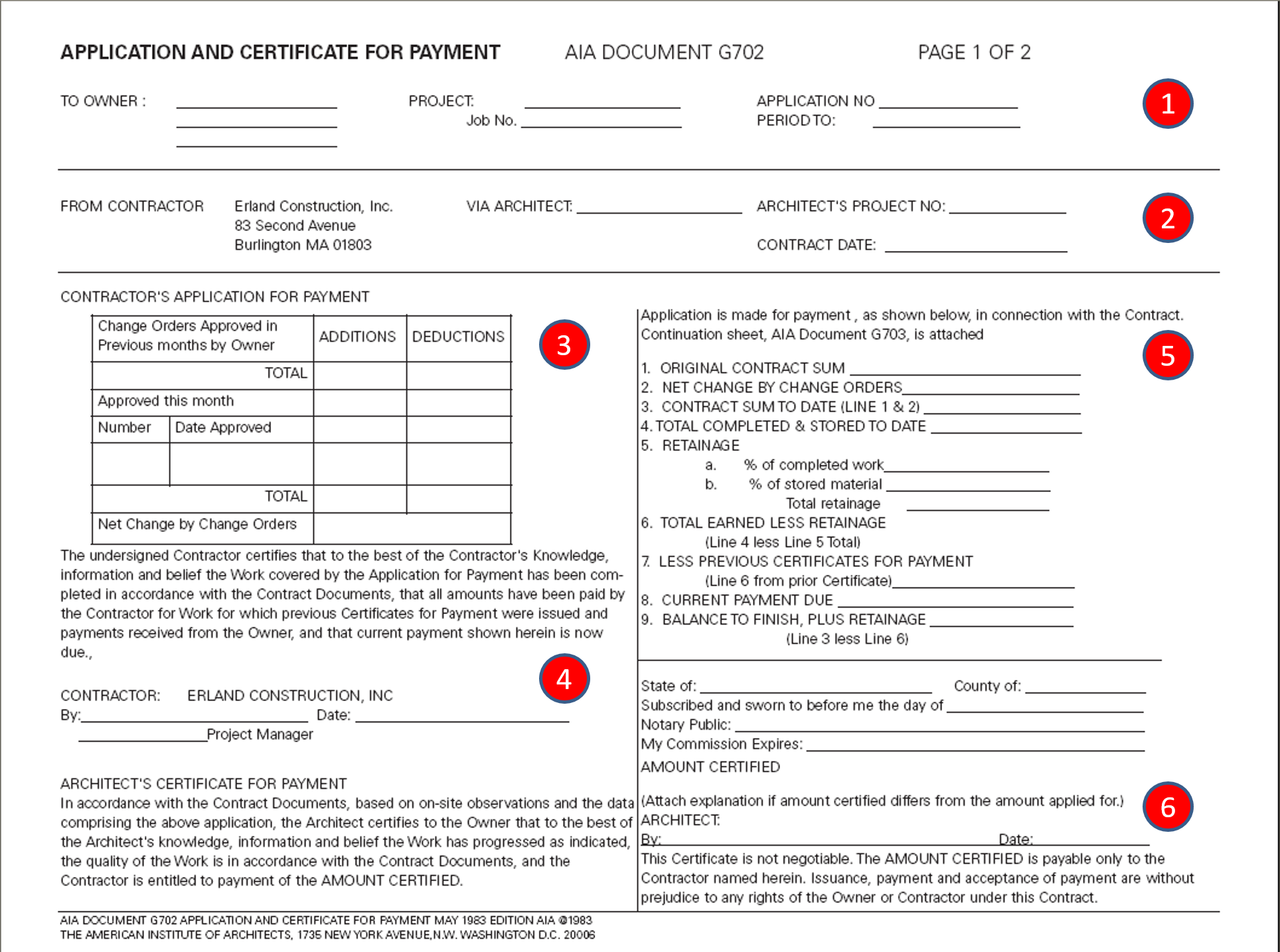
Figure 2 - AIA Form G702 Application for Payment
Source: Adapted from AIA Form G702 Application for Payment (Page 1 of 2)
This document is important because it establishes legal liability on two parties, one the contractor who is making a claim for payment and in this case, the Architect who, as an independent third party, is approving the payment. Follow the flow to get an idea of why this represents a “best tested and proven” practice:
(1) The CONTRACTOR submits this “Request for Payment” document periodically to the OWNER (usually monthly)
(2) The submittal is NOT done directly but through an independent third party. This third party could be the architect, the engineer or quantity surveyor, but regardless it is important to both the owner and contractor that there is an independent third party validating requests for payment.
(3) The contractor provides a detailed explanation of all approved change orders between this billing and previous billings as well as totals to date;
(4) The contractor the signs off on it as a sworn document. What this means is if the contractor has lied about the numbers he/she is not only open to civil penalties but criminal ones as well under the various fraud statutes.
(5) The Architect, Engineer, Quantity Surveyor or other qualified independent third party then summarizes what the contractor provided in 2 above plus what is on the second page and then
(6) provides a sworn statement to the owner that what the contractor claimed is valid and justifiable. Here again, by making a sworn statement, the architect, engineer or quantity surveyor is putting their license to practice on the line as well as the possibility of facing criminal charges for fraud if they approve what the contractor claims and it turns out to be fraudulent.
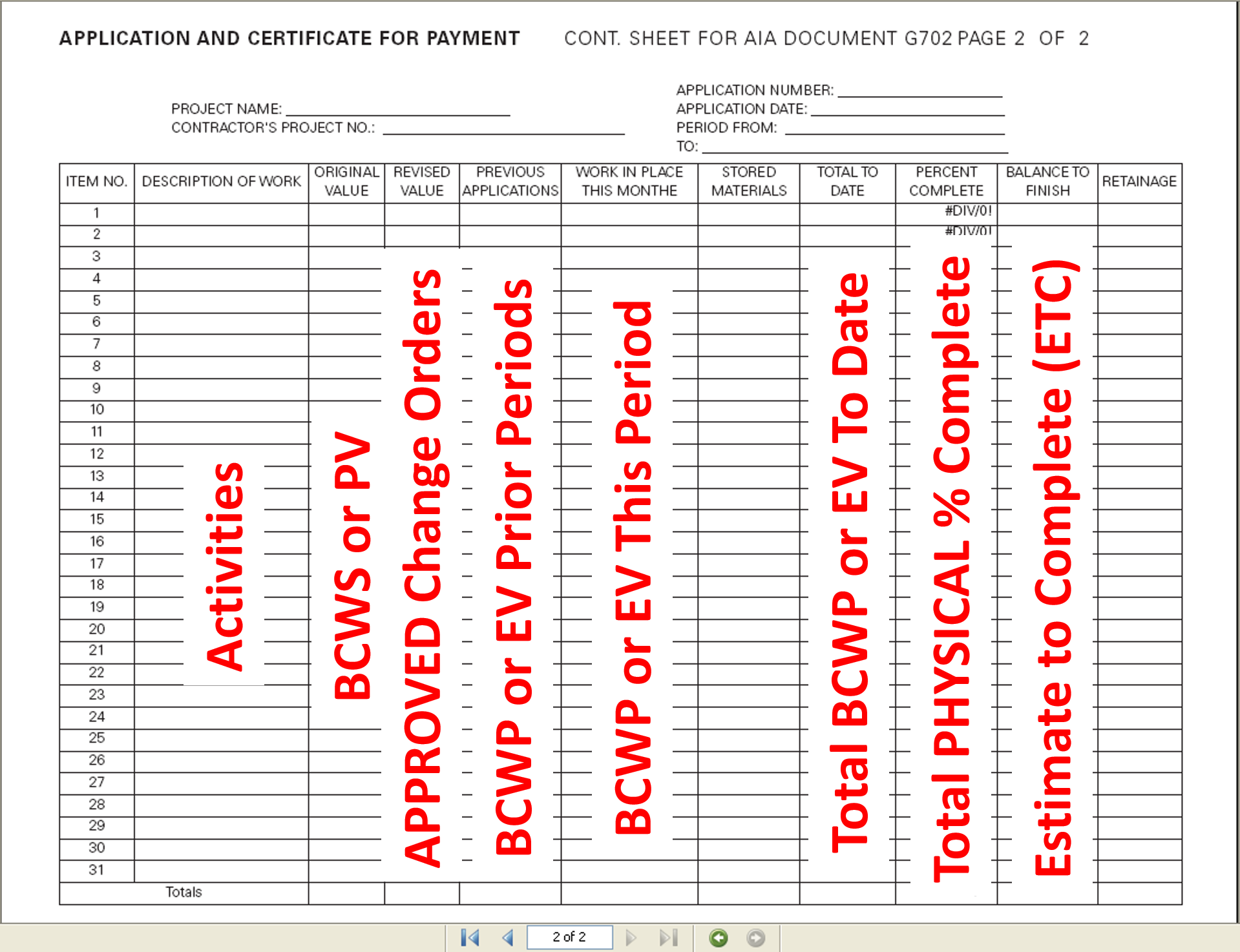
Figure 3 - AIA Form G702 Application for Payment
Source: Adapted from AIA Form G702 Application for Payment (Page 2 of 2)
This is the second page of the Application for Payment, which is filled in by the CONTRACTOR and submitted to the Architect, Engineer or Quantity Surveyor for validation and confirmation. Notice that the contractor is being paid by the ACTIVITY and not simply by MILESTONES? This is extremely important point to understand. Why? Because how many times do we put this really great schedule up on the wall and then everyone totally ignores it? The reason for this is because we have DISCONNECTED payment from the schedule. It is only when we begin to pay for ACTIVITIES completed that everyone but especially the CONTRACTOR will be looking at the schedule each and every day to try to maximize his/her cash flow. How? By completing as many activities as possible on or even before they are scheduled to start.
As explained in Module 08.4.3.18 Budget, Authorization or Control GPC Level 3 Cost Estimate, Figures 13 (Assembly Costing) or Figure 14, (Module Costing) an “activity” does not necessarily have to be Level 5 or Level 6, but could be Level 3 or Level 4. This is consistent with the concept of “Rolling Wave Planning” and addresses the concerns of those schedulers with large schedules of >5,000 activities. Using Rolling Wave Planning the number of activities can be reduced by summarizing them with the “rolled up” costs.
It is only when owners begin to fully understand how important cash flow management is to a contractor that they can use this knowledge to their advantage. By paying based on activity rather than on milestones, the contractor has an incentive to be innovative in completing as many activities as possible as early as possible.
05.5.3.14 Substantial Completion vs Substantial Performance
Substantial Completion is another term that project control professionals be they planner/schedulers, cost managers or forensic claims analysts need to know and understand. Why? For the same reasons noted above, specifically that planners, schedulers and cost managers are at risk of giving 100% credit for work packages before the work is really done.
- “Substantial Completion” is a legal term that Section A.9.8.1 of the American Institute of Architects (AIA) defines as: “the stage in the progress of the Work when the Work or designated portion thereof is sufficiently complete in accordance with the Contract Documents so that the Owner can occupy or utilize the Work for its intended use.
This does NOT mean the work package is complete yet. What it does mean is that the work package is 90% to 95% complete and that the remaining 5% to 10% will be covered by the PUNCHLIST activities.
This becomes important to planners and schedulers in particular, as the date of substantial completion often or usually determines bonus or penalty payments.
- “Substantial Performance” is a term used in contract law to refer to a degree of performance of a contract which isn't full and complete performance, but is so nearly equivalent that it would be unfair to deny the contractor the payment agreed upon in the contract. However, the owner has a right to recover whatever damages he has suffered by reason of the contractor's failure to render full and complete performance.
Thus Substantial COMPLETION is important to the planner/scheduler because the date it was achieved is important, while both Substantial COMPLETION and Substantial PERFORMANCE are important to the forensic claims analyst.
The differences between substantial COMPLETION and substantial PERFORMANCE, although related, need to be understood by the professional planner and scheduler in particular.
05.5.3.15 Punch Lists or Snag List
These are synonymous terms which often cause confusion in project control professionals particularly in determining completion dates and physical % complete. Essentially, a punch list or snag list is the work remaining AFTER “Substantial Completion”. Section A.9.8.2 of the American Institute of Architects (AIA) General Conditions tells us“ the contractor shall prepare and submit to the Architect a comprehensive list of items to be completed or corrected prior to final payment…” Depending on the contractual terms and conditions, the RETENTION money, usually 5% to 10% of the value of the work package is held back from each payment and that amount of money is to be used to protect the owner in case the contractor fails to complete the work. That retention will be released upon completion of the punchlist as final payment to the contractor.
What this means to the project controls professional is that an activity is not 100% until the punch list has been completed OR that another activity has to be added at the end of the project called “Complete Punchlist” and that activity has an appropriate duration and is cost loaded with the amount of money retained. Templates for Punch Lists:
- Cal State University Construction Management Forms- http://www.calstate.edu/cpdc/cm/forms/
Lastly, there are many Apps available for mobile devices which are now being used to identify, manage and close out punch list items- http://www.gocanvas.com/mobile-forms-apps?tag=Punch+List
05.5.3.16 Beneficial Use or Beneficial Occupancy
Another important term that project control professionals will hear that they need to know and understand and that is “Beneficial Use” or “Beneficial Occupancy”. These terms are synonymous and are defined to be the “Stage of construction of a building or facility before final completion, at which point the owner can occupy or use it for the purpose it was constructed.
The reason this becomes a concern to project controls professionals is just because the owner is using some part of the facility does NOT mean that the work package(s) are 100% complete. It only means that the facility or some portions of the facility have reached the stage where the owner can start to use some or even all of the facility, even though it is not complete yet.
05.5.3.17 Certificate of Completion / Certificate of Final Acceptance
For project control practitioners, this is the document which legally ends the project. For owners, this is when the product of the project is turned over to the asset managers for depreciation purposes and for the contractors, this document signifies the completion of the contract and the start of any warranty or guaranty periods.
Templates for Certificates of Completion:
- US Dept of Agriculture http://forms.sc.egov.usda.gov/efcommon/eFileServices/eForms/RUS187.PDF
- Queensland Government http://www.qbcc.qld.gov.au/sites/default/files/NHC%20Form%207.pdf
05.5.4 OUTPUTS
- Completed Deliverables (For Submittal To Module 3.3 - Validate Stakeholder Expectations)
- Payments For Completed Work
- Change Orders
- Claims
- Completed Punch/Snag Lists
05.5.5 REFERENCES & TEMPLATES
- Understanding The New BP Settlement (2013) http://blogs.reuters.com/alison-frankel/files/2014/12/bp-federalistsoci…
- BP Press Release (2015) BP To Settle All Claims For 18.7 Billion Over 18 Years https://www.business-humanrights.org/en/usa-bp-to-pay-record-187-billio…
- Legal Dictionary Definition of Elements of a Contract (N.D.) Http://Legal-Dictionary.Thefreedictionary.Com/Elements+Of+A+Contract
05.6 - Module 05-6 - Closing the Contract (Owner & Contractor)
GPCCAR M05-5, Revision 1.01