02.0 - MANAGING PEOPLE
02.1 - Module 02-1 - Introduction to Managing People
02.2 - Module 02-2 - Develop Project Controls Career Path Development Plan
02.3 - Module 02-3 - Develop Individual Competencies
02.4 - MODULE 02-4 - DEVELOP MANAGEMENT COMPETENCIES
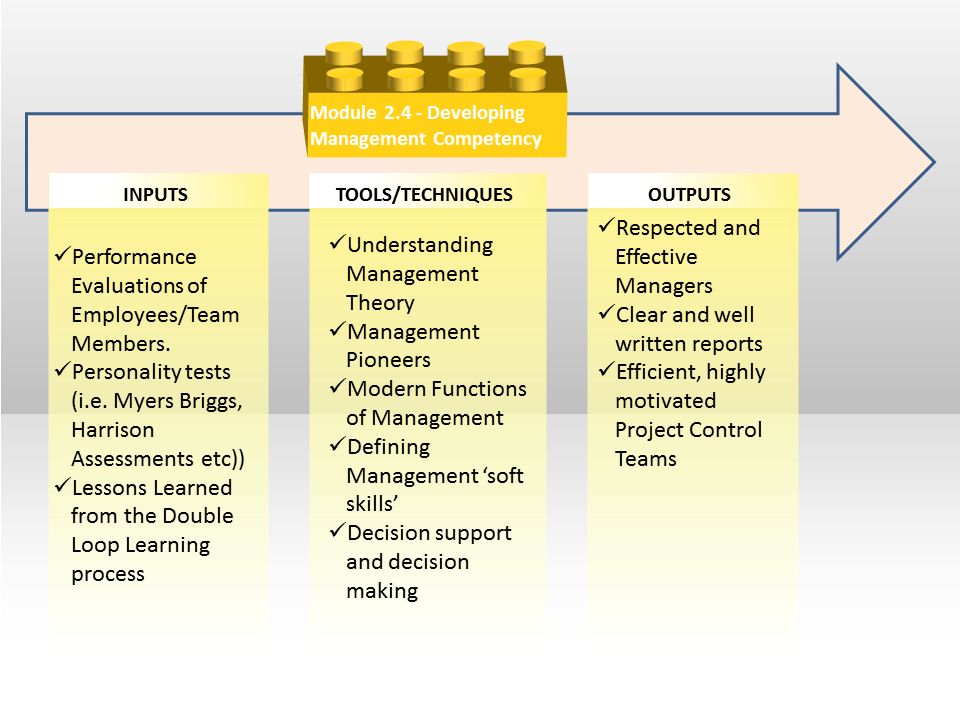
Figure 1 - Developing Management Competency Process Map
Source: Source: Guild of Project Controls
02.4.1 INTRODUCTION
In the previous module, focus was on developing individual competencies, while in this module, the focus is on those tools & techniques which practitioners need to know, understand and develop competency in if they expect to become effective MANAGERS. This module is designed specifically for the Specialist Level practitioner whose career path objective is to move to Advanced and Expert level. In this module the focus in on knowing and understanding management philosophies and models with the objective to assist the aspiring team leaders and supervisors to develop sufficient management skills to become a team leader, project controls manager or independent project controls consultant.
Explained another way, in addition to mastering how and when to use the tools and techniques shown in the previous module, for those who are or aspire to become managers, also need to be able to demonstrate knowledge, understanding and applied competency in using the tools and techniques shown below.
While ALL practitioners should be working to develop the INDIVIDUAL competencies (both technical and soft competencies) in our role as managers there are ADDITIONAL skills, particularly on the soft or people side that we have to develop over and above those we developed as individuals.
For those who qualify for an are seeking out Expert level certifications in the PS, CM, FA or PC tracks, a good portion of your competency assessment will come from this module.
Because projects are “unique one time events” and because the variable conditions that any project is likely to be executed in, it is the expectation being that not only will applicants study the GPC BoK but if they do NOT “know and understand” the concepts, they will also familiarize themselves with the original references as well as the supplemental references.
While ALL practitioners should be working to develop the INDIVIDUAL competencies (both technical and soft competencies) in our role as managers there are ADDITIONAL skills, particularly on the soft or people side that we have to develop over and above those we developed as individuals. For those who qualify for an are seeking out Expert level certifications in the PS, CM, FA or PC tracks, a good portion of your competency assessment will come from this module. Because projects are “unique one time events” and because the variable conditions that any project is likely to be executed in, it is the expectation being that not only will applicants study the GPC BoK but if they do NOT “know and understand” the concepts, they will also familiarize themselves with the original references as well as the supplemental references. This can be done either via self-study OR by taking a course in this topic. While there are other leading management guru’s, those who most heavily influenced the Guild of Project Controls in the development of this Management Competency Modules are:
- Henry Fayol with his “5 Management Functions” and “14 Principles of Management”
- Clarence “Kelly” Johnson of Skunkworks fame with his “14 Rules of Management”
- W. Edwards Deming and his “7 Deadly Diseases” and his “14 Principles of Management”
More recently, the Guild of Project Controls has been heavily influenced by the work of Peter Drucker, Henry Mintzberg and Patrick Lencioni and much of our “best tested and proven” practices” are based on the work of these researchers.
While this module covers the fundamental theories of Henry Fayol, Clarence “Kelly” Johnson, W. Edward Deming and Peter Drucker, it also includes more current thinking of Henry Mintzberg, Brue Tuckman and Patrick Lencioni, the latter two who have a very strong focus on team building and identifying and fixing dysfunctional teams. Featured in Module 02-4 - Developing Management Competencies is Bruce Tuckman’s “Forming, Storming, Norming, Performing and Adjourning” which is so important, especially in project based environments. This supports the #1 attribute identified by the NACE research in Refer Module 02-1 - Introduction to Managing People, Figure 3 - NACE Attributes Desired by Employers (2016) which is the importance of LEADERSHIP.
Another current philosopher and author who is featured heavily in this Module is Patrick Lencioni and his research on the “5 Dysfunctions of Teams” and how to avoid or prevent them. As we know from Figure 3 referenced above, the 2nd most important attribute that employers identified as being desirable to have in their employees is the ability to work and function in a team environment. Figure 5 below presents - Lencioni’s overcoming the 5 Team Dysfunctions below illustrates Lencioni’s 5 steps to build performing team. If we look at the top of Lencioni’s model “Focus on Results” is consistent with the Guild’s adoption of the Kirkpatrick Model which also focuses on identifying and measuring the results that training provides to the organization.
02.4.2 INPUTS
- 360 Degree/Balanced Scorecard Or Other Performance Evaluations By Employees/Team Members/Customers.
- Personality Tests (I.E. Myers Briggs, Harrison Assessments Etc))
- Lessons Learned From The Double Loop Learning Process
02.4.3 TOOLS & TECHNIQUES
02.4.3.1 Understanding Management Theory
Again, the expectation is that the tools and techniques listed below are for REFERENCE PURPOSES ONLY. It is up to the professional practitioner to “know and understand” the key concepts and principles and then choose which is most appropriate for them to use, given the unique circumstances and conditions applicable to their particular project or program.
Explained another way, the listings below are a SUMMARY. It is up to the practitioner to apply his/her “best professional judgement” to determine which tool(s) or technique(s) are appropriate in the context of their responsibilities. Thus you need to look at each of the key points contained in the summary and determine:
- Is this particular tool/technique appropriate for the situation being faced?
- How can I or should I use this tool or technique to solve the problem being faced?
02.4.3.2 Management Pioneers
02.4.3.2.1. Henry Fayol- Five Traditional Functions of Management and 14 Management Functions
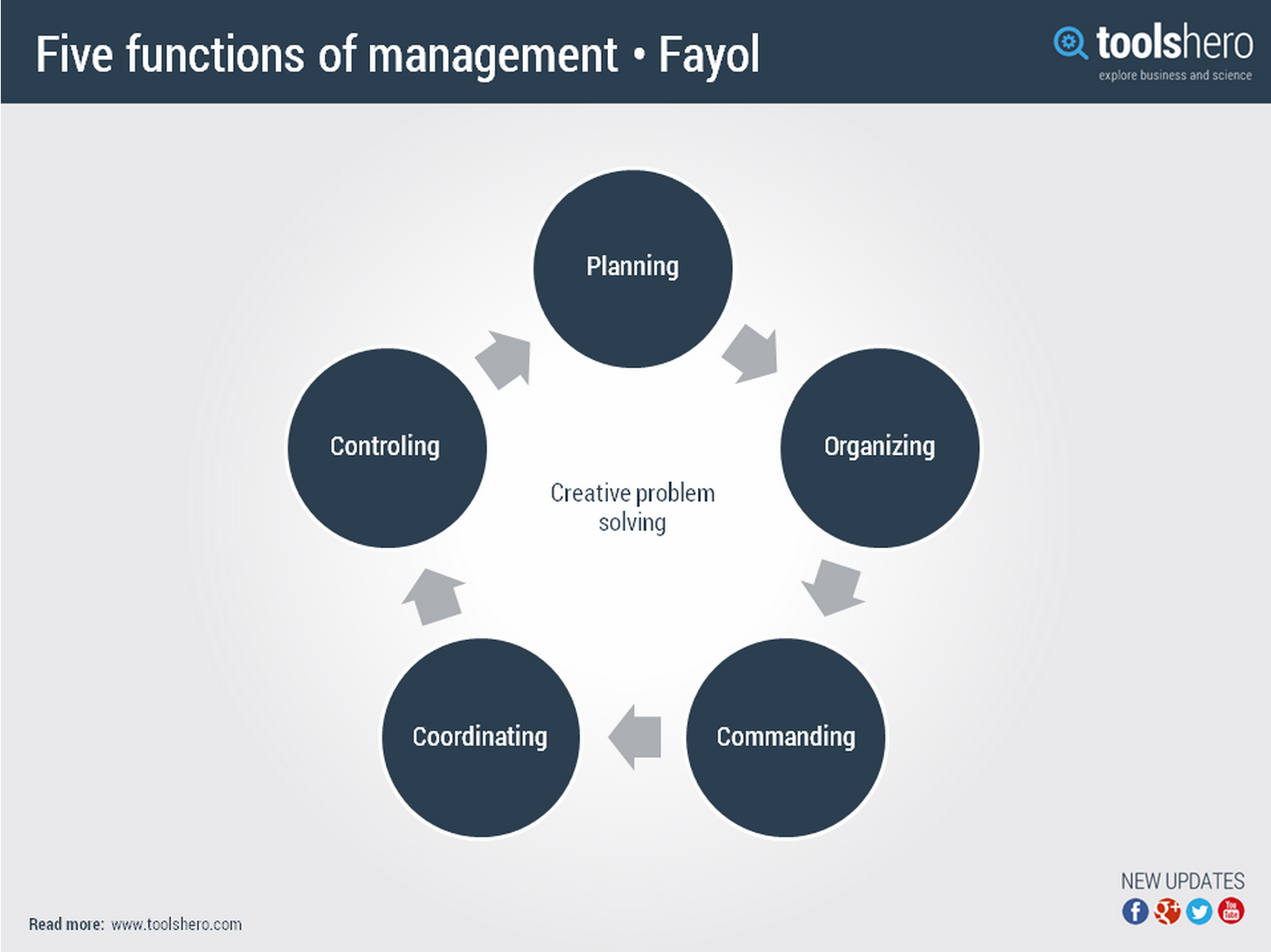
Figure 2 - Henry Fayol’s 5 Functions of Management
Source: van Vliet Vincent (2014) 5 Functions of Management
Henry Fayol could easily be considered the father of project control. Not only was he one of the first of the management guru’s to popularize the concepts of the WBS and Control Accounts but his 5 functions of management form the very essence of project controls:
- Prevoyance- (To Plan and Forecast). Examining the past and present to predict the future then creating both tactical (short term) and strategic (long term) plans to recover or maintain the schedule. The GPC has dedicated Modules 7, 8 and 9, to fulfil Fayol’s “Prevoyance” requirement.
- To Organize- To identify who should be on the team, acquiring those people, then motivating them to perform. Module 2 has been created to address this requirement.
- To Command- The formal authority to issue directives for people to execute in accordance with the agreed to plan. Previous discussions on Authority vs Power was in response to this requirement. This too has been addressed in Module 2
- To Coordinate- The rationale behind creating Integrated Master Plans (IMP) and Integrated Master Schedules is to ensure that the activities of all the key stakeholders- owners, contractors, subcontractors and vendors and even government agencies are included in the schedules. This is the very essence behind the AIA’s Integrated Project Delivery (IPD) approach.
- To Control- Here again, the GPC has not only dedicated an entire track to the concept of “Project Control” but of the 12 modules, 4 of them are directly related to establishing realistic cost and resource baselines, the tracking and reporting against those baselines with the objective to control the project execution through the use of Earned Value Management and can be found in Modules 9 and 10.
Henry Fayol also offered us his 14 Management Principles:
- Division Of Work- This concept formed the basis of not only the Work Breakdown Structure but has now been expanded to include other breakdown structures including cost, risk, organizational and the 15 breakdown structures developed by Omniclass and used to support Building Information Modeling (BIM)
- Authority- While contractor project managers generally have considerable formal P&L statement authority, in many owner organizations, project managers have little or no formal authority, including the ability to hire and fire and reward their team members. Many believe this to be one of the root causes why so many owner projects finish late and/or over budget.
- Discipline- This becomes a problem mostly in owner organizations where the project managers and project control team members are working in a matrix management structure. In many cases, the project manager is not empowered to select his/her own team members nor to fire or otherwise discipline non- or poorly performing team members. This is why the GPC recommends the use of the Balanced Scorecard or 360 degree evaluations, to provide each project manager and other stakeholders that a project control professional provides professional services for, to give their input on the competency of that practitioner.
- Unity of Command- This is another challenging quandary faced by project managers/project teams. How manage when the people on your team report to more than one “boss”. This is the kind of question which will appear on the advanced level exams.
- Unity of Direction- This is another weakness in many owner organizations. The process to select projects which are in alignment with the strategic objectives of the organization and communicate that to the project manager/project team is not always done as well as it could or should be. The Guild of Project Controls is advocating the adoption of the Logical Framework Approach, which specifically addresses that issue. This will be covered in Module 03- Managing Scope.
- Subordination Of Individual Interest- With today’s focus on “life-work” balance of so much concern, and organizations trying to do more with fewer people, this too is an area we will be exploring at the advanced level certification exams and competency assessment.
- Remuneration- Payment for Performance is the very essence of Earned Value Management. The challenges we are facing as we move towards a more projectized world is how to compensate project managers and project team members based on performance and not on the number of people supervised.
- Centralization (Or Decentralization) As nearly all major projects are being done virtually, how we address the issue of centralized vs decentralized project teams becomes more of an issue.
- Scalar Chain (Line Of Authority) As we have seen a “Flattening” of the organization for the past 20 years and more collaborative contracting approaches (i.e. partnering, Integrated Project Delivery and more incentive contracting approaches) formal reporting is being replaced with more collaboration where there are either more than one “bosses” or that there is a group of equal partners, all with a vested interest in the success or failure of both the project and the product of the project.
- Order- given we live in chaotic times, how can we bring order to chaos? The project plan is the basis for this, PROVIDED it is realistic and achievable. This includes building in appropriate contingencies in terms of time and money to offset known risks and to anticipate how much reserve needs to be set aside to cover unknown risk events
- Equity- As we move to a more project based environment, expect to see more incentive based contracting and both owners and contractors will end up sharing in the proceeds of the PRODUCT of the project. This has been a common practice in the oil and gas sector through “production sharing contracts” and there is no reason not to expect to see that model adapted for other sectors as well.
- Stability Of Tenure Of Personnel- As we move to a project based world, with more people working as part of the “contingent” or “part time” work force, without companies to provide stability of tenure, it appears as though the professional organizations, such as the Guild of Project Controls, is going to play that role. Thus expect the project controls professional of tomorrow will not associate with any company but with their professional society or organization, just as the trades did in the early days before unions.
- Initiative- As we move towards a workforce dominated by temporary or contingent workforce, the opportunities to demonstrate initiative will increase but on the other hand, the risks associated with being wrong will increase.
- Esprit De Corps- One of the major challenges of project managers and managers of project control tracks is how to maintain the motivation especially when many of the people on the team are temporary employees or area coming from functional departments and are working for two or more bosses. This is one of the reasons why Mazlow’s multi-level assessment is so relevant as it combines both intrinsic and extrinsic rewards to keep project management teams motivated.
02.4.3.2.2. Clarence “Kelly” Johnson- 14 Rules of Management
- The Skunk Works manager must be delegated practically complete control of his program in all aspects. He should report to a division president or higher. For project controls, this means that the Director of Project Controls should NOT be reporting to a project manager but at least one level higher.
- Strong but small project offices must be provided both by the military and industry. This has relevance to project controls practitioners as we do not need a large team (See Miller’s “Magic Number 7, +/-2) but we do need the appropriate number of people with the “right” competencies.)
- The number of people having any connection with the project must be restricted in an almost vicious manner. Use a small number of good people (10% to 25% compared to the so-called normal systems).
- A very simple drawing and drawing release system with great flexibility for making changes must be provided. Document control is another skill set which falls to project control professionals.
- There must be a minimum number of reports required, but important work must be recorded thoroughly. See the section above on the importance of communication and also to Module 10- Managing Project Progress
- There must be a monthly cost review covering not only what has been spent and committed but also projected costs to the conclusion of the program. Don't have the books ninety days late and don't surprise the customer with sudden overruns. For project control professionals one of our biggest challenges is to get real time information from the field and communicate it to the appropriate decision makers in a timely manner.
- The contractor must be delegated and must assume more than normal responsibility to get good vendor bids for subcontract on the project. Commercial bid procedures are very often better than military ones. The very essence of the EPC, IPD and other incentive or innovative contracting methods is to give more authority to the contractors for that over which they have reasonable control over.
- The inspection system as currently used by the Skunk Works, which has been approved by both the Air Force and Navy, meets the intent of existing military requirements and should be used on new projects. Push more basic inspection responsibility back to subcontractors and vendors. Don't duplicate so much inspection. In Module 10- Managing Project Performance, we will see that the burden of proof in terms of quality and having met the contractual terms and conditions, lies with the contractor and not the owner.
- The contractor must be delegated the authority to test his final product in flight. He can and must test it in the initial stages. If he doesn't, he rapidly loses his competency to design other vehicles. For project controls professionals, this has most applicability and relevance to those contractors doing EPC work.
- The specifications applying to the hardware must be agreed to well in advance of contracting. The Skunk Works practice of having a specification section stating clearly which important military specification items will not knowingly be complied with and reasons therefore is highly recommended. The relevance of this to project control professionals can be found with Building Information Modelling (BIM). Many of the more laborious tasks (document control, quantity take offs and bills of materials/bills of quantities) will be done using BIM. Our job as project controls professionals will be to maintain and update the scheduling and cost databases.
- Funding a program must be timely so that the contractor doesn't have to keep running to the bank to support government projects. This will be covered in more detail in Module 10 - Managing Project Progress but as contractors live and die by their cash flows, it is up to the project controls departments to ensure that contractors are paid what they deserve (what they have earned) in a timely manner.
- There must be mutual trust between the military project organization and the contractor with very close cooperation and liaison on a day-to-day basis. This cuts down misunderstanding and correspondence to an absolute minimum. Here again, part of the building of trust through honest, timely and candid communications falls on the backs of the project control professional.
- Access by outsiders to the project and its personnel must be strictly controlled by appropriate security measures. This has little relevance to the project controller but is an important issue to the project manager.
- Because only a few people will be used in engineering and most other areas, ways must be provided to reward good performance by pay not based on the number of personnel supervised. Here again, this is why we spent so much time explaining the various motivational theories and reward/recognition systems.
02.4.3.2.3. W. Edward Deming- 14 Rules of Management and 7 Deadly Sins
W. Edwards Deming offered 14 key principles for management to follow for significantly improving the effectiveness of a business or organization. Many of the principles are philosophical. Others are more programmatic. All are transformative in nature. The points were first presented in his book Out of the Crisis. Below is the condensation of the 14 Points for Management as they appeared in the book.
- Create constancy of purpose toward improvement of product and service, with the aim to become competitive and to stay in business, and to provide jobs. This explains why the GPC has adopted Agyris and Schon’s “Double Loop Learning” as the basis for our “continuous process improvement”.
- Adopt the new philosophy. We are in a new economic age. Western management must awaken to the challenge, must learn their responsibilities, and take on leadership for change. As key project team members, project control professional are in an ideal position to be agents of change, both within our organizations as well as on our projects.
- Cease dependence on inspection to achieve quality. Eliminate the need for inspection on a mass basis by building quality into the product in the first place. The importance of this especially for planners and schedulers cannot and should not be lost. We need to allow a “reasonable” amount of time for the resources available to do the job right the first time and not have to do it over again. This is why tracking and reporting punch or snag lists becomes and important KPI to monitor and report.
- End the practice of awarding business on the basis of price tag. Instead, minimize total cost. Move toward a single supplier for any one item, on a long-term relationship of loyalty and trust. For cost managers in particular, this becomes an important concept. Very tough to do in today’s hyper-competitive marketplace, but certainly a goal worth striving for.
- Improve constantly and forever the system of production and service, to improve quality and productivity, and thus constantly decrease costs. Isn’t this the very essence of project controls?
- Institute training on the job.
- Institute leadership. The aim of supervision should be to help people and machines and gadgets to do a better job. Supervision of management is in need of overhaul, as well as supervision of production workers. This is why the GPC included a module on Management Competencies.
- Drive out fear, so that everyone may work effectively for the company. This has considerable implications for project controls. How many times have project control professionals been “shot” because we delivered “bad news”? We need to have the ability to tell the truth without fear of being reprimanded or otherwise punished for doing so.
- Break down barriers between departments. People in research, design, sales, and production must work as a team, to foresee problems of production and in use that may be encountered with the product or service. In the context of project controls, isn’t much of our responsibility to help break down these barriers by capturing, preparing, analysing and communicating project progress?
- Eliminate slogans, exhortations, and targets for the work force asking for zero defects and new levels of productivity. Such exhortations only create adversarial relationships, as the bulk of the causes of low quality and low productivity belong to the system and thus lie beyond the power of the work force. This is one of the major reasons why the GPC has adopted a process based approach and why we have built this process based approach on Double Loop Learning. a. Eliminate work standards (quotas) on the factory floor. Substitute leadership. b. Eliminate management by objective. Eliminate management by numbers, numerical goals. Substitute leadership. This is a very tough challenge for project controls to meet of fulfil, as we are not only Management By Objective driven but our primary purpose is to develop the very numbers that Deming tells us should not be necessary IF there is good leadership.
- Remove barriers that rob the hourly worker of his right to pride of workmanship. The responsibility of supervisors must be changed from sheer numbers to quality. Again, the challenge to project control managers is how can we inspire a sense of pride and professionalism in the work our practitioners produce?
- Remove barriers that rob people in management and in engineering of their right to pride of workmanship. This means, inter alia, abolishment of the annual or merit rating and of management by objective. Didn’t the GPC just get done advocating for the use of Balanced Scorecard as the basis to assess competency rather than purely extrinsic motivational tools? How can or should we as project control managers adapt Deming’s advice, given we are by definition, objective driven? (On time and within budget)?
- Institute a vigorous program of education and self-improvement. In the context of the GPC BoK, we are encouraging both self learning and FORMAL learning as part of the career path development plan.
- Put everybody in the company to work to accomplish the transformation. The transformation is everybody's job. This has worked quite well with Safety. The question is how can we as professionals integrate project controls into the organizational culture?
02.4.3.2.4. W. Edwards Deming also put forward the 7 Deadly Diseases of Management
Which are:
- Lack of constancy of purpose to plan product and service that will have a market and keep the company in business, and provide jobs.
- Emphasis on short-term profits: short-term thinking (just the opposite from constancy of purpose to stay in business), fed by fear of unfriendly takeover, and by push from bankers and owners for dividends.
- Evaluation of performance, merit rating, or annual review.
- Mobility of management; job hopping.
- Management by use only of visible figures, with little or no consideration of figures that are unknown or unknowable.
- Excessive medical costs.
- Excessive costs of liability, swelled by lawyers that work on contingency fees.
Our challenge as project control managers is:
- Do we have any reasonable way to control these issues if not at an organizational level then at the project level?
- If yes, then what can or should we be doing to fix the problem(s), given that project management is not working as effectively as it can or should be?
For those preparing for your Foundation exam, you need to KNOW and UNDERSTAND these philosophies and be able to identify who was responsible for which philosophy. For those preparing for your Proficient or Advanced exams, be prepared to compare the philosophy of Fayol, Johnson and Deming. What are the common threads? Where do they differ? How can today’s project control manager use these philosophies to better manage his/her team? Which of these are impossible or impractical to implement today?
While Fayol, Johnson and Deming are all 19th and 20th century thinkers, we are now living in the 21st century. In addition to the Guild looking to the past, we are also looking into the future to see what changes we can expect of managers today and tomorrow, thus we have added the Ten Functions of Modern Managers as well as the thoughts of Peter Drucker, Bruce Tuckman, Henry Mintzberg and Patrick Lencioni’s.
According to published research by Dr. Mark Mallinger, from Pepperdine University’s George L. Graziado School of Business and Management, he identified the following management skills expected to be required for managers in the future:
- Communication and interpersonal skills
- An ethical or spiritual orientation
- The ability to manage change
- The ability to motivate
- Analytic and problem solving skills
- Being a strategic/visionary manager
- Persistence in overcoming difficulties
- Managing the knowledge worker
- Hard work
- Being passionate about work
02.4.3.3 Modern Functions of Management
02.4.3.3.1. Peter Drucker
Below are 10 quotes from Peter Drucker which have important relevance to the project control managers of today and tomorrow, particularly those who are managing the Millennial Generation.
- “Doing the right thing is more important than doing the thing right.” For planners and schedulers in particular, this has relevance especially during the early phases of the project development. Phase 1, Phase 2 and Phase 3, as subject matter experts we need to be willing, as part of our assumption testing, to ask whether or not this project should be done at all.
- “If you want something new, you have to stop doing something old.” This is why the GPC BoK has taken some strong stands on certain issues. There are many “best tested and proven” practices that we SHOULD do but have gotten in the habit of not doing. Given that projects fail with such alarming regularity, we have a moral if not legal obligation to do our part to increase the success rate.
- “There is nothing quite as useless as doing with great efficiency something that should not be done at all.” Here again, this comes back to the planner/scheduler as subject matter expert. We must be willing to challenge some of the projects we are being assigned to.
- “What gets measured gets improved.” Isn’t this the very heart and soul of Project Controls? In particular, Module 10- Managing Project Progress?
- “Results are gained by exploiting opportunities, not by solving problems.” Very powerful words. When we get to Module 4- Managing Project Risk & Opportunity, you will see that the GPC has put as much emphasis on managing opportunity as we put on managing risk.
- “So much of what we call management consists of making it difficult for people to work.” Here again, this simple statement has potentially profound meaning for planners/schedulers. Are our schedules actually making it EASY for people to work or are our schedules actually making it difficult to work? This is going to become an even bigger issue when we start creating schedules using BIM. The reason being, building a project in a computer is unlikely to even come close to what will really happen in the field. As planners/schedulers, we need to be able to look at what the 4D BIM has produced or created and apply the appropriate contingency from Module 4-Managing Project Risk/Opportunity and adjustment factors from Module 5- Managing Resources to make the schedules more realistic.
- “People who don't take risks generally make about two big mistakes a year. People who do take risks generally make about two big mistakes a year.” This concept is covered in Module 4- Managing Risks & Opportunities. Both risks and opportunities WILL happen. Our job as project control professionals is to help identify them, and alert the appropriate decision makers so they can take appropriate actions.
- “Meetings are by definition a concession to a deficient organization. For one either meets or one works. One cannot do both at the same time.” In terms of project controls, isn’t this why we are moving to web based dashboards to help us communicate project status quickly and more efficiently?
- “Long-range planning does not deal with the future decisions, but with the future of present decisions.” Again, in terms of project controls, doesn’t this help explain the rationale behind what we know as “Rolling Wave Planning”? For the future, this is why we are more than likely moving beyond the traditional forward pass/backwards pass scheduling programs and will eventually be using systems dynamics software which requires the use of feedback loops, something we cannot do with Primavera and MS Project.
- "Management is doing things right. Leadership is doing the right things" Lastly, the relevance of this is it represents an ethical question that is going to engulf the practice of project management, including project controls. Should we as project team members, be held accountable if we know a project is doomed to fail and we don’t do something about it? Sarbanes Oxley (SOX) in the USA, Audit, Investigations and Community Enterprise) Act of 2004 in the UK and a host of comparable laws in the European Union are holding management at all levels, including project managers (and with them, potentially project control managers?) legally accountable if projects knowing cause shareholder value to be negatively impacted.
02.4.3.3.2. Henry Mintzberg
Below are 10 quotes from Henry Mintzberg which have been selected for their relevancy to project control managers to reflect on and consider, whether you manage as a team leader or a full project control department.
- “The great myth is the manager as orchestra conductor. It's this idea of standing on a pedestal and you wave your baton and accounting comes in, and you wave it somewhere else and marketing chimes in with accounting, and they all sound very glorious. But management is more like orchestra conducting during rehearsals, when everything is going wrong.” This analogy has a lot of significance for project control practitioners. Given that projects are “unique one time events” and given that we only have one shot to get them right, what are the contributions that the project control professional can or should make to ensure that projects consistently finish on time and within budget? This is what has driven the GPC to adopt Double Loop Learning as the basis for our continuous process improvement model.
- Corporations are social institutions. If they don't serve society, they have no business existing. Organizations are communities of human beings, not collections of human resources. The relevance of this philosophy to project controls is what (if any) responsibility to we, as project controllers have in terms of corporate social responsibility? (CSR) What can or should we be doing within the practice of project controls to support or enhance CSR?
- I describe management as arts, crafts and science. It is a practice that draws on arts, craft and science and there is a lot of craft - meaning experience - there is a certain amount of craft meaning insight, creativity and vision, and there is the use of science, technique or analysis. Look at the Guilds Competency Levels. Isn’t one of the major components of those levels based on EXPERIENCE? And not just the same experience, but increasingly more challenging experience, under the watchful eyes of a mentor? So here Mintzberg’s philosophy has served to shape the development of not only our GPC BoK, but also the competency assessment model we have developed.
- Everyone is against micro managing but macro managing means you're working at the big picture but don't know the details. Here is yet another common thread found in the GPC BoK. That project management is about managing the details. This is the concept underlying Activity Based Costing (ABC) (Module 8) and Module 9- Managing Project Progress, which is based on Activity Based Management (ABM)
- Basically, managing is about influencing action. Managing is about helping organizations and units to get things done, which means action. Sometimes, managers manage actions directly. They fight fires. They manage projects. They negotiate contracts. In project controls, our roles, especially as planners and schedulers, is to influence action- first we facilitate the creation of the schedule baseline, then we track and report against this baseline, making recommendation based on our analysis. This is covered in Module 07 - Managing Project Planning & Scheduling and again in Module 09- Managing Project Progress, but the concept is found throughout the GPC BoK.
- Management is a curious phenomenon. It is generously paid, enormously influential, and significantly devoid of common sense. This is one of the challenges we face as key project management team members. What happens when management has instructed us to create a schedule and/or cost budget which we know to be unrealistic? This comes back to the ethical if not legal obligations we have if we are to earn the right to call project controls a profession.
- You can teach all sorts of things that improve the practice of management with people who are managers. What you cannot do is teach management to somebody who is not a manager, the way you cannot teach surgery to somebody who is not a surgeon. This is why the Guild of Project Controls is not encouraging companies who “teach to the exam” and why our competency assessment model has been based on that used by the licensed trades and other professions such as commercial aircraft piloting and commercial truck drivers.
- What I have against M.B.A.s is the assumption that you come out of a two-year program probably never having been a manager - at least for full-time younger people M.B.A. programs - and assume you are ready to manage. This philosophy is what shaped the decision by the GPC to focus on EXPERIENCE in our competency assessment model. And not just any experience but progressively more challenging experience, conducted under the watchful eyes of peer reviewers.
- We're all flawed, but basically, effective managers are people whose flaws are not fatal under the circumstances. Maybe the best managers are simply ordinary, healthy people who aren't too screwed up. Our job as project control professionals is to help project and program managers keep from screwing up. We help them create a reasonable and achievable plan, then we track and report progress against the plan, with the objective to help the program or project manager lead the team in keeping to the plan.
- No job is more vital to our society than that of the manager. It is the manager who determines whether our social institutions serve us well or whether they squander our talents and resources. This applies not only to program and project managers, but to project control managers.
02.4.3.3.3. Bruce Tuckman
Psychologist Bruce Tuckman is another of the modern team theorists who has significant relevance for project control managers and their team members. In Tuckman’s model, he explained that all teams move through four stages or phases before they can become a high performing team. The reason Tuckman’s model is so relevant to project control professionals lies with the fact that given projects are unique one-time events, and eventually will end, there is an adjourning phase which represents very unique challenges to keep project teams motivated as a project winds down.
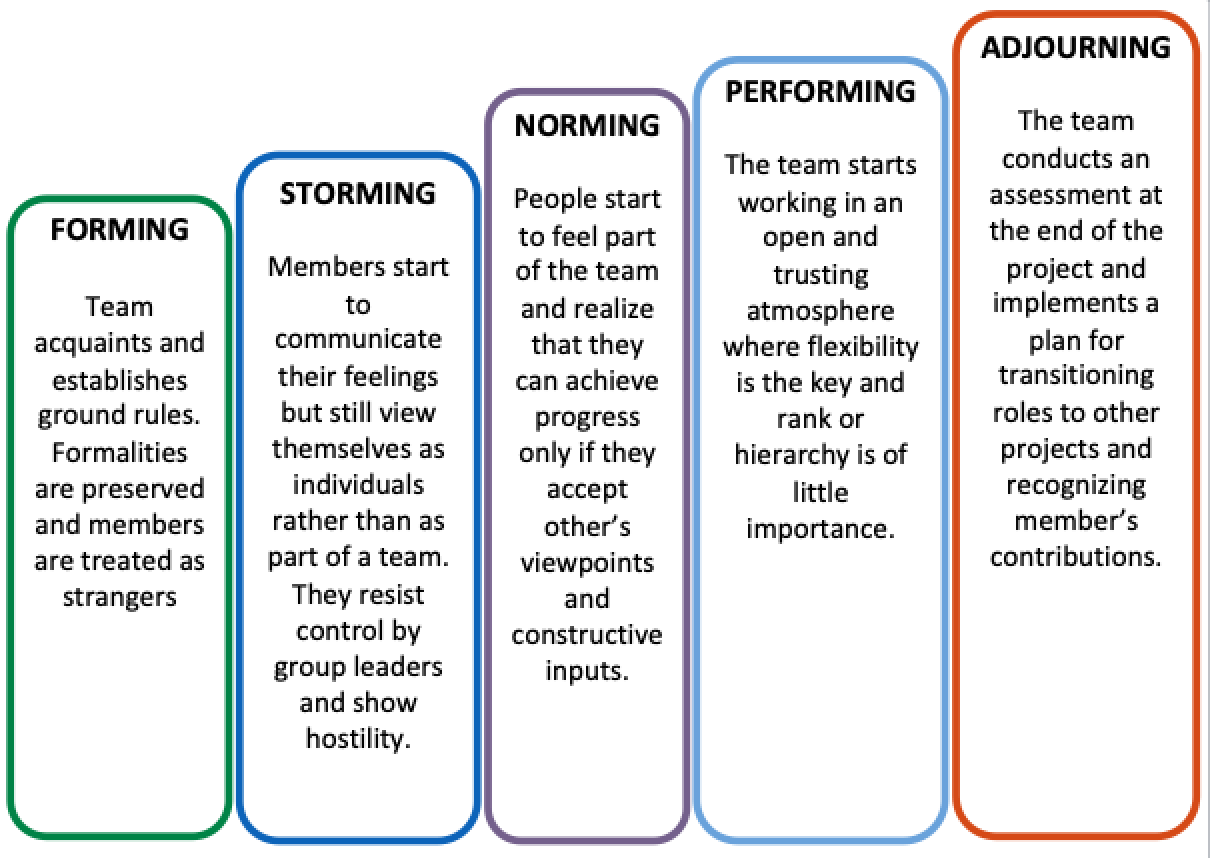
Figure 3 - Tuckman’s 5 stages of a Team Development
Source: Tuckman, Bruce (1965) "Developmental Sequence in Small Groups” Eyre, Elizabeth, Mindtools Article
Tuckman explains that to be an effective manager, he/she must be able to assess where a team is in this team life cycle and be able to adjust their leadership style appropriate to where the team is, understanding the ultimate objective is to get a team of people to get to the performing phase or stage and keep them there, until the project is completed.
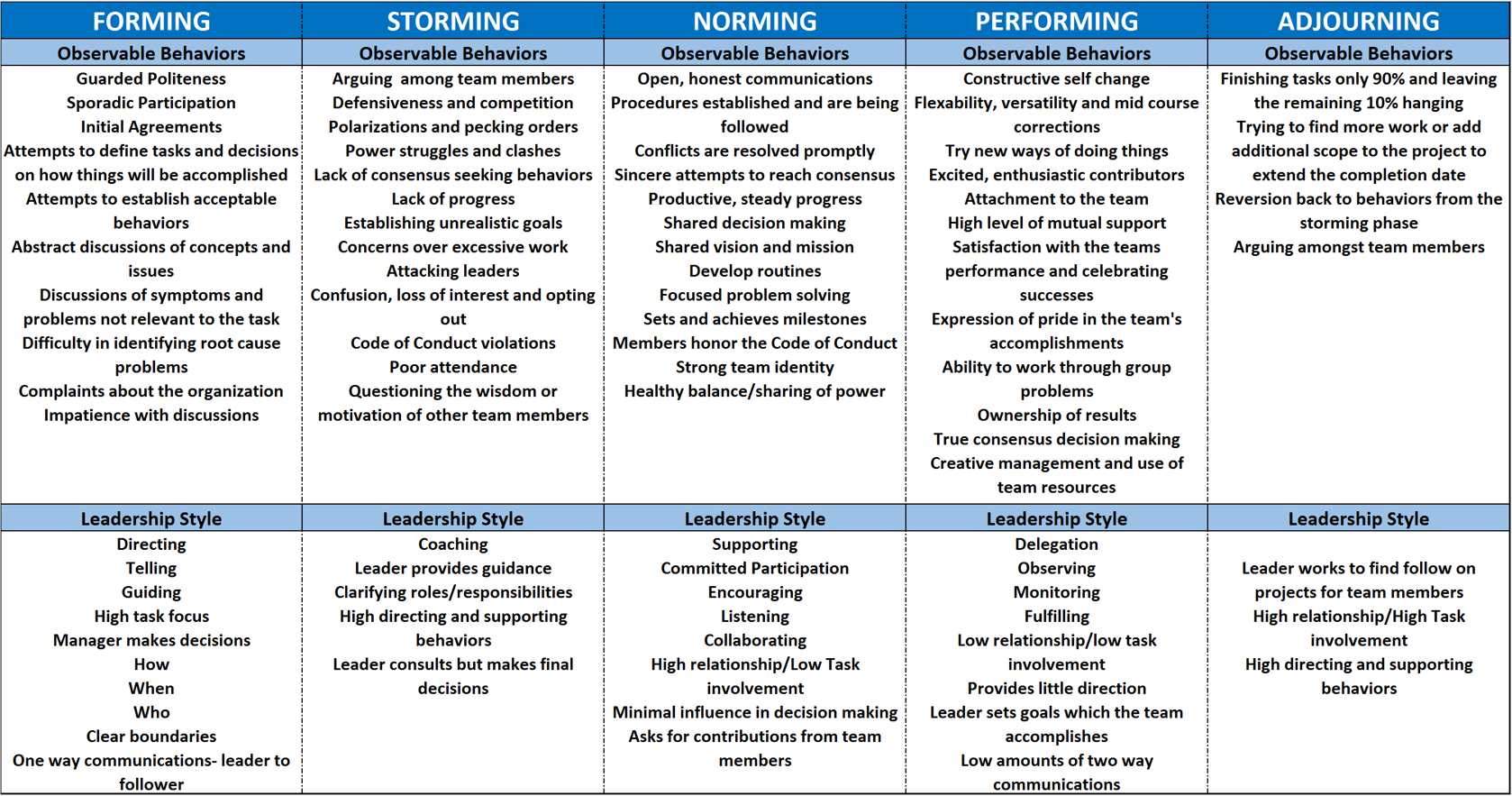
Figure 4 - Characteristics or Attributes of Each Phase and Appropriate Management Styles or Interventions
Source: Giammalvo, Paul D (2015) Course Materials. Contributed Under Creative Commons License BY v 4.0
Figure 3 shows us some of the visible attributes or characteristics we can use to tell which phase our team is in and under “Strategies” we can see some suggested leadership styles whic are appropriate for each phase.
For those preparing for your Advanced or Expert credential, this site contains essential reading materials as many of the questions on the Advanced exam are coming from this site. This is also a handy reference for those who are new to management and want single source reference of high quality. (MUCH better than Wikipedia)
02.4.3.3.4. Team Formation Tuckman = traditional
The Tuckman model for team development first published 1965 (above) is one of the more widely accepted (there are other models):
- Forming: Team members get to know each other;
- Storming: Team members trying to sort each other out;
- Norming: Team members starting to work as a group;
- Performing: Team members performing as a committed team;
- Adjourning: Team members closeout the relationships developed during the project.
All teams go through at least 3 of these stages. The time and amplitude of the curves vary and can be managed but every team loses efficiency in its formation phase.
When planning project work, allowance needs to be made for the loss of efficiency in the early stages of team development.
02.4.3.3.5. Swift Trust
The Tuckman model takes time for the team to evolve, in some situations there is no ‘time’ and other factors affect team formation. One of the keys is ‘swift trust’. Temporary organisations such as project teams (particularly virtual teams), where people are brought together to complete a given task that requires a high degree of collaboration, within tight timescales and with a high cost of failure create a different challenge. Most people do not have the time to allow the team to develop naturally. They have to work out their differences on the fly and ‘blindly’ trust one another to do their jobs. This is called ‘swift trust’.
Aligned activity within the team contributing to a common goal, supported by appropriately professional behaviours and an effective team leader allows ‘swift trust’ to develop but it will only last as long as everyone behaves in a trustworthy way. ‘Swift trust’ can be a powerful force but is also fragile and easily broken. Many project teams start work based on ‘swift trust’ and then move into the Tuckman model as trust and knowledge develops between team members.
02.4.3.3.6. Lencioni
To close out the management philosophies adopted by the Guild of Project Controls as representing what we believe to be “best tested and proven” practices, we share the summarized work of Patrick Lencioni and his “5 Dysfunctions of Teams”. This model or philosophy forms the basis of how the Guild suggests we approach team building.
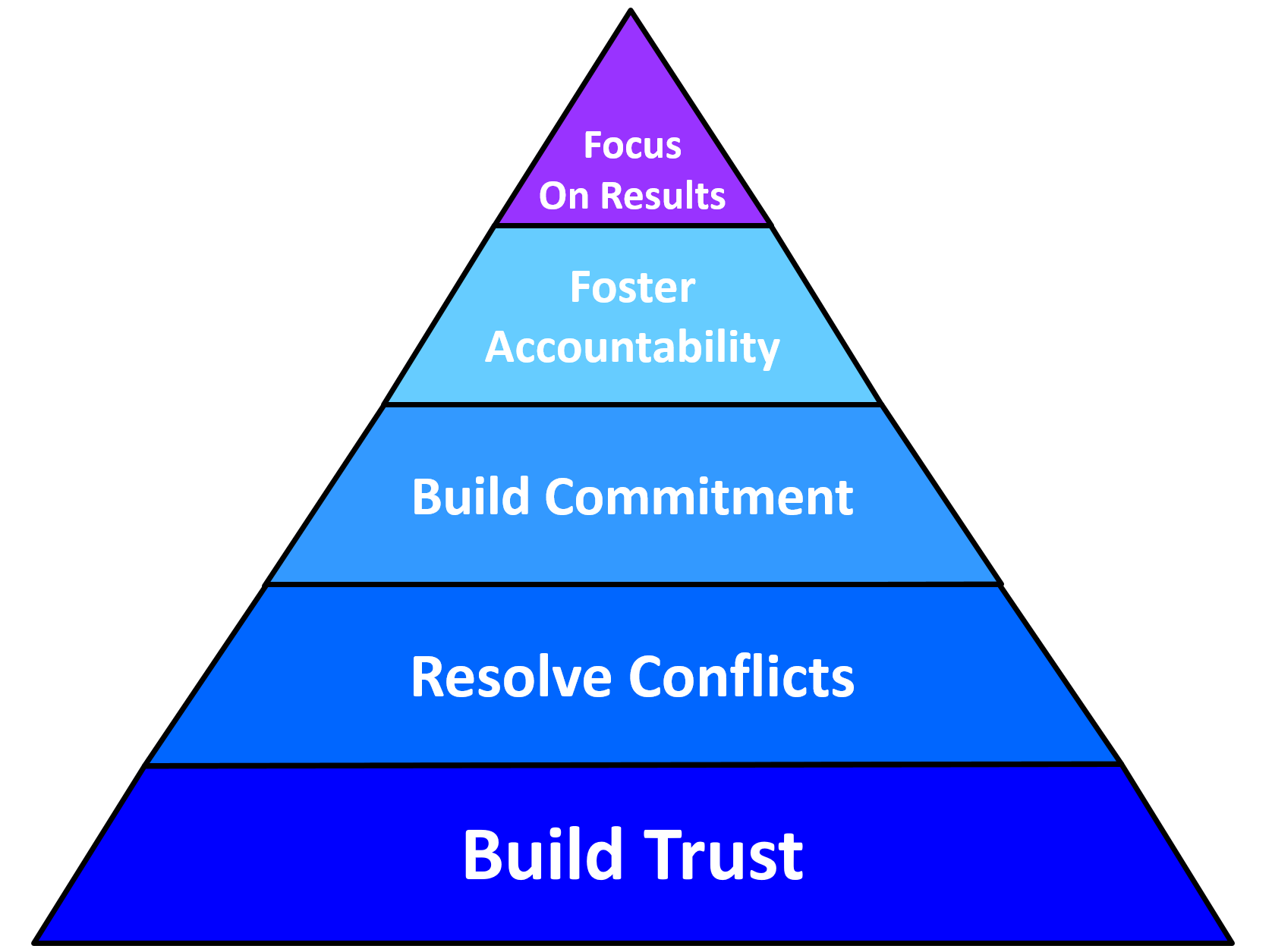
Figure 5 - Lencioni’s Overcoming the 5 Team Dysfunctions
Source: Lencioni, Patrick (n.d.) Overcoming the 5 Dysfunctions of a Team
To summarize, it is not expected that people memorize these concepts. What the Guild of project controls has done is identify those philosophies which have meaning or relevance to those who aspire to be project controls professionals and who are willing to take the time to familiarize themselves with these concepts (know and understand them) and be able to apply sound professional judgement in any given circumstance to know which concept is appropriate, why it is appropriate and how and when it can or should be used given your specific application or situation.
Management science evolved through the 19th and 20th centuries in response to ‘waves’ of innovation in business and society. Modern project management uses many of the ideas and techniques developed from these evolving general management concepts and experiences.
The Industrial Revolution brought about the emergence of large-scale businesses with an intrinsic need for professional managers; early military and church organizations provided the leadership models adopted to control these enterprises. From these beginnings, the foundations of modern management were progressively developed around the world. However, it was the developments in American management theories that particularly underpinned the beginnings of modern project management.
The Classical school of thought began around 1900 and continued into the 1920s. It focuses on efficiency and includes scientific, bureaucratic and administrative management.
Scientific management focuses on worker and machine relationships and assumes productivity can be increased by increasing the efficiency of production processes. Some of the leaders in this school are Frederick Taylor, known as the Father of Scientific Management, the Gilbreths, and Henry Gantt.
Bureaucratic management relies on a rational set of structuring guidelines, such as rules and procedures, authority, hierarchy, and a clear division of labour. Max Weber developed Bureaucratic Management Theory (1922).
Administrative management emphasizes the flow of information in the operation of the organisation. Henri Fayol (1841-1925), known as the Father of Modern Management, wrote General and Industrial Management (1916). His five functions of managers were to: plan, organise, command, coordinate, and control.
The Human Relations Movement emerged in the 1920s and dealt with the human aspects of organisations. It began with the Hawthorne Studies which were conducted by Elton Mayo between 1924 to 1933. Chester Barnard developed the concepts of strategic planning and the acceptance theory of authority. Barnard believed that each person has a zone of indifference or a range within which he or she would willingly accept orders without consciously questioning authority. It was up to the organization to provide sufficient inducements to broaden each employee's zone of indifference so that the manager's orders would be obeyed. The Human Resources School began in the early 1950s. The behavioural approach did not always increase productivity. Thus, motivation and leadership techniques became a topic of great interest. The human resources school understands that employees are creative and competent, and that much of their talent is largely untapped by their employers. Employees want meaningful work; they want to contribute; they want to participate in decision making and leadership functions.
Modern management thinkers from the 1950s on include:
- Peter Drucker - managing knowledge work is different!
- W. Edwards Deming - quality is paramount.
All of these traits are important to ‘modern project management’.
02.4.3.3.7. Traditional Management (‘command and control’)
The functions of management are generally agree to be planning, organizing, leading & staffing, executing or implementing and controlling the organisation; and these basic functions underpin project management. Its roots can arguably be traced back to the Protestant reformation of the 15th Century and most of the ideas implicit in the early days of our profession (from the 1960s to 1980s) are firmly rooted in the ideas of Scientific Management.
Scientific management assumes, amongst other things, that ‘supervision must be achieved through a clear chain of command and through the application of impersonal rules’ and that ‘only those at the top have the capacity and opportunity to direct the enterprise’. And that by controlling the detailed elements of a project (reductionism) you can understand and control the whole project. This philosophy has strongly influenced the development of project management.
The limitations of this approach have been apparent since the 1950s - reductionism and control may be useful in simple mechanistic environments but fail completely in complex environments where knowledge creation is key. You cannot instruct knowledge workers on how long it will take them to solve a problem.
02.4.3.3.8. Modern Management ('distributed authority’)
As soon as the team or the technology grows beyond a relatively simple system direct ‘command and control’ becomes impossible and attempting to impose a ridged hierarchy based on formal instructions will lead to inefficiencies. Effective leaders need to establish clear guidelines and a system of protocols, chain of command, and standard operating procedures so that everyone in the project team knows what they have to do and who is accountable. The overall action of the team is unified by the leader’s intent; within this space sub-teams and smaller work groups are allocated their individual missions and tasks within that higher intent. Once this framework is in place, properly trained team members can go straight into the performing stage of their activity.
Trusting and empowering your team, open communication, leadership and motivation are all closely interlinked and in combination create high performance teams. This is not a new concept; the Prussian military developed the concept of auftragstaktik at the beginning of the 19th Century with its core tenet of ‘bounded initiative’.
Provided people within the organisation hierarchy have proper training and the organisational culture is strong, the leader’s role is to clearly outline his/her intentions and rationale. Once this is understood, subordinate personnel can formulate their own plan of action for the tasks they are allocated and design appropriate responses to achieve the objectives based on their understanding of the actual situation, exploit opportunities and mitigate problems.
02.4.3.3.9. Management by Objectives (MBO)
Project controls and MBO are almost symbiotic, provided the project controller allows the project team members to have control over the measures included in the cost plan and schedule. Management by objectives (MBO) works best when supported by the project’s management, and implemented through the project controls process. Some of the important features and advantages of MBO are:
- Motivation – Involving employees in the whole process of goal setting and increasing employee empowerment. This increases employee job satisfaction and commitment.
- Better communication and coordination – Frequent reviews and interactions between superiors and subordinates helps to maintain harmonious relationships within the organization and also to solve many problems.
- Clarity of goals - the subordinate knows exactly what they expected to achieve.
Achieving this in a controls setting simply means involving the people doing the work in setting the schedule and cost objectives associated with the activities they are responsible for achieving. As a first step, you need to have a responsible person assigned to manage each activity or work package and then involve them in crating the various baselines so that they end up ‘owning’ the estimates. This can be accomplished by:
- Don’t tell the person ‘how long’ a task should take, ask them.
- Agree the costing with them.
- Agreeing any other key measures with them, eg, quality.
- Don’t tell the person how to do the work, let them tell you the best way.
- When updating progress ask them ‘how long’ and ‘how much’ is needed to complete the work.
This approach generally gets the best estimates for the baseline and the update anyway, therefore represents ‘good practice’, but also sets objectives and measures performance against the agreed objectives. The key elements of MBO are:
- Clear objectives and aligned expectations.
- Shared measures and targets.
- Recognition of success and failure (recognising success being the key)
MBO in a project controls environment works best if the controls process is used to define individual responsibilities in terms of corporate and project objectives, for the following reasons:
- Autonomy and control - Subordinates tend to have a higher commitment to objectives they set for themselves than those imposed on them by another person.
- Linkage - Managers can ensure that objectives of the subordinates are linked to the organization's objectives (WBS, schedules, etc do this by default).
- Clarity - SMART objectives must be unambiguous and realistic (SMART stands for Specific, Measurable, Assignable, Realistic and Time-related).
Good practice dictates that the project manager must periodically evaluate achievements and act upon the results.
02.4.3.3.10. Theory X, Y and Z
MacGregor’s Theory X and Theory Y along with Ouchi’s Theory Z- These classic management theories remain relevant to some degree or another, especially as todays manager’s grapple with managing not one or two generations of workers, but 3 of them- the Baby Boomers, who are living longer and are reluctant to retire, Generation X and the Millennial Generation. Understanding these three basic theories is important, especially when we start to work in different cultures.
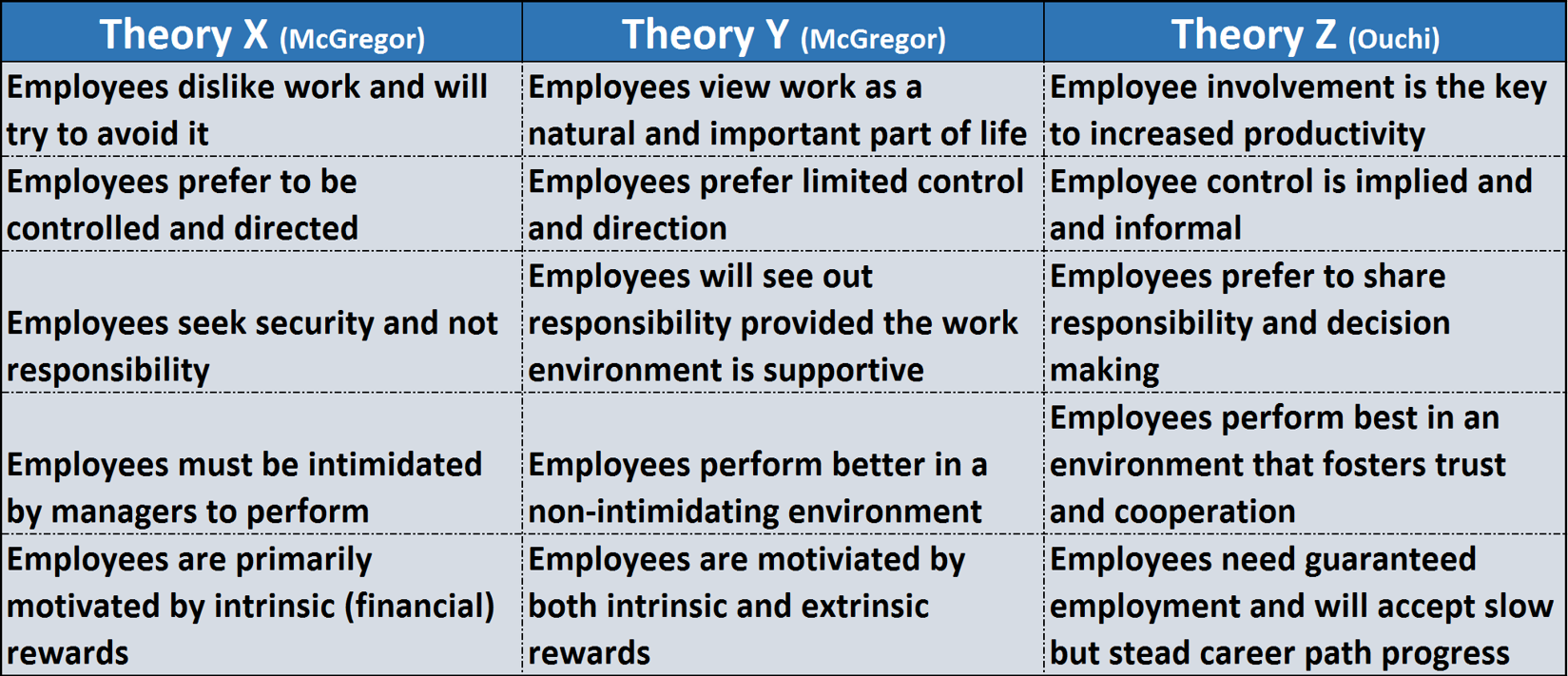
Figure 6 - McGregor and Ouchi’s Theories Compared
Source: Giammalvo, Paul D (2015) Course Materials. Contributed Under Creative Commons License BY v 4.0
In addition to the traditional management and motivation theories, there are some which have particular relevance to the practice of project controls, especially for those who are managers.
Peter Senge- The Fifth Discipline: The Art and Practice of the Learning Organization (1990). Popularized the concept of the learning organization. Senge’s philosophy explains why the Guild of Project Controls has adopted Argyris and Schon’s “Double Loop Learning” as the basis behind our continuous improvement processes.
JoAnne Yates- Control through Communications: The Rise of System in Management. Explains how shifts in management are coming about through the adoption of technologies. Her theories are especially relevant to project control professionals as Building Information Modelling (BIM) is already starting to have an impact on project controls, and with the growing use of Systems Dynamics software, it is highly likely that linear scheduling programs such as Primavera or MS Project which forward pass/backwards pass algorithms will eventually be replaced by systems dynamic software. Both BIM and SD present both threats and opportunities to project control professionals.
Jay B Barney- Organizational Economics (with W. G. Ouchi, 1986) and Gaining and Sustaining Competitive Advantage (1997). This third researcher has and continues to shape the practice of project controls, especially from a management perspective. Barney proposed that a resource based model can help to sustain competitive advantage over time. As time passes, the firm productively uses resources that are valuable, rare, and appropriable. This leads to short-term competitive advantage. In order to sustain this competitive advantage over time during the sustainability phase, resources must be imitable, substitutable, and mobile. “Outsourcing” and “Offshoring” are examples of Barney’s philosophy in action.
If applied badly, the project controls function can operate through a ‘command and control’ process where people are forced to comply with ‘the plan’ and will only do the minimum necessary to stay in a job. The best controlled and organised team will only partially succeed if team members only follow procedures without motivation.
Or, as discussed above, project controls can function as a valuable motivator focused on engaging the project team in planning and accomplishing the work successfully. A motivated team member will make up for deficiencies in the team, the organisation and the PM and still get things done. The controls tools don’t change, only the way you use them!
02.4.3.4 Defining Management ‘soft skills’
The synergy of ‘hard’ skills powered by ‘soft’ skills will create a far more powerful engine for success than the sum of the two parts in isolation. Successful projects, and successful project controllers need both capabilities either within their person or within their leadership team. Project success is achieved by persuading people in the project team to enthusiastically and collaboratively work together to achieve the contracted output. Developing a motivated team capable of achieving this requires a range of ‘soft’ skills including leadership, motivation, communication and conflict management to name a few. Organisations cannot do work; it is the people within the organisation that do the work and management is about directing and leading people!
Soft skills are the personal attributes that enable someone to interact effectively and harmoniously with other people. The term ‘soft’ does not mean easy, applying soft skills effectively is very difficult. However, unlike most ‘hard skills’ where there is one right way of applying the skill, interpersonal skills have to be adapted to meet then needs of the people involved in the exchange every time.
- Understand yourself - EQ and personal bias
EQ = Emotional Intelligence. Emotional intelligence is broadly defined as the ability to identify, understand and manage the emotions around you. The theory of emotional intelligence states we are born with an innate capacity to recognise emotions in ourselves and the people around us. Connecticut-based Dr. Hendrie "Hank" Weisinger says, "We are born with the ability to regulate them, like a thermostat", but rather than nurturing that ability, most people walk around "like a thermometer, just reacting to what's around them." Whenever you blame someone else for the way you feel or behave, then you have given away control of your emotions and behaviour and have given that control to them.
Managers with a high EQ (emotional quotient) understand:
- People need to be valued.
- People need to feel a sense of belonging.
- People need a realistic and hopeful future.
- People need basic organization in their lives.
The five key competencies in emotional intelligence are:
- Self Awareness
- Self Regulation and Mood Management
- Self Motivation
- Interpersonal Expertise
- Emotional Mentoring to help others deal with situations.
Everyone is biased! (including you)
The evolution of the human race has left us with a series of cognitive biases that are innate – factors that we are born with and which can easily generate irrational behaviours in the modern business world. These innate cognitive biases are overlayed with learned behaviours ‘hard wired’ into our brains and relate to the perception of risk, expectations and most aspects of estimating.
It is impossible to eliminate bias, the only practical option is to be aware of the different types of bias that effect relationships, processes and decisions; and then work to minimise their effect.
02.4.3.4.1. Leadership
Form the perspective of organisations, the distinction between management and leadership was first made in the middle of the last century, when businesses were seeking ways to improve organisational effectiveness; the difference can be summarised as:
- Management is the tactical ability to get things done, usually through other people, by setting appropriate targets, defining clear goals, tasking and motivating people, monitoring progress and making necessary adjustments to stay on track. Managers have staff.
- Leadership by contrast is a strategic competence, providing vision and purpose, setting overall direction, inspiring people to commit themselves to a course of action. Leaders have followers.
Aspiring to leadership is a choice we make; leaders become leaders because other people decide to follow them - you cannot appoint yourself a ‘leader’, but you can display the characteristics of a leader to attract followers!
Leading is a decision we make to influence the thinking, behaviour and development of others. To accomplish this we need to develop a sincere interest in people, a commitment to delivering outcomes, and a mindset of continual renewal of our own thinking and knowledge. Force and directive behaviour will not lead to long-term commitment from your followers, sustainable change or optimal solutions.
Leading is a decision we make to influence the thinking, behaviour and development of others. To accomplish this we need to develop a sincere interest in people, a commitment to delivering outcomes, and a mindset of continual renewal of our own thinking and knowledge. Force and directive behaviour will not lead to long-term commitment from your followers, sustainable change or optimal solutions.
02.4.3.4.2. Team Building
The modern view of a project workforce is as a ‘team’ or as a ‘team of teams’. A motivated team covers gaps in the performance of various team members and works together to achieve the team’s objectives. A key role of any leader or manager is to build an effective team to support them in the accomplishment of their, and the organisation’s objectives.
02.4.3.4.3. Team Development
Effective team development is vital to enable the project to meet its objectives. Team development is enhanced by:
- Co-location (being in the same place at the same time);
- A common and clearly defined objective for the whole team;
- Time spent doing things together.
The Project Manager is responsible for maximising team performance through leading, mentoring, training, and motivating team members by:
- Enhancing the ability of each stakeholder to contribute to the team.
- Enhancing the ability of the team to function effectively.
- Understanding the ways team develop (below)
- Using appropriate recognition and rewards (below)
- Managing the challenges of virtual teams (below)
Performing teams:
- Create their own team ground rules for dealing with each other and conflict
- Encourage involvement, participation and cooperation from everyone
- Build a shared understanding of team roles and the objectives of the project - Align the teams understanding with the organisation’s and other stakeholders
- Maintain the self esteem of all members and recognise their contributions
- Validate their effectiveness as a team and its performance against the objectives
02.4.3.4.4. Managers Perspective on Recognition and Rewards
Only desirable behaviour should be recognised and rewarded. Recognition is often more important than rewards recognition enhances an individual’s self-esteem.
Rewards should be directly and visibly linked to project performance. Reward systems that are seen to be fair, open, honest, understandable and accountable work best. The process must also be relevant to the project - recognising individual excellence may be counterproductive if the objective is to encourage team performance.
A key factor to consider is ensuring the person has control over the inputs to the process and/or the results that she/he is being rewarded for.
The targets (KPIs) need to be carefully selected to obtain the desired responses. Rewarding the highest level of overtime will not encourage people to produce more it will simply encourage people to stay at work longer (and increases costs). If your measurement and reward systems focus on the wrong things, you will get exactly what you asked for!
02.4.3.4.5. Virtual Teams
Virtual teams occur when project team members or groups with a shared goal, work from different locations and rarely meet face-to-face with other project team members. Communication is assisted by video-conferencing and email. Through virtual teams it is possible to:
- Use people from the same company in different geographic areas;
- Add expertise to the team from another place: have different shifts of worker involved;
- Incorporate home office work; involve people with mobility disabilities;
- Work on projects that may not have been able to support travel costs
Communications planning is vital for virtual teams, to involve them in decision-making, deal with conflict and set expectations. Team development and problem solving are always slower and more complex, the overall project planning processes need to allow for these factors.
02.4.3.4.6. Influencing
Project controllers rarely have much management authority; consequently the ability to influence other is a key skill. Influencing is a strategy to get others to cooperate towards achieving a common goal. One of the ‘standard’ references defining the problem and offering practical solutions is Influence without Authority (2nd Edition) by Allan Cohen and David Bradford. This book introduces the Cohen Bradford IWA Model that describes how to influence others through a "give and take” exchange. The model consists of six steps pictured as an inward spiral, starting at the outside with ‘Assume all are potential allies’. Then moves inward with ‘Clarify your goals and priorities’, ‘Diagnose the world of the other person’, ‘Identify relevant currencies, theirs and yours’, ‘Dealing with relationships’, and finally at the centre ‘Influence through give and take’.
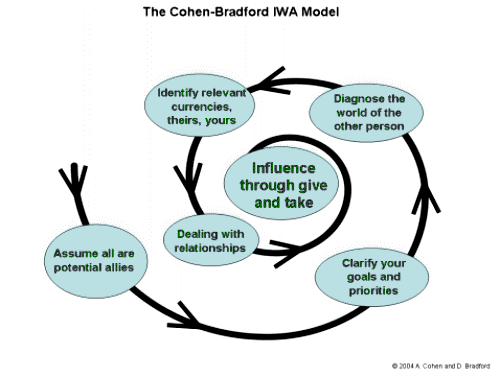
Figure 7 – Cohen-Bradford IWA Model
Source: Influence without Authority (2nd Edition), Cohen and Bradford
This model is trading paradigm based on creating something of value to ‘trade’ and then obtaining the best return from your investment. It is a subtly different approach to WIFM.
- WIFM (What’s in it For Me) focuses on finding a value proposition that provides a direct benefit to the stakeholder you want help from - if they help you achieve your project outcomes, they benefit from the success. WIFM is effective in situations where a senior stakeholder (eg, the sponsor) can directly benefit from helping you succeed.
- IWA (Influencing Without Authority) is more effective when there is no direct benefit for the stakeholder you need help from and is based on ‘trading favours’ or more simply ‘you-scratch-my-back-and-I’ll-scratch-yours’. We can and often do intuitively understand the give and take in a transaction for small things, such as sharing the effort to pick up the morning coffee. However, for large complex transactions we need to be more methodical and think through our process, goals and interests, those of our allies and those of the stakeholders we need to influence.
Effective project controllers know they get work done by working well within their peer network. If someone does something for the project manager, there’s a good chance the project manager will do something for them in return. It’s a two way trade that benefits everyone. But even so, influencing without authority isn’t an easy task. The key to IWA is creating and banking ‘organizational currency’ in advance of the time you need to use it.
02.4.3.4.7. Problem Solving
Problem solving is a form of decision making used where there is enough information to resolve the problem. The challenge in problem solving is to make the time and resources available to reach the right answer. Whilst there are many different approaches to problem solving, most include the following basic steps:
- Investigate the problem: Find out when, why and how it occurred and its impact.
- Define the problem: state exactly what the issue is that needs resolving. If you cannot clearly document the problem, it will be difficult to solve it.
- Identify the root cause (or causes): Resolving a symptom will not resolve the problem. If you cannot define the root cause you have not taken your investigation far enough.
- Define the solution space: Decide precisely what problem you are trying to solve to create boundaries for the idea-generation process.
- Prioritise it: Problems occur all the time, focus urgent attention on problems that are both important and urgent (ie, show stoppers).
- Generate options: use brainstorming and other techniques to generate a range of solutions.
- Identify the solution: Choose the solution that solves the root cause in the simplest way.
- Make your decision and act on it: carefully consider important decisions but once made, act immediately by communicating the actions needed to make it happen.
- Evaluate the overall process and outcomes, for ‘lessons learned’ and future preventative actions.
02.4.3.4.8. Trust Building
Trust is a key element in the effective management of project teams and contracts. High levels of trust speeds up decisions and business processes and consequently lowers costs. As the level of trust goes down, the speed of doing business goes down and costs go up. When distrust exists, relationships and communications are ineffective and everything has to be proved or validated!
Most of the cost associated with measuring and checking performance, writing complex and detailed contracts and meeting with people is associated with the lack of trust. Where trust exists, all that would be needed to manage most work is a brief communication to ensure understanding and a ‘hand shake’; real or virtual.
Trust is a psychological state that incorporates ‘positive or confident expectations about another party’ and ‘a disposition and attitude concerning the willingness to rely upon the actions of, or be venerable towards, another party’. The development of trust in strongly influenced by prior experience, in a new situation it is easier to trust (or not trust) someone you know a bit about or have had some experience of working with in the past either directly or by association (the last consultant from ABC was good so we can probably trust this person……) - reputation really does matter! There are two sides to a trusting relationship:
- The trustworthiness of the person being trusted, do they demonstrate behaviours that engender trust?
- The trustfulness of both parties, their willingness to believe in the honesty and reliability of others.
You can demonstrate your trustworthiness through appropriate behaviours over time; how trustful the other person is depends on their life experiences, some people have learned to be trustful, others have learned to avoid trusting anyone. In any commercial relationship, both of these factors are influenced by the environment the parties are working within, perceptions of past behaviours and expectations for the future.
02.4.3.4.9. Conflict Management
The ability to deal with conflict effectively is directly related to overall management success and is just one aspect of relationship management. Too little conflict can indicate a stagnant organisation or disinterested or demoralised project team, whereas too much conflict indicates a dysfunctional team.
Vijay Verma in Managing the Project Team refers to three views of conflict:
- The traditional view that conflict is bad and must be eliminated through the use of authority. This is not a good view for project teams and projects.
- The interactionist view is that conflict is desirable and necessary for high performance teams. Conflict should be encouraged. This is NOT the PMBOK® Guide view and has limited general acceptance.
- The contemporary view is that conflict is inevitable, it may be positive and it may be negative but it must be managed to be beneficial. Conflict can be a sign that the project team is committed.
Before you can deal with the conflict you need to understand its scope:
What is the conflict about?
Who is involved in the conflict? Are there ‘backers’, ‘puppet masters’ or ‘supporters’ encouraging the immediately obvious protagonists? Are there others who should be involved who are avoiding the dispute (but who are essential to the solution or will be affected by the outcome)?
What is the root cause of the dispute?
Why has it occurred? How has it managed to get to this stage? There has usually been a management failure.
What is the actual or potential impact of the conflict? How much effort is sensible to expend on the dispute (expending a disproportionate amount of effort could be more detrimental than the conflict itself)?
Are you involved you are you seeking to manage the resolution of a conflict between others? If you are involved do you need the help of an impartial third party? If you are managing a dispute between others do you have the leadership, authority or influence to make a difference to the behaviours of the disputants (or should you involve others)?
If you are involved in the conflict situation, you can choose to apply one of the following basic approaches:
Forcing / Directing: Exert your authority and positional power (or get a person with the necessary power) to insist the issue is addressed and a solution imposed. Typically, this is the way conflicts are resolved during an emergency where decisions are required immediately.
Smoothing / Accommodating: Is not a solution but can buy time for emotions to cool and the protagonists to come to their own solution.
Compromise / Reconcile: Both sides agree to give a little to resolve the dispute but this approach rarely leads to an optimal solution.
Problem solving / Collaboration: Involves both sides working together to understand the other’s position; recognising what might be best for any one person is not necessarily best overall or for the longer term relationships. Win-win negotiating requires strength of purpose.
Withdrawal / Avoidance / Acceptance: has a range of options that may be useful: - Accept and settle: Give the other party what they want. It removes the conflict at least cost but could have future ramifications
- Accept and ignore: The effort required to fix the problem, if it can be fixed, far outweighs the damage the conflict is doing. Accept it, move on, but watch for signs of escalation in case the impact increases.
- Delay: Similar to ‘smoothing / accommodating’ to give everyone a chance to reflect on the situation. Once the heat has dissipated most problems can be rectified more easily.
- Accommodation: This is the path of least pain where one side accepts the other’s views or position (whether or not the actually agree). But the acceptance has to be genuine to avoid a repeat of the dispute at a later date.
02.4.3.4.10. Coaching and Training
Tutoring (training) typically forms part of an education program, University Lecturers 'tutor' students. Tutoring tends to be focused on teaching, or enhancing taught skills and knowledge. Training provides specific knowledge to the trainee and is frequently delivered virtually.
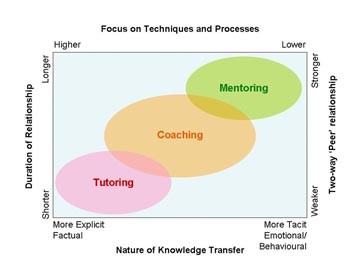
Figure 8 – Nature of Knowledge Transfer
Source: Developing your Team, Praxis Framework, Lynda Bourne
Coaching is focused on competency and skill development. All professional sports teams have at least one 'coach' focused on developing team members and helping them reach their full capabilities. Project & Program Management Coaching focuses on enhancing the ability of project and program managers to apply PM skills effectively to help them be successful in the workplace. The aims of coaching include:
- enhancing leadership effectiveness, performance and career progression within a specific organisational context
- development and integration of appropriate mindsets and behaviours
- focussing on specific requirements needed for the application of capability.
Your coach brings an enhanced range of skill-sets and aims to transform your mindset with new perspectives. The work is focused on 'raising the bar'; your coach will help you set your career goals and then hold you accountable. Your results goals set the overall objectives and are usually stable, they focus on outcomes. Activity goals are reviewed and updated regularly and are focused on doing things that work towards achieving the desired results.
Mentoring is a more complex process and relationship. The skill of the Mentor is to help unlock the complex factors needed to allow the Mentee to grow within his/her self, ask the right questions from within, develop creative solutions, and find new ways to succeed from within themselves. Frequently the Mentee has a similar level of knowledge and experience to the Mentor but needs an independent third party to talk through issues and to explore options and new ideas with; using the combined depth and breadth of vision of both the Mentor and the Mentee to create new insights and knowledge. The aims of mentoring include:
- being challenged to explore and integrate new perspectives
- developing new insights on specific challenges, including strategy and policy
Your mentor has broad useful experience and the ability to share that with you at a practical and pragmatic level that is goal-directed and which you can apply to your own context.
02.4.3.5 Decision Support and Decision Making
There is never enough information to make a fully informed decision!
However, making decisions is a central part of any management role, a core element in problem solving, and important in a range of other social and business activities. There are three elements to any decision, alternatives, preferences and information.
If there are no alternatives, there is no decision to make; you have an issue that requires managing! Where there are alternatives, there has to be a degree of uncertainty as to which alternative is best for a decision to be required.
If a decision is required, personal preferences and values play a significant part in the decision making process and our preferences are affected by innate personal bias and the social context we are deciding within.
For every uncertainty there is information that has the potential to reduce or remove it! Without information you make a decision and find out what happens, with information you find out what will happen then decide what to do! However, we rarely if ever have enough information; as Carl von Clausewitz wrote more then 100 years ago, “War is the realm of uncertainty; three quarters of the factors on which action in war is based are wrapped in a fog of greater or lesser uncertainty. . . . The commander must work in a medium which his eyes cannot see; which his best deductive powers cannot always fathom; and with which, because of constant changes, he can rarely become familiar.” Substitute ‘project’ for war and the sentiment remains true today! And, information has no value at all, unless it has the potential to change the decision!
The critical thing is not the amount of information available; but having the key elements of information available when needed in a useful form, which improves your awareness of the situation and ability to act. Once the best possible (but typically inadequate) information has been assembled, decisions need to be made; usually no decision is the least beneficial outcome. A key function of project controls is to get the right amount of the right information to the decision maker and make sure everyone understands the reliability (or lack thereof) of the information - predictions about the future are always wrong, the question is how wrong?
02.4.3.5.1. Types of Decision
There are many different types of decision that have different features and require different approaches, some of the more commonly described variants are:
- Wicked problems these are difficult or impossible to solve because of incomplete, contradictory, and/or changing requirements that are often difficult to recognise. Each decision changes the problem.
- Dilemmas have no ‘right’ answers - you choose the ‘lesser of two evils’.
- Conundrums are intricate and difficult questions that only have a conjectural answer.
- A paradox is a seemingly true statement or group of statements that lead to a contradiction or a situation which seems to defy logic or intuition.
- Mysteries do not have a simple, factual answer, they require judgments and the assessment of uncertainty.
- Puzzles have one right answer that may be resolved in one correct way or which may be achieved through several different routes. The problem is you don’t know where to find the answer!
- Problems simply require hard work. There is one right answer and usually one optimum way to solve the problem.
The first step in decision making is to appreciate what type of decision you are being confronted with.
02.4.3.5.2. Decision Making
- Decisions are usually needed from various members of the project team, to avoid ambiguity and procrastination, establish a decision-making framework by answering the following questions:
- Who? Prior to the beginning of any project, determining who has decision-making power is critical. On most projects there will be several decision makers with different responsibilities.
- What? Determine the type of decision and its parameters.
- When? Some decisions are urgent, others have time and the time element may allow better information gathering.
- How? Identifying how decisions are made, who will be involved, and how they are shared with project team members is almost as important as the decision itself.
- The best decisions are made when they are needed, delayed decisions are almost always the worst outcome.
02.4.4 OUTPUTS
- Respected And Effective Managers
- Clear And Well Written Reports
- Efficient, Highly Motivated Project Control Teams
02.4.5 REFERENCES & TEMPLATES
- Effective communications, leading to desired actions.
References
- White Paper: Communication Theory: https://mosaicprojects.com.au/WhitePapers/WP1066_Communcation_Theory.pdf
- White Paper: Page Layout & Design: https://mosaicprojects.com.au/WhitePapers/WP1065_Page_Layout.pdf
- White Paper: Presentation Skills: https://mosaicprojects.com.au/WhitePapers/WP1009_Presentation_Skills.pdf
- White Paper: Writing Skills: https://mosaicprojects.com.au/WhitePapers/WP1010_Writing_Skills.pdf
- http://www.managementstudyguide.com/management_functions.htm
- https://www.cliffsnotes.com/study-guides/principles-of-management/the-n…
- http://gbr.pepperdine.edu/2010/08/management-skills-for-the-21st-centur…
- 22 Quotes from Peter Drucker https://www.goodreads.com/author/quotes/12008.Peter_F_Drucker?page=2
- Lencioni, Patrick (2015) 5 Dysfunctions of a Team https://medium.com/taskworld-blog/lencionis-5-dysfunctions-of-a-team-33…
- Clark, Donald (n.d.) Big Dog & Little Dog’s Juxtaposition The Art and science of Leadership http://www.nwlink.com/~donclark/leader/leader.html
- Communications Plan- http://static1.1.sqspcdn.com/static/f/752898/23313694/1376494937560/com…
- Communications Management Plan- https://www.projectmanagementdocs.com/template/project-planning/communi…
- Communications Management- https://www.mindtools.com/CommSkll/CommunicationsPlanning.htm
02.5 - Module 02-5 - Developing Organisational Competencies
02.6 - Module 02-6 - Identifying And Engaging Stakeholders
GPCCAR Module M02-4, Revision 1.02